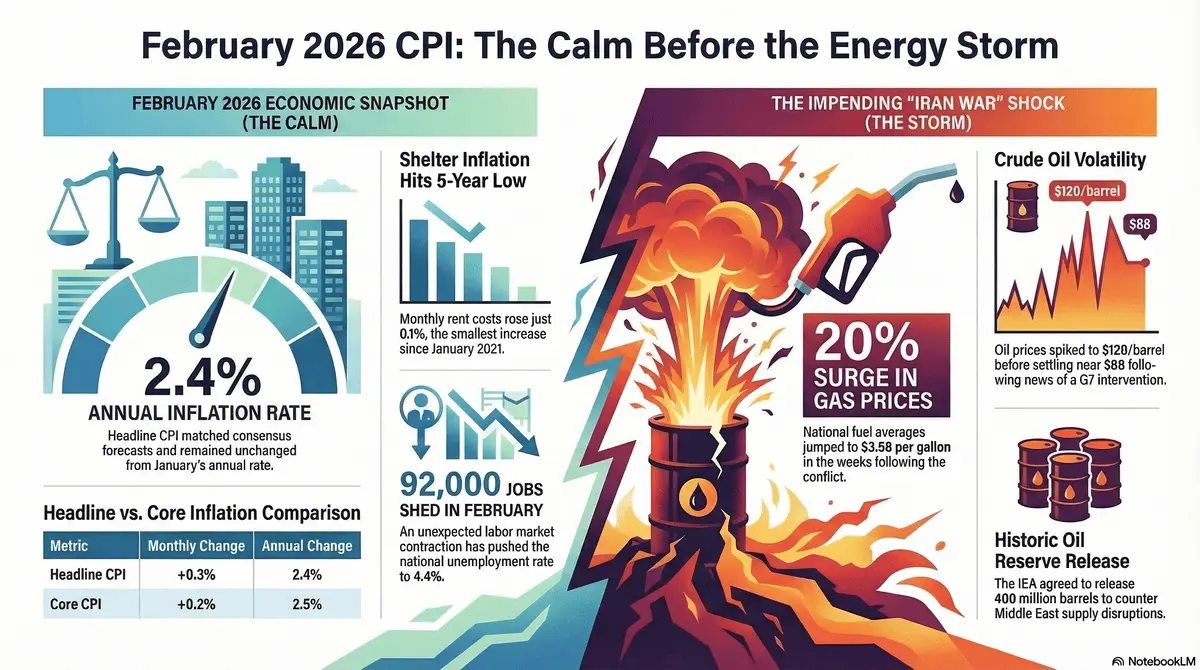
Washington, D.C. — Consumer prices rose in line with expectations last month, but the data predates a major geopolitical shock that has since sent energy costs soaring. The Bureau of Labor Statistics released the Consumer Price Index on March 11, 2026, revealing a 2.4% annual inflation rate. However, economists warn that recent oil spikes linked to the conflict with Iran will likely complicate the economic outlook and fuel higher costs broadly.
Below is a detailed breakdown of the inflation report and its broader economic implications.
Context & Background
The February CPI Findings The February Consumer Price Index (CPI) increased by a seasonally adjusted 0.3% for the month, maintaining a 12-month headline inflation rate of 2.4%. While core inflation, which strips out volatile food and energy sectors, held steady at an annual rate of 2.5%, notable declines were seen in rent increases, which saw their smallest monthly jump since January 2021.
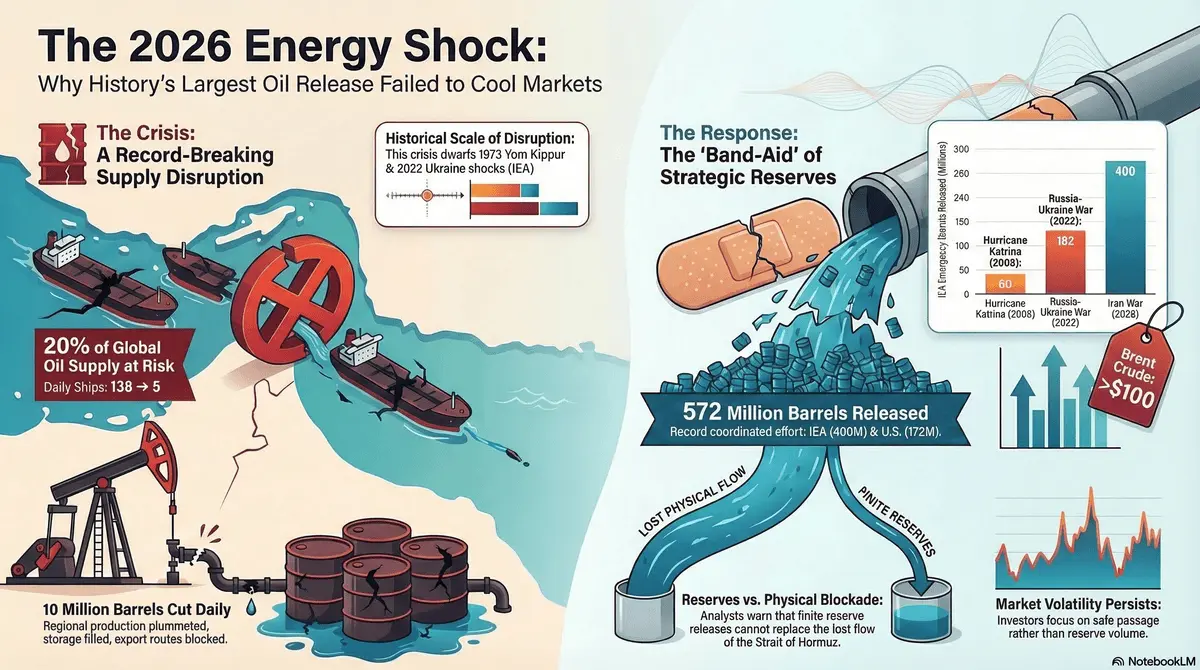
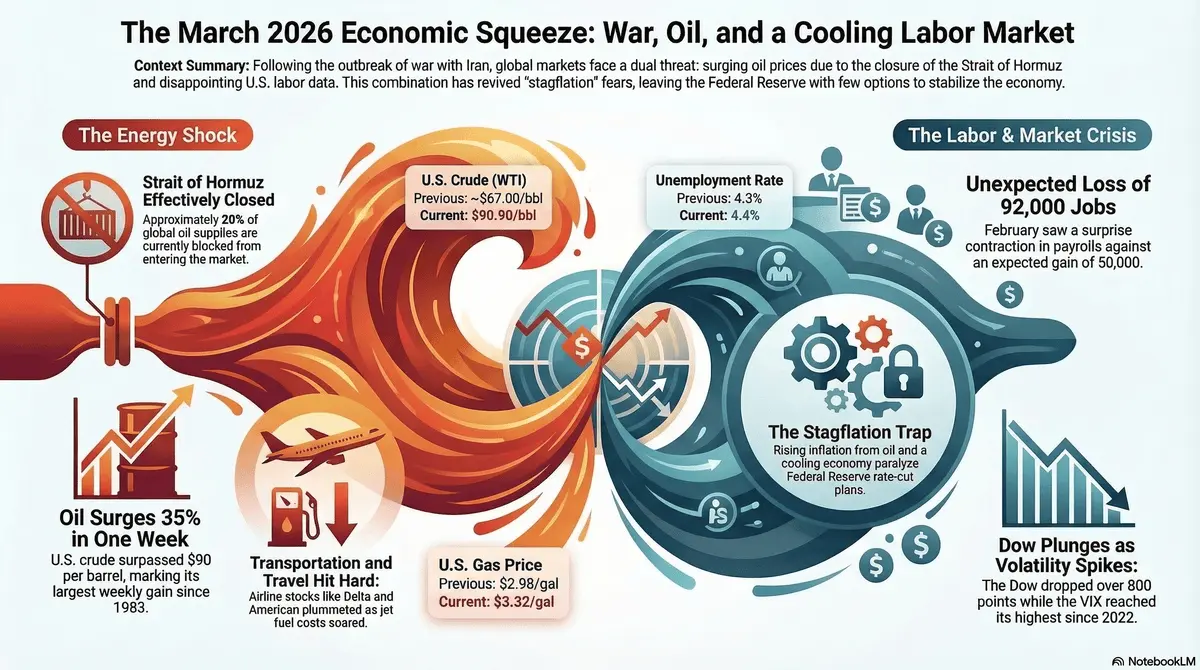
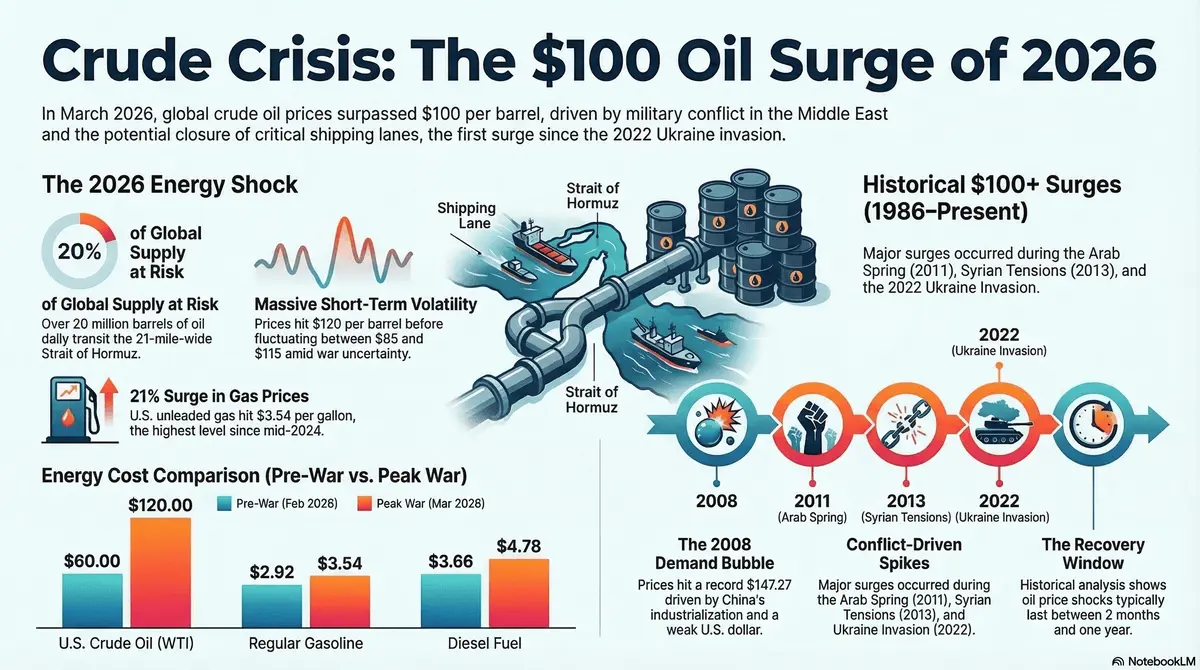
The Impact of the Oil Shock The February data serves as a snapshot of the economy before the U.S. and Israel attack on Iran, which temporarily shuttered shipping lanes and drove crude oil prices as high as $115 per barrel. This energy shock is expected to heavily impact the March CPI report, as the national average for regular gasoline has already surged to $3.58 a gallon.
Tariff and Supply Chain Pressures Ongoing tariff pressures continue to influence the prices of specific goods, with apparel experiencing a 1.3% monthly gain—its largest since September 2018. Furthermore, industrial metals like aluminum have surged nearly 10% due to supply fears in the Middle East, a region that supplies roughly 9% of the world’s aluminum.
Federal Reserve Implications Jerome Powell and the Federal Reserve face a difficult scenario marked by rising energy costs and a cooling labor market, highlighted by the unexpected loss of 92,000 jobs in February. These competing pressures of potential stagflation complicate the timeline for any anticipated interest rate cuts, likely keeping the central bank on hold during their upcoming policy meetings.
Q&A: Unpacking The Inflation Report and Oil Shock
Q: How might the sudden spike in crude oil prices cascade through the broader U.S. economy?
A: The rapid escalation of oil prices threatens to reverse recent progress on inflation by increasing operational costs across multiple sectors.
- Transportation Costs: Sustained gains in crude prices quickly increase the cost of gasoline and diesel, directly impacting shipping and freight expenses.
- Consumer Goods Impact: Higher transportation costs inevitably filter down to a wide range of everyday consumer goods, from groceries to household furnishings.
- Consumer Spending Squeeze: With gas prices reaching $3.58 per gallon, household budgets are tightened, which could slow the consumer spending that drives two-thirds of the nation’s economic growth.
Q: Why are economists warning of a potential “stagflation” scenario in the coming months?
A: A combination of geopolitical shocks and domestic labor weakness is creating a complex environment of rising prices and slowing economic growth.
- Energy-Driven Inflation: The conflict in the Middle East is pushing headline inflation higher due to severe disruptions in global oil markets.
- Labor Market Contraction: The unexpected loss of 92,000 jobs in February points to a softening labor market that contrasts sharply with rising energy costs.
- Policy Gridlock: This dynamic makes it exceptionally difficult for the Federal Reserve to cut interest rates to stimulate employment without risking further inflation.
Q: How is the Federal Reserve expected to navigate the conflicting data on inflation and employment?
A: The central bank will likely maintain its current interest rates while closely monitoring the duration and severity of the geopolitical crisis.
- Rate Hold Probability: Traders assign a nearly 100% probability that the Federal Reserve will keep its benchmark federal funds rate steady at its next meeting on March 17-18.
- Delayed Easing: The combination of oil shocks and uncertain tariff policies has pushed back market expectations for the next rate reduction to September.
- Dual Mandate Struggle: Policymakers must carefully weigh their mandate to maximize employment against their duty to control inflation, a calculation complicated by recent job losses.
Q: Why did shelter and rent prices show such significant moderation in the latest report?
A: The heavily weighted shelter component of the CPI indicated a cooling trend that initially offered hope to inflation-weary consumers.
- Rent Deceleration: Rent rose by a mere 0.1% in February, marking the smallest monthly increase since January 2021.
- Annual Shelter Index: The overall shelter index posted a modest 0.2% monthly increase, bringing its annual rate down to 3%.
- Index Weighting Context: Because shelter is the single-biggest component of the CPI, this moderation was the primary reason core inflation remained steady before the oil shock.
Q: How are ongoing tariff disputes influencing the cost of consumer goods and industrial materials?
A: Trade policies and tariffs are creating uneven price pressures across different sectors of the economy, independent of energy costs.
- Apparel Price Spikes: Clothing costs, which are highly sensitive to tariff pressures, jumped 1.3% in February alone.
- Industrial Metal Surges: Supply fears and tariffs have driven up the cost of raw materials like aluminum, which is critical for infrastructure and technology.
- Pending Tariff Refunds: At this time, the exact timing and execution of up to $175 billion in potential tariff refunds remains unverified by official sources.
Editorial Note & Transparency
Verification Log:
- Financial News Outlet: CNBC provided detailed breakdowns of the February CPI report and market reactions.
- Broadcast Network: Fox Business contributed analysis on the Federal Reserve rate expectations and labor market data.
- Wire Service: The Associated Press reported on the macroeconomic impact of the Iran conflict and corresponding oil price spikes.
Compliance:
- Privacy: This article respects user data under our Privacy Policy.
- Transparency: No sponsored content influenced this reporting.
Contact Us: For corrections or feedback, please email: news.desk@qnanews.com