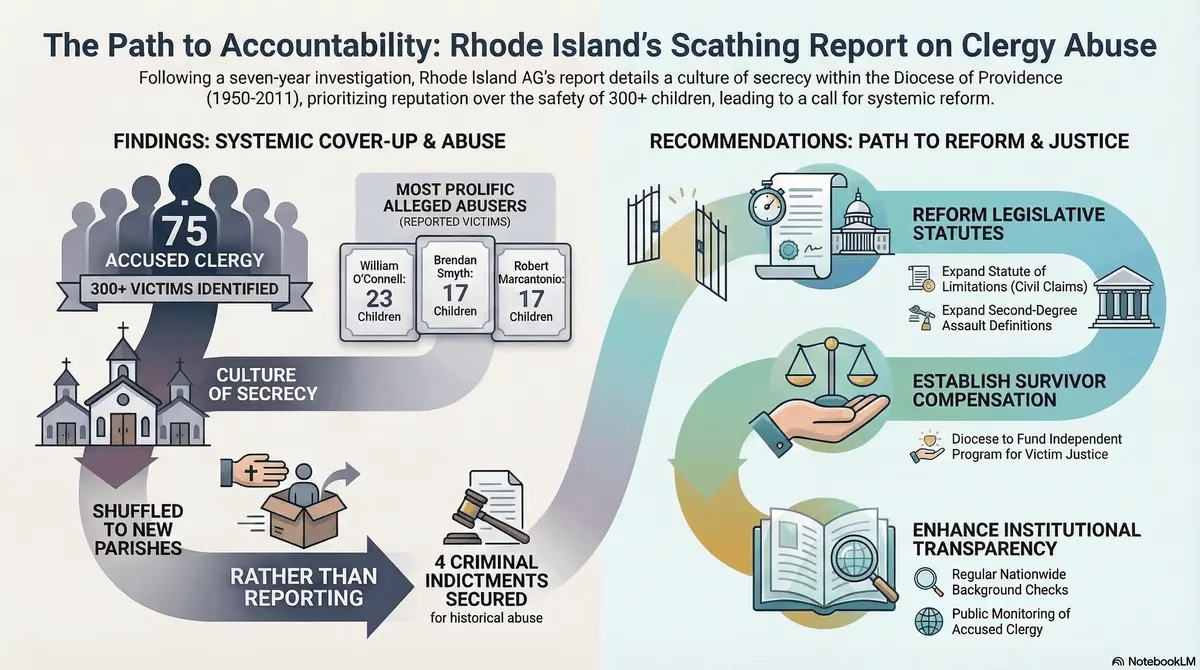
PROVIDENCE — Rhode Island Attorney General Peter Neronha has released a multiyear investigative report detailing widespread clergy sexual abuse and systematic concealment within the Catholic Diocese of Providence. The 284-page document, made public on March 4, 2026, identifies 75 credibly accused clergy members and outlines allegations involving more than 300 victims over a span of 60 years. The investigation, launched in 2019, also led to criminal indictments for four current or former priests.
Below is a detailed breakdown of the findings, the Diocese’s response, and the proposed legal reforms.
Context & Background
How did the investigation begin? The inquiry was initiated in 2019 under a Memorandum of Understanding between the Attorney General’s office and former Bishop Thomas Tobin. Investigators reviewed over 250,000 pages of internal Diocese of Providence records dating back to 1950, attempting to contact more than 300 victims to document the scale of the abuse.
The scope of the abuse The final report confirmed that 61 Diocesan priests and deacons, 13 religious order members, and one extern priest were credibly accused of sexually abusing children between 1950 and 2011. The most prolific alleged abusers—including William O’Connell and Brendan Smyth—reportedly abused a combined total of 85 children in Rhode Island.
The institutional cover-up According to Attorney General Peter Neronha, diocesan leaders maintained a “culture of secrecy” where bishops prioritized the church’s reputation over child safety. During the tenures of Bishop Russell McVinney and Bishop Louis Gelineau, accused priests were frequently sent to “treatment” facilities or transferred to different parishes where they subsequently abused additional children.
The response from the Diocese Current Bishop Bruce Lewandowski issued a video apology to the victims, acknowledging past failures to protect children. However, the Diocese also strongly criticized the report, arguing it offers “untested perspectives,” highlights historical issues already addressed by modern safeguards, and was strategically timed to “sway legislative debate” over the civil statute of limitations.
Q&A: Unpacking the Clergy Abuse Report
Q: How did the Diocese historically manage allegations of child sexual abuse against its clergy?
A: Diocesan leadership actively concealed allegations from civil authorities and prioritized internal, often ineffective, management strategies over public safety.
- Internal Reassignments: Accused clergy were frequently transferred to new parishes, granting them continued access to children.
- Treatment Diversions: Instead of permanently removing abusers from ministry, leaders sent them to “treatment” centers—such as the Queen of the Clergy Villa and the House of Affirmation—before returning them to active service.
- Victim Intimidation: Victims coming forward were frequently subjected to unreliable polygraph tests and told by church officials that they were not credible.
Q: Why were criminal charges only brought against a select few individuals?
A: The expansive historical timeline and restrictive statutes of limitations limited modern prosecutorial options.
- Expired Timeframes: A significant portion of the documented abuse occurred between 1950 and the late 1990s, meaning criminal and civil statutes of limitations had already expired for many cases.
- Recent Indictments: Prosecutors successfully secured indictments for four individuals—John Petrocelli, James Silva, Kevin Fisette, and the late Edward Kelley—for alleged assaults that occurred in the 1980s and 1990s.
- Suspect Mortality: At this time, the exact number of surviving uncharged abusers remains unverified by official sources, but the Diocese noted the average age of the newly identified accused would be over 104 if they were still living.
Q: How do survivors and advocates view the Attorney General’s findings?
A: Survivors consider the report a validating milestone, though many emphasize that it only represents the beginning of the fight for true institutional accountability.
- Restored Credibility: For survivors like Ann Hagan Webb, the report officially recognizes their testimonies after decades of being dismissed as “not credible” by church officials.
- Calls for Accountability: Advocates stress that apologies are insufficient and are demanding financial consequences and legislative changes to allow civil lawsuits against the Diocese.
- Remaining Secrecy: Survivor groups suspect the Diocese has not fully disclosed all internal secrets, citing the refusal of church officials to participate in in-person interviews with investigators.
Q: Why is the Attorney General proposing specific legislative reforms?
A: The proposed reforms aim to eliminate legal barriers that have historically shielded religious institutions from civil and criminal accountability.
- Statute of Limitations: A core proposal seeks to expand the civil window for expired claims, allowing victims to sue the institutions and supervisors that enabled their abuse.
- Mandatory Reporting Laws: The reforms would explicitly mandate that clergy and church supervisors report known or suspected child sexual abuse to civil authorities immediately.
- Grand Jury Transparency: Peter Neronha is pushing to authorize grand juries to issue public reports on their findings even without returning an indictment, addressing current legal constraints that keep such investigations secret.
Q: How are modern safety protocols functioning within the Diocese today?
A: While the Attorney General acknowledged improvements since 2002, the report highlighted ongoing, critical gaps in current policies.
- Policy Inconsistencies: The report found a lack of clear written guidance for internal investigations and inadequate monitoring of living, credibly accused clergy.
- Inadequate Transparency: The Diocese’s official Credibly Accused List was found to be deficient, as investigators identified 20 additional accused individuals known to the church who had been omitted from the public registry.
- Grooming Blind Spots: Investigators noted a concerning failure by the church to proactively recognize, investigate, and discipline early warning signs of abuse, such as “grooming” behaviors.
Editorial Note & Transparency
Verification Log:
- News Reports: Syndicated articles and local news coverage detailing the release and contents of the Rhode Island Attorney General’s report.
- Government Documents: Citations from the official Report on Child Sexual Abuse in the Diocese of Providence.
- Diocesan Statements: Mentions of public statements and video releases by Diocesan leadership regarding the investigation.
Compliance:
- Privacy: This article respects user data under our Privacy Policy.
- Transparency: No sponsored content influenced this reporting.
Contact Us: For corrections or feedback, please email: news.desk@qnanews.com