Category: USA – News

  • FBI Investigates Deadly Old Dominion University Shooting as Act of Terrorism

    FBI Investigates Deadly Old Dominion University Shooting as Act of Terrorism

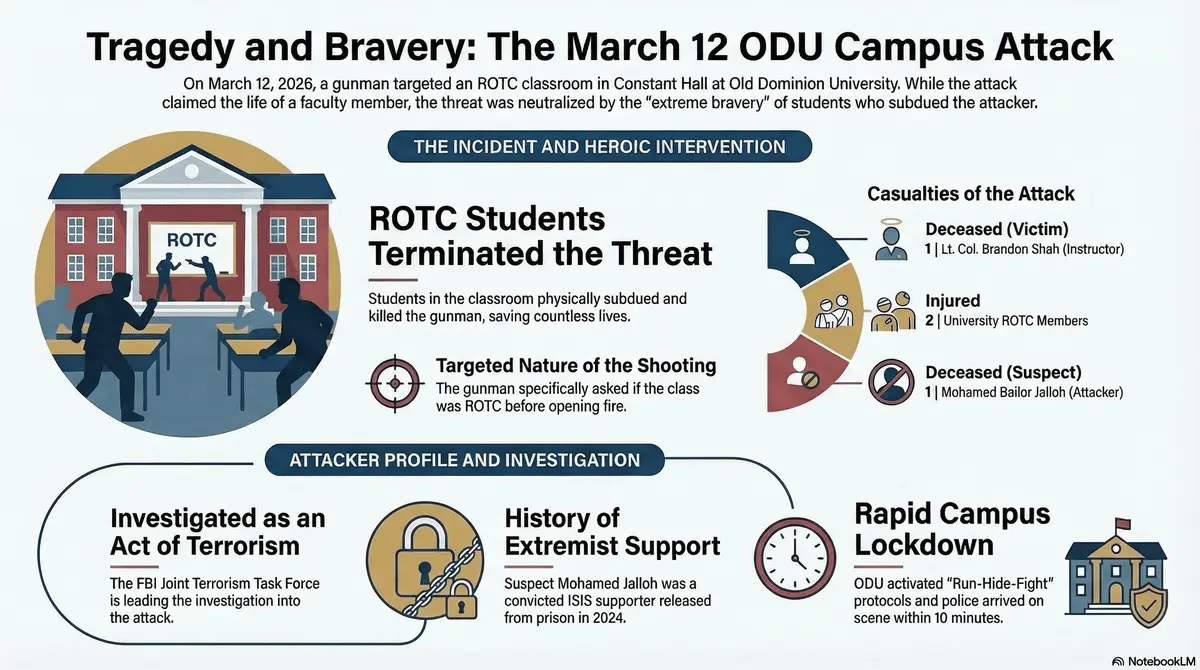
    Norfolk, Virginia — A deadly shooting at Old Dominion University ended when students subdued the armed attacker, leading to two fatalities including the gunman. The incident occurred on the morning of March 12, 2026, when the suspect targeted a military science classroom. The Federal Bureau of Investigation has officially taken over the case, designating it as a potential act of terrorism due to the suspect’s criminal background and actions during the attack.

    Below is a detailed examination of the attack, the suspect’s history, and the ongoing federal investigation.

    Context & Background

    How the Attack Unfolded Shortly before 11:00 a.m. on March 12, 2026, the assailant entered Constant Hall and explicitly asked if the room contained an ROTC class. After receiving confirmation, he shouted “Allahu Akbar” and opened fire, killing the instructor and wounding two others before students physically intervened. The students successfully disarmed and subdued the attacker, resulting in his death without the use of firearms.

    The Key Players The suspect has been identified as Mohamed Bailor Jalloh, a 36-year-old former Army National Guard member. The deceased victim was identified as Lt. Col. Brandon Shah, a decorated military veteran, alumnus of Old Dominion University, and the targeted classroom’s military science instructor. Federal oversight is being led by Kash Patel, the FBI Director, and Dominique Evans, the FBI Special Agent in Charge, who have both praised the students’ rapid response.

    Historical Significance of the Suspect’s Background Mohamed Bailor Jalloh previously pleaded guilty in 2016 to attempting to provide material support to the ISIS terrorist organization. He served a federal prison sentence and was released early in December 2024, which has raised significant questions regarding the federal monitoring of individuals convicted of terrorism-related offenses. The Joint Terrorism Task Force is now heavily involved in analyzing how this prior conviction relates to the current attack.

    Why This Matters This incident highlights the ongoing vulnerabilities on college campuses and the evolving nature of domestic terrorism threats. It also emphasizes the critical role of bystander intervention in active shooter scenarios, as law enforcement officials credit the ROTC students with preventing a much larger mass casualty event.

    Q&A: Unpacking The Old Dominion University Attack

    Q: How was the attacker neutralized before law enforcement arrived on the scene?

    A: The gunman was physically overpowered and killed by the students inside the classroom.

    • Tactical Intervention: Several ROTC students in the targeted classroom immediately confronted and subdued Mohamed Bailor Jalloh after he opened fire.
    • Cause of Death: While the FBI confirmed the suspect was not shot, one law enforcement source indicated the attacker was killed with a knife during the struggle.
    • Casualty Prevention: Kash Patel stated that the rapid response of these students undoubtedly saved numerous lives by terminating the threat within minutes.

    Q: Why is the Federal Bureau of Investigation treating this incident as an act of terrorism?

    A: The designation stems from the suspect’s previous terror conviction and his explicit statements during the attack.

    • Verbal Indicators: Dominique Evans reported that the suspect shouted a religious phrase associated with extremism immediately before opening fire on the classroom.
    • Target Selection: The attacker specifically sought out a military-affiliated target, verifying that the room was an ROTC class before initiating the violence.
    • Criminal History: Mohamed Bailor Jalloh had a prior federal conviction for attempting to support ISIS, making his actions part of a broader, recognized pattern of extremist behavior.

    Q: How did the suspect’s prior conviction for terrorism support occur?

    A: The suspect was arrested in 2016 following an undercover federal sting operation.

    • Informant Contact: Mohamed Bailor Jalloh communicated with overseas ISIS members who connected him with an FBI confidential informant in the United States.
    • Plotting Attacks: Court documents reveal he expressed a desire to conduct an attack similar to the 2009 shooting at Fort Hood, Texas.
    • Weapon Procurement: The suspect was arrested after attempting to purchase an AR-15 assault rifle from a gun store in Virginia, which had been secretly rendered inoperable by authorities.

    Q: Why was a convicted terrorism supporter released prior to the completion of his sentence?

    A: The suspect was released early from federal custody in December 2024, though the exact legal mechanisms remain under scrutiny.

    • Sentencing Discrepancy: Despite prosecutors requesting a 20-year sentence in 2017, a federal judge sentenced him to 11 years in prison with five years of supervised release.
    • Early Release Status: He left the custody of the Federal Bureau of Prisons in December 2024, years before his full sentence or supervised release terms would have concluded.
    • Unverified Circumstances: At this time, the exact administrative or legal reasoning for his early release remains unverified by official sources.

    Q: How has the university and local government responded to the tragedy?

    A: Officials have suspended operations and initiated widespread community support protocols.

    • Campus Closures: Brian O. Hemphill canceled all classes and operations on the main campus through Friday, March 13, 2026, to allow for mourning and a thorough police investigation.
    • Mental Health Support: The university deployed comprehensive counseling services, a 24/7 peer support community called Talk Campus, and established a Family Information Center at the Chartway Arena.
    • State Mobilization: Abigail Spanberger mobilized state emergency resources to assist the university and the city of Norfolk, Virginia.

    Editorial Note & Transparency

    Verification Log:

    • Law Enforcement Statements: Press conference transcripts and official statements from the Federal Bureau of Investigation and Norfolk Police Department regarding the suspect and investigation.
    • University Communications: Official emergency alerts and public letters distributed by Old Dominion University leadership regarding campus closures and support services.
    • Court Records: Federal sentencing documents and Department of Justice press releases documenting the suspect’s 2016 terrorism conviction and subsequent release.

    Compliance:

    • Privacy: This article respects user data under our Privacy Policy.
    • Transparency: No sponsored content influenced this reporting.

    Contact Us: For corrections or feedback, please email: news.desk@qnanews.com

  • Investigation Underway Following Deadly Vehicle Ramming at Michigan Synagogue

    Investigation Underway Following Deadly Vehicle Ramming at Michigan Synagogue

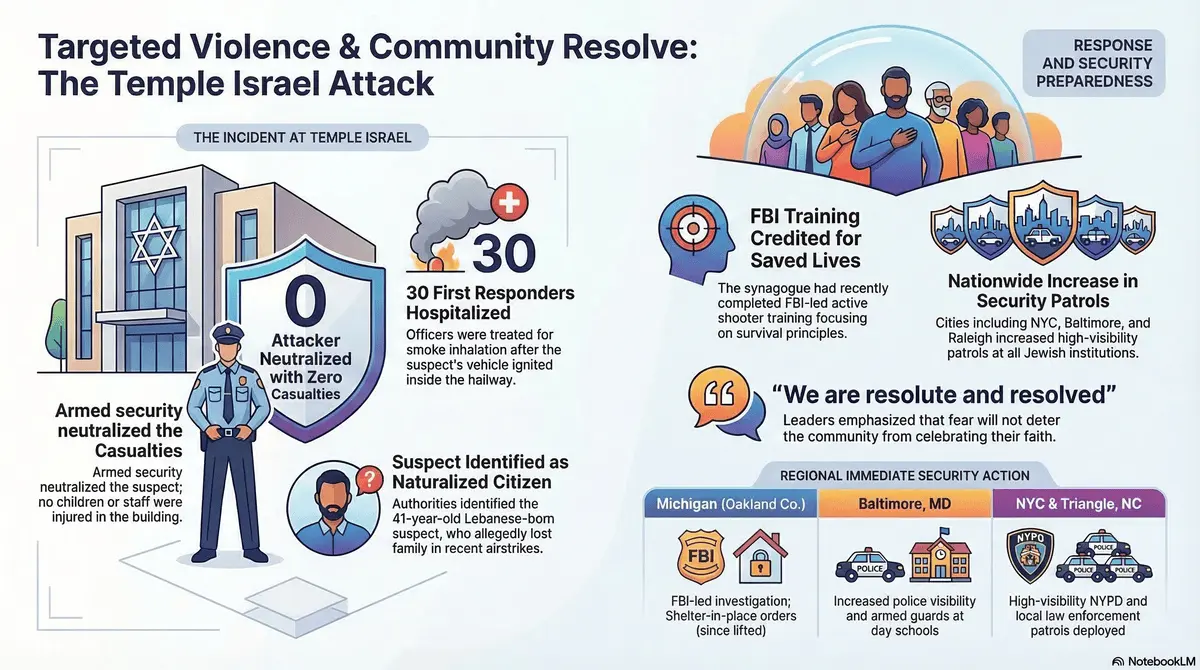
    West Bloomfield Township, Michigan — Federal and local authorities are investigating a targeted act of violence after a driver rammed a truck into a large Jewish synagogue, resulting in a fatal confrontation with on-site security personnel. The incident occurred on March 12, 2026, when the suspect breached the doors of the facility before being shot by an armed guard. At least 30 first responders sustained smoke inhalation injuries after the suspect’s vehicle caught fire, while all students and congregational staff remained unharmed.

    Below is a detailed examination of the attack, the swift security response, and the broader implications for community safety.

    Context & Background

    How did the attack unfold? On the afternoon of the incident, the attacker drove a vehicle directly into the glass doors of Temple Israel, plunging nearly forty feet down a hallway before coming to a stop. A lead member of the synagogue’s security team was struck and knocked unconscious, prompting another guard to engage the driver with gunfire. The suspect’s vehicle subsequently caught fire due to an unidentified ignited substance, leading to severe smoke conditions inside the facility.

    Who are the key figures in the investigation? The primary suspect, identified by the Department of Homeland Security as Ayman Mohamad Ghazali, was a 41-year-old naturalized American citizen originally from Lebanon. The Federal Bureau of Investigation (FBI), led by Special Agent in Charge Jennifer Runyan, has assumed control of the inquiry, designating the event as a targeted act of violence against the Jewish community. Local figures, including Oakland County Sheriff Michael Bouchard, are assisting in securing the site and determining the precise cause of the fire and the suspect’s death.

    What is the historical significance of the targeted location? Temple Israel is recognized as the largest Reform synagogue in the United States, serving approximately 12,000 congregants and housing a large early childhood education center. Founded in 1941, it represents a central pillar of the Jewish community in suburban Detroit. The facility’s high profile and significant population make it a sensitive target, particularly amidst rising national concerns regarding antisemitic violence.

    Why does the immediate security response matter? The incident underscores the critical value of specialized emergency training for houses of worship. In January, the FBI Detroit Field Office conducted an active shooter preparedness course at Temple Israel, focusing on critical decision-making under extreme pressure. Officials credit this recent preparation, alongside the presence of armed security, for preventing casualties among the 140 students and staff present during the breach.

    Q&A: Unpacking the Synagogue Ramming Attack

    Q: How did ongoing international conflicts reportedly influence the suspect’s motivations?

    A: Preliminary reports suggest the suspect recently suffered personal tragedies linked to the escalating war in the Middle East.

    • Recent Family Losses: Sources within the local Lebanese American community indicate that Ayman Mohamad Ghazali lost two brothers and two nieces or nephews in a recent military airstrike in Lebanon.
    • Psychological Impact: Following the strike roughly ten days prior, the suspect reportedly experienced severe trauma, ceased working, and exhibited alarming behavior, such as instructing his ex-wife to care for their children shortly before the attack.
    • Official Verification Status: At this time, a direct political or terror-related motive linking his family’s deaths to the synagogue attack remains unverified by official sources.

    Q: Why was the threat neutralized without further civilian casualties?

    A: The synagogue’s pre-established security protocols and recent federal training empowered staff to isolate the threat instantly.

    • Armed Confrontation: An on-site security guard immediately discharged his weapon at the suspect after the vehicle breached the facility and struck a colleague.
    • Prior Federal Training: Clergy and staff had completed a scenario-based training program organized by the FBI just weeks prior to the incident.
    • Successful Evacuation: Teachers swiftly applied their training to secure all 140 early childhood center students, who were successfully evacuated and sheltered at a neighboring country club.

    Q: How are law enforcement agencies managing the complex crime scene?

    A: Authorities are treating the heavily damaged building as a potential explosive hazard while federal agencies assume jurisdictional control.

    • Explosive Device Protocols: Bomb squads deployed canine units to sweep the burned vehicle for improvised explosives due to initial reports of chemical agents or mortar-type materials inside the cab.
    • Multi-Agency Coordination: The FBI is spearheading the investigation into the targeted violence, with support from the Bureau of Alcohol, Tobacco, Firearms and Explosives (ATF) and local county sheriff’s deputies.
    • First Responder Injuries: Over thirty police officers and emergency medical personnel required hospital treatment for smoke inhalation due to the intense vehicle fire.

    Q: Why have local officials implemented heightened security postures across the region?

    A: The attack has triggered widespread precautionary measures to protect religious and educational institutions from potential copycat or subsequent threats.

    • Increased Police Patrols: The Michigan State Police and surrounding municipal departments have surged high-visibility patrols around area synagogues and churches.
    • Regional Lockdowns: The Jewish Federation of Detroit temporarily initiated lockout protocols for all affiliated organizations throughout Southeast Michigan before the immediate threat was deemed neutralized.
    • National Ripple Effects: Police departments in major metropolitan areas, including New York City and Washington, D.C., announced increased security measures at Jewish cultural sites.

    Q: How has the political leadership responded to the crisis?

    A: Bipartisan political figures have universally condemned the attack and pledged resources to combat antisemitism.

    • State Level Condemnation: Michigan Governor Gretchen Whitmer characterized the event as a “nightmare” and reiterated that antisemitic violence has no place in the state.
    • Federal Commentary: President Donald Trump stated he was fully briefed on the incident, calling it a “terrible thing” while pledging to uncover the underlying details.
    • Legislative Action Calls: Local representatives have urged Congress to allocate further federal funding to protect houses of worship from escalating hate crimes.

    Editorial Note & Transparency

    Verification Log:

    • Official Statements: Press conferences by Oakland County Sheriff Michael Bouchard and FBI Special Agent Jennifer Runyan.
    • Federal Documents: Statements from the Department of Homeland Security verifying the suspect’s citizenship status and background.
    • Local Reporting: Dispatches from local broadcast networks and community sources confirming details of the suspect’s background and synagogue operations.

    Compliance:

    • Privacy: This article respects user data under our Privacy Policy.
    • Transparency: No sponsored content influenced this reporting.

    Contact Us: For corrections or feedback, please email: news.desk@qnanews.com

  • Georgia 14th Congressional District Special Election Advances to Runoff

    Georgia 14th Congressional District Special Election Advances to Runoff

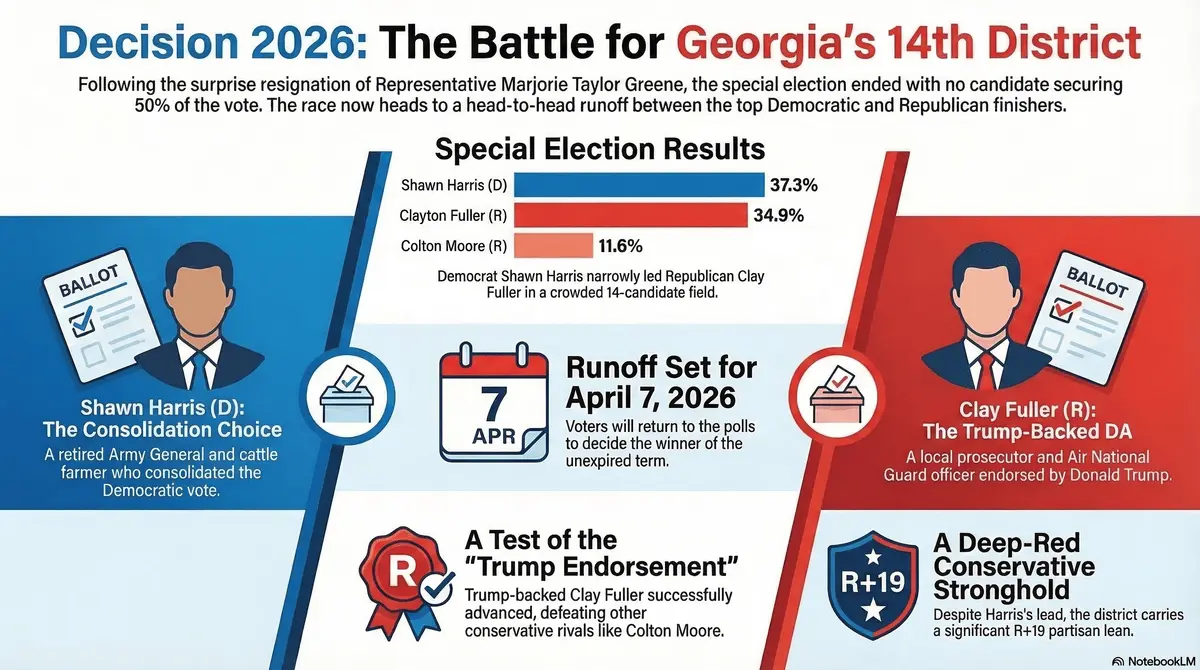
    Rome, Georgia / Atlanta, Georgia — Democrat Shawn Harris and Republican Clayton Fuller are heading to a runoff election to fill the vacant seat previously held by former Representative Marjorie Taylor Greene. The general primary yielded no clear majority on March 10, 2026, triggering a head-to-head contest scheduled for April 7, 2026. The race is closely watched as a gauge of former President Donald Trump‘s political influence and could impact the narrow Republican majority in the U.S. House of Representatives.

    Below is a detailed examination of the candidates, the district’s political landscape, and the broader implications of this race.

    Context & Background

    How did this vacancy occur? The seat for Georgia’s 14th Congressional District became vacant when Marjorie Taylor Greene resigned in January. Her departure followed a highly public break with Donald Trump over issues including foreign policy regarding Iran and the release of documents related to Jeffrey Epstein. This fracture ultimately created an open special election featuring a crowded field of 17 candidates spanning multiple parties.

    Who are the key candidates? The runoff will feature Democrat Shawn Harris, a retired Army brigadier general and cattle farmer who previously challenged Marjorie Taylor Greene in 2024. He faces Republican Clayton Fuller, a local district attorney, Air National Guard officer, and former White House fellow who received a crucial endorsement from Donald Trump in February.

    What is the historical significance of this district? The district, located in northwest Georgia, is heavily conservative and widely considered a safe Republican stronghold where Donald Trump carried 68 percent of the vote in 2024. Despite the deep-red demographics, Shawn Harris led the initial vote tally with over 37 percent of the vote due to the fragmentation of the conservative base across multiple candidates, including right-wing figure Colton Moore.

    Why does this runoff matter? Beyond replacing a high-profile conservative figure, the outcome of this race will impact the narrow Republican majority in the House, which currently stands at 218 to 214 seats. Furthermore, it serves as a critical test of Donald Trump‘s endorsement power, particularly as Clayton Fuller seeks to unify the conservative electorate against a unified Democratic coalition in the coming weeks.

    Q&A: Unpacking The Georgia Special Election

    Q: How did the crowded primary field impact the election results?

    A: The presence of numerous candidates splintered the conservative vote, allowing the leading Democrat to secure a slight plurality.

    • Democratic Consolidation: Shawn Harris benefited from a unified Democratic base, capturing 37.3 percent of the vote as the primary candidate of his party.
    • Republican Fragmentation: The inclusion of nine Republican candidates, such as former state senator Colton Moore, divided the majority conservative electorate, preventing any single Republican from breaking 50 percent.
    • Runoff Trigger: Because no single candidate secured an outright majority on March 10, 2026, the top two vote-getters automatically advanced to the final contest.

    Q: Why was Donald Trump’s endorsement crucial for Clayton Fuller?

    A: The endorsement elevated Clayton Fuller above other conservative contenders by signaling official alignment with the MAGA movement.

    • Endorsement Boost: Donald Trump publicly backed Clayton Fuller during a rally in Rome, Georgia, which the candidate subsequently described as “rocket fuel” for his campaign.
    • Voter Alignment: Many constituents in the district look to Donald Trump for guidance, citing a desire for a representative who will firmly support his America First agenda rather than prioritizing personal celebrity.
    • Candidate Differentiation: In a field where multiple candidates claimed loyalty to the former president, the official endorsement helped Clayton Fuller bypass hardline challengers and establish himself as the presumptive conservative choice.

    Q: How is Shawn Harris attempting to flip a deep-red district?

    A: Shawn Harris is leveraging a moderate platform and significant fundraising to appeal to a broad coalition of voters disillusioned with partisan extremes.

    • Coalition Building: He aims to attract Democrats, independents, and moderate Republicans who are seeking a departure from the combative style of Marjorie Taylor Greene.
    • Financial Advantage: His campaign has raised over $4.3 million, giving him a substantial financial edge over his opponents heading into the runoff.
    • Focus on Local Issues: Shawn Harris is emphasizing practical economic concerns, such as the cost of groceries and living expenses, over national partisan grievances.

    Q: Why did Marjorie Taylor Greene resign from this seat?

    A: Her resignation followed escalating tensions and a public fracture with Donald Trump over various policy and political disagreements.

    • Epstein Files Dispute: A significant breaking point was her criticism of Donald Trump‘s reluctance to release documents related to convicted sex offender Jeffrey Epstein.
    • Foreign Policy Clashes: She vocally opposed the administration’s foreign policy actions, particularly concerning military strikes and potential conflict involving Iran.
    • Primary Threat: Donald Trump eventually threatened to support a primary challenge against her, prompting her to step down in January to avoid a divisive intra-party battle.

    Q: How does the voting system for overseas military personnel differ from the general electorate in this race?

    A: Georgia employs ranked-choice voting for military and overseas voters to streamline the runoff process, despite Republican opposition to the system domestically.

    • Instant Runoff Mechanism: Military voters submit a ranked-choice ballot that automatically reassigns their vote to their next preference if no candidate wins an outright majority, acting as an instant runoff.
    • Logistical Necessity: This method ensures that military personnel deployed overseas have their votes counted within the federally mandated 45-day window without needing to wait for a second physical ballot.
    • Political Controversy: While utilized effectively for overseas service members in Georgia, ranked-choice voting remains highly contested, with many Republican lawmakers actively pushing to ban its use for the general public.

    Editorial Note & Transparency

    Verification Log:

    • Local & National Reporting: Coverage utilized from local affiliates (Local 3 News, WTVC) and national broadcasters (NPR, PBS News) to confirm election mechanisms and candidate statements.
    • Election Data: Vote percentages and runoff confirmations sourced from the Associated Press Decision Team.
    • Candidate Statements: Direct quotes and campaign strategies gathered from post-election watch parties and verified public appearances in Rome, Georgia.

    Compliance:

    • Privacy: This article respects user data under our Privacy Policy.
    • Transparency: No sponsored content influenced this reporting.

    Contact Us: For corrections or feedback, please email: news.desk@qnanews.com

  • TSA Staffing Shortages Trigger Severe Airport Delays Amid DHS Shutdown

    TSA Staffing Shortages Trigger Severe Airport Delays Amid DHS Shutdown

    Houston/New Orleans — Travelers are facing unprecedented delays at security checkpoints due to severe Transportation Security Administration (TSA) staffing shortages linked to a partial government shutdown. On March 8, 2026, lines extended up to three hours at major hubs as the spring break travel rush began. The disruption comes as unpaid federal workers face increasing financial hardship, prompting absences that are straining aviation infrastructure.

    Below is a detailed examination of the shutdown’s impact on air travel and the political standoff fueling it.

    Context & Background

    How did this start? The impasse began when funding for the Department of Homeland Security expired in mid-February, following a stalemate in Congress. Democratic lawmakers refused to pass a funding bill without instituting reforms for U.S. Immigration and Customs Enforcement and U.S. Customs and Border Protection after federal agents killed two Americans, Renee Good and Alex Pretti, in Minneapolis in January.

    The key players The crisis features Congressional Democrats, led by figures like Sen. Chuck Schumer and Sen. Patty Murray, who demand accountability, and Republicans, alongside President Donald Trump, who argue sufficient changes were already made. Aviation industry leaders, including Chris Sununu of Airlines for America and Geoff Freeman of the U.S. Travel Association, are actively lobbying Congress to resolve the crisis and ensure essential workers are paid. Furthermore, President Donald Trump announced the dismissal of DHS Secretary Kristi Noem, planning to nominate Sen. Markwayne Mullin as her replacement amid the ongoing turmoil.

    Why this matters The shutdown forces essential TSA officers to work without pay, leading to a rise in unscheduled absences as workers face their first completely missed paycheck. With spring break passenger volumes expected to hit record highs, the staffing crisis has caused crippling bottlenecks, forcing facilities like William P. Hobby Airport in Houston to recommend arriving up to five hours early.

    Q&A: Unpacking the DHS Shutdown and Travel Disruptions

    Q: How are TSA staffing shortages directly affecting airport operations?

    A: Reduced personnel numbers have crippled security checkpoint capacities, leading to massive queues and suspended expedited screening services.

    • Wait Time Escalation: Average wait times hit two to three hours at airports in New Orleans, Houston, and Atlanta, with lines frequently spilling into parking garages and baggage claim areas.
    • Service Suspensions: Expedited programs like Global Entry have been fully suspended, and PreCheck lanes at specific hubs like William P. Hobby Airport have faced closures due to limited capacity.
    • Traveler Impact: The bottlenecks have caused numerous travelers to miss flights, leading to cascading scheduling disruptions across the aviation system.

    Q: Why are aviation industry leaders so concerned about the prolonged shutdown?

    A: Trade associations fear that continued missed paychecks will exacerbate sickouts and trigger mass resignations during one of the busiest travel periods of the year.

    • Financial Strain: TSA screeners, who earn an average salary of around $35,000, are facing severe financial hardship, forcing many to rotate taking unpaid days off to save on commuting costs.
    • Spring Break Volume: The industry expects to screen an average of 2.8 million passengers per day in March and April, an all-time high that current staffing levels cannot accommodate.
    • Economic Toll: Industry advocates note that a previous shutdown caused 9,000 flights to be delayed or canceled, resulting in billions of dollars in economic losses.

    Q: How are the political dynamics in Washington stalling a resolution?

    A: Deeply entrenched partisan positions regarding immigration enforcement reforms have prevented the passage of any DHS funding legislation.

    • Democratic Demands: Lawmakers are insisting on new checks for DHS law enforcement personnel, including barring face masks and tightening warrant rules, before approving a budget.
    • Republican Stance: GOP leaders and the administration maintain that the demands are political stunts and that necessary operational changes have already been implemented following the Minneapolis incident.
    • Legislative Gridlock: While the House recently advanced a spending bill for DHS, it was approved largely along party lines and failed to gain the necessary 60 votes in the Senate.

    Q: How are airports and airlines responding to the immediate crisis?

    A: Local aviation authorities and airlines are implementing emergency crowd control and communication measures while lobbying for a swift political resolution.

    • Passenger Advisories: Hubs such as William P. Hobby Airport are broadcasting warnings urging travelers to arrive four to five hours early to accommodate the prolonged screening times.
    • Crowd Management: Airport staff and local law enforcement are being deployed to organize winding queues that have breached standard security zones and entered parking garages.
    • Worker Support: Aviation partners are attempting to alleviate the financial burden on TSA agents by distributing food and gas gift cards, though industry leaders note these gestures cannot replace standard payroll.

    Q: Why is the suspension of expedited screening programs exacerbating the delays?

    A: The halt of trusted traveler programs has funneled highly vetted passengers into standard security lanes, severely restricting overall checkpoint throughput.

    • Global Entry Pause: The suspension of the Global Entry program has forced international arrivals into standard customs lines, eliminating a critical shortcut for frequent travelers.
    • PreCheck Disruptions: While officially operational, TSA PreCheck lanes have faced intermittent closures at facilities like William P. Hobby Airport due to the sheer lack of available agents to staff them.
    • Systemic Bottlenecks: Industry advocates argue that pausing these programs forces pre-approved, low-risk travelers into general queues, unnecessarily compounding the congestion during peak travel windows.

    Editorial Note & Transparency

    Verification Log:

    • News Reports: Aggregated coverage detailing airport wait times, traveler testimonies, and the political standoff in Washington.
    • Official Statements: Quotes and press releases from trade groups like Airlines for America and the U.S. Travel Association, as well as comments from DHS officials like Lauren Bis.
    • Airport Advisories: Official alerts and social media updates from Louis Armstrong New Orleans International Airport, William P. Hobby Airport, and Hartsfield-Jackson Atlanta International Airport regarding recommended arrival times.

    Compliance:

    • Privacy: This article respects user data under our Privacy Policy.
    • Transparency: No sponsored content influenced this reporting.

    Contact Us: For corrections or feedback, please email: news.desk@qnanews.com

  • Deadly Tornadoes Devastate Southwest Michigan Counties

    Deadly Tornadoes Devastate Southwest Michigan Counties

    Three Rivers/Union City — A series of destructive tornadoes swept through southwest Michigan, causing multiple fatalities, widespread structural damage, and massive power outages. The severe weather event resulted in at least four confirmed deaths and over a dozen injuries across several counties on Friday, March 6, 2026. Local authorities have declared states of emergency and established shelters as rescue and recovery operations continue across the affected regions.

    Below is a detailed breakdown of the storm’s impact and ongoing recovery efforts.

    Context & Background

    How did this storm system develop? The severe weather outbreak was part of a massive storm system threatening over seven million Americans across a broad zone stretching from Texas to Michigan. The National Weather Service issued multiple warnings as a tornadic supercell tracked eastward, spawning violent, rotating columns of air that eventually touched down in Cass County, St. Joseph County, and Branch County.

    What are the reported casualties and damage? Authorities have confirmed four fatalities resulting from the storms: one individual in Cass County and three individuals in the Union Lake area of Branch County. Structural devastation is extensive, with roofs torn from commercial buildings like the Menards in Three Rivers, numerous homes shredded to pieces on residential streets like Douglas Avenue and Grant Avenue, and massive power grid failures affecting thousands.

    How are local governments responding? In response to the catastrophic destruction, Cass County officials immediately declared a local state of emergency to facilitate rapid resource deployment. Emergency operations centers and mobile command units were activated, while the American Red Cross opened a shelter at Riverside Church in Three Rivers to assist displaced residents.

    Q&A: Unpacking the Southwest Michigan Tornadoes

    Q: How did the tornado specifically impact commercial and medical infrastructure in Three Rivers?

    A: The storm severely damaged major retail structures while medical facilities remained functional despite exterior damage.

    • Retail Destruction: The Menards home improvement store located at US-131 and Broadway Road experienced a partial roof collapse and its front sign was completely torn away by the intense winds.
    • Medical Facility Continuity: The Three Rivers Health Hospital and several campus clinics sustained exterior damage, but operations continued without interruption to patient care.
    • Casualty Status: Fortunately, no staff or patients were reported injured at the medical facilities during the severe weather event.

    Q: Why are authorities urging residents to avoid travel in the hardest-hit areas like Union City?

    A: Officials need to keep roadways clear to facilitate urgent emergency response and infrastructure repair.

    • Emergency Access: Extra civilian traffic creates significant obstacles for emergency vehicles navigating debris-filled roadways.
    • Hazard Mitigation: The area contains numerous dangerous environmental hazards, including downed power lines, fallen trees, and unstable structures that pose a threat to public safety.
    • Utility Restoration: Utility workers from Consumers Energy require unobstructed access to restore electricity for over 2,200 residents left without power.

    Q: How are emergency services conducting search and recovery operations in Branch County?

    A: Law enforcement and emergency personnel are deploying specialized resources to locate victims and assess the extensive damage.

    • Specialized Units: News crews observed the use of drones and K-9 units searching fields near Tuttle Road in Union City to locate potential victims.
    • Fatality Confirmation: The Branch County Medical Examiner was dispatched to the scene following reports of significant casualties in the area.
    • Unverified Reports: At this time, the presence of specific body bags in the surveyed fields remains unverified by official sources.

    Q: Why was the timeline of the storm’s progression critical for resident safety?

    A: The rapid movement of the tornadic supercell left residents with minimal time to seek adequate shelter.

    • Warning Issuance: The initial tornado warning was issued around 3:15 p.m. for a storm near Cassopolis.
    • Rapid Progression: The system quickly tracked into St. Joseph County, touching down near Three Rivers around 4:00 p.m., forcing residents like Nelson Storms to dive into basements mere seconds before their homes were destroyed.
    • Secondary Touchdown: The storm continued its destructive path, hitting the Union City area at approximately 4:40 p.m., compounding the regional emergency.

    Q: How does this event fit into the broader national weather patterns observed during this period?

    A: The Michigan tornadoes were part of a widespread and deadly early spring storm system affecting multiple states.

    • National Risk Zone: Over 7 million Americans were placed at the highest risk for severe weather in a corridor stretching from Texas to Michigan.
    • Previous Casualties: Just one day prior, on Thursday, the same broader weather system was linked to the deaths of a 47-year-old mother and her 13-year-old daughter in Fairview, Oklahoma.
    • Ongoing Investigations: The National Weather Service is currently conducting storm surveys across several states to officially categorize the size and strength of these early-season tornadoes.

    Editorial Note & Transparency

    Verification Log:

    • Local News Reports: Coverage and damage assessments from WNDU, WWMT, WSBT, and WTVB regarding local casualty numbers and infrastructure impact.
    • Official Statements: Emergency communications from the Cass County Sheriff’s Office, Branch County Sheriff’s Office, and Michigan State Police.
    • Meteorological Data: Weather tracking, storm timelines, and threat assessments provided by the National Weather Service and the Storm Prediction Center.

    Compliance:

    • Privacy: This article respects user data under our Privacy Policy.
    • Transparency: No sponsored content influenced this reporting.

    Contact Us: For corrections or feedback, please email: news.desk@qnanews.com

  • Evaluating the Strategic Exploitation of Ethnic Fault Lines in Iran

    Evaluating the Strategic Exploitation of Ethnic Fault Lines in Iran

    Washington/Tehran — Reports indicate that military and intelligence planners in the United States and Israel are allegedly exploring strategies to destabilize Iran from within by exploiting historical ethnic tensions and supporting regional separatist groups. As the regional conflict escalated following intense strikes on March 4, 2026, discussions surrounding internal fragmentation as an alternative to a full-scale ground invasion have gained prominent attention. This evolving strategy aims to leverage minority grievances to overwhelm the central government, though international analysts warn it carries profound risks of sparking uncontrollable regional warfare.

    Below is a detailed examination of the ethnic dynamics, strategic calculations, and potential regional impacts of this approach.

    Context & Background

    The Ethnic Demographics of Iran Iran is a deeply diverse nation of roughly 90 million people, where ethnic Persians constitute approximately 50 to 60 percent of the population. The remaining demographic landscape includes significant minority groups such as Azeris (16 percent), Kurds (9 to 10 percent), as well as Lurs, Baloch, Arabs, and Turkmens. These groups experience drastically different levels of integration within the state, fundamentally altering how they interact with the central government and the Islamic Revolutionary Guard Corps (IRGC).

    Historical Significance of State Centralization Modern state consolidation in Iran began under the rule of Reza Shah Pahlavi in 1925, but it was the 1979 Islamic Revolution that cemented a highly centralized theocratic and security state. The government rapidly constructed a massive security apparatus centered around the IRGC, which was tasked with defending the ideological legacy of the revolution. Over the decades, this security infrastructure has primarily suppressed, rather than resolved, the deeply rooted ethnic separatist tensions across the country.

    The Key Players in Kurdish Opposition Kurdish fighters, concentrated near the border of northern Iraq, are widely considered the most organized segment of the broader Iranian opposition movement. Organizations like the Kurdistan Democratic Party of Iran (KDPI) maintain thousands of combatants and have recently issued statements hinting at imminent action against the state. Analysts note these groups are attractive to foreign intelligence services because they offer a structured, armed resistance capable of forcing the state to redirect military resources internally.

    Why This Strategy Carries Severe Risks Historians and foreign policy analysts draw uncomfortable parallels between this strategy and the 1990s disintegration of Yugoslavia, warning that the collapse of a heavily centralized state can trigger prolonged fragmentation and massive human tragedy. Fanning the flames of ethnic insurgencies threatens to displace up to eight million people rapidly and could easily spill across borders, dragging neighboring nations into a widespread conflagration.

    Q&A: Unpacking Internal Destabilization Strategies

    Q: WHY might military planners in the United States and Israel view ethnic insurgencies as a viable alternative to conventional warfare?

    A: Planners may view internal insurgencies as a mechanism to degrade the regime’s authority and infrastructure without the need to deploy their own ground troops.

    • Proxy Utilization: Employing organized minority factions provides “boots on the ground” to directly challenge the IRGC, forcing the government into a multi-front domestic war.
    • Cascading Unrest: Strategists calculate that a successful armed offensive by minority groups could overwhelm security forces, creating a cascading effect that encourages broader civilian populations to return to street protests.
    • Safe Zone Creation: Similar to the strategy used in Afghanistan in 2001, Kurdish fighters could potentially carve out autonomous zones where foreign special forces could operate safely.

    Q: HOW do the unique political and social dynamics of different minority groups complicate any unified strategy of destabilization?

    A: The varying degrees of societal integration and differing political objectives among minorities make a cohesive national uprising highly improbable.

    • Kurdish Political Aspirations: Kurdish organizations primarily seek regional self-determination or a federalist structure, maintaining a relatively organized political and military apparatus.
    • Baloch Radicalization: The Baloch insurgency in southeastern Iran is dominated by radical Sunni organizations deeply embedded in transnational smuggling economies spanning into Pakistan, presenting a vastly different dynamic than the Kurdish struggle.
    • Azeri Integration: Despite being the largest minority, Azeris are highly integrated into the state apparatus—demonstrated by the heritage of leaders like Ayatollah Ali Khamenei and President Masoud Pezeshkian—making them difficult to mobilize against the government.

    Q: WHY would the weaponization of Iranian ethnic fault lines pose severe security threats to neighboring nations?

    A: Because ethnic groups in the region are transnational, igniting conflicts within Iran would inevitably draw neighboring states into the violence.

    • Turkish Security Threats: Arming Kurdish rebels inherently threatens Turkey and Syria, both of which view armed Kurdish autonomy movements as existential threats to their own territorial sovereignty.
    • Af-Pak Frontier Volatility: Elevating the Baloch insurgency would severely destabilize the volatile border regions of Pakistan and Afghanistan, potentially triggering wider regional chaos.
    • Caucasus Instability: Encouraging hostility or unrest among the Azeri population risks spilling over into the Caucasus, destabilizing Azerbaijan.

    Q: HOW do prominent figures within the broader Iranian opposition view the potential armament of ethnic separatist groups?

    A: Leading opposition figures strongly oppose ethnic separatism, viewing it as a direct threat to the nation’s historical territorial integrity.

    • Nationalist Pushback: Opposition figures like Reza Pahlavi have explicitly condemned coalitions of Kurdish groups seeking self-determination, declaring that the territorial integrity of Iran is the “ultimate red line”.
    • Federalist Justifications: Some minority representatives, such as Arash Saleh, argue that their goal is a federalized state to ensure inclusion, but this does little to assuage fears of national balkanization.
    • Internal Fracturing: Relying heavily on minority militias risks putting foreign governments on a collision course with Persian nationalist opposition groups, thereby fracturing the broader anti-regime movement.

    Q: WHY is the concept of a “New Middle East” frequently referenced by critics of this fragmentation strategy?

    A: The concept represents a highly controversial geopolitical doctrine that theorizes regional security can be achieved by erasing existing borders and breaking rivals into smaller ethnic statelets.

    • Strategic Lineage: This vision of pulverizing rivals into fragments has historically been a core component of hardline Israeli strategies, particularly associated with figures like Benjamin Netanyahu.
    • Warlordism Realities: Critics assert that this doctrine ignores historical precedents, arguing that state collapse inevitably leads to decentralized warlordism and the proliferation of loose weapons, rather than compliant micro-states.
    • Mass Displacement: Implementing this theory could trigger an unprecedented refugee crisis, potentially displacing millions of civilians and devastating the economic stability of surrounding Gulf states.

    Q: HOW are foreign intelligence agencies reportedly interacting with these ethnic insurgent groups?

    A: Media reports claim intelligence agencies are actively arming and coordinating with rebel factions, though these claims face strong official pushback.

    • Alleged Armament Programs: Several reports suggest that the CIA is actively working to arm Iranian Kurdish forces in an attempt to foment a coordinated uprising against the state.
    • Official Denials: The White House has publicly characterized stories of arming the rebels as “completely false,” although they have confirmed that diplomatic discussions with Kurdish leaders have taken place.
    • Verification Status: At this time, the direct armament of separatist groups by foreign intelligence agencies remains unverified by official sources.

    Editorial Note & Transparency

    Verification Log:

    • Media Report: Detailed demographic breakdowns and historical context sourced from regional analyses and international press reporting.
    • Geopolitical Analysis: Strategic assessments regarding the risks of state fragmentation sourced from defense and foreign policy researchers.
    • Official Statement: Responses from government spokespeople regarding alleged intelligence operations with minority groups.

    Compliance:

    • Privacy: This article respects user data under our Privacy Policy.
    • Transparency: No sponsored content influenced this reporting.

    Contact Us: For corrections or feedback, please email: news.desk@qnanews.com

  • Russia Supplies Iran with Intelligence on US Military Positions

    Russia Supplies Iran with Intelligence on US Military Positions

    Washington, D.C.Russia is reportedly providing Iran with critical intelligence regarding the locations of United States military assets in the Middle East, including warships, aircraft, and communication systems. This development, confirmed by U.S. officials on March 6, 2026, represents the first indication of Moscow playing a direct, supportive role in the escalating conflict between Iran, Israel, and the U.S..

    Below is a detailed breakdown of the intelligence-sharing arrangement and its geopolitical implications.

    Context & Background

    The Scope of Intelligence Sharing Russia has begun supplying Tehran with precise targeting data, including satellite imagery of U.S. bases, radars, and naval vessels. This assistance compensates for the Iranian military’s degraded surveillance capabilities, which were significantly impaired following recent U.S. and Israeli airstrikes.

    The Administration’s Response The Donald Trump administration has largely downplayed the impact of Moscow‘s assistance to Iran, with White House Press Secretary Karoline Leavitt stating that the intelligence sharing does not matter because the U.S. military is actively decimating the Iranian regime. Furthermore, Defense Secretary Pete Hegseth asserted that the military is tracking all back-channel communications and that U.S. forces are not in increased danger.

    Geopolitical Motivations The alliance between Vladimir Putin and Iran has deepened amid the ongoing war in Ukraine, where Russia relies heavily on Iranian-made Shahed drones. Because Moscow is facing its own severe hardware shortages, sharing actionable intelligence is the most immediate and valuable asset it can offer Tehran without depleting its own military stocks.

    Congressional Pushback Lawmakers from both parties have criticized the White House’s dismissal of the threat, viewing the intelligence sharing as a severe escalation that directly endangers American lives. Figures such as Representative Don Bacon and Senator Jeanne Shaheen have called for harsher economic sanctions against Russia and increased military support for Ukraine in response to this coordination.

    Q&A: Unpacking The Intelligence Partnership

    Q: How does Russian intelligence specifically enhance Iran’s military capabilities?

    A: Russian data provides a critical upgrade to Iran’s targeting precision and operational awareness in the region.

    • Satellite Network Superiority: Iran possesses a very limited number of military satellites, whereas Russia operates a massive network that can provide rapid, precise data on U.S. forces.
    • Targeting Precision: The shared intelligence has allowed Iran to execute more focused strikes on U.S. command and control infrastructure, radar sites, and communication posts.
    • Battle Damage Assessment: Russian satellite imagery enables Tehran to accurately evaluate the success and damage of its aerial strikes, refining future attacks.

    Q: Why is the White House dismissing the strategic impact of this intelligence sharing?

    A: Administration officials argue that the overwhelming superiority of the U.S. military renders the Russian assistance functionally irrelevant.

    • Military Decimation: Press Secretary Karoline Leavitt and spokeswoman Anna Kelly emphasized that the U.S. is successfully destroying Iran‘s naval fleet and diminishing its ballistic missile capabilities by 90 percent.
    • Surveillance Dominance: Defense Secretary Pete Hegseth expressed confidence that U.S. commanders are fully tracking all movements and communications, neutralizing the threat before it endangers troops.
    • Command Ambiguity: At this time, whether Russia is actively directing Iranian strikes remains unverified by official sources, leading officials to view the aid as passive sharing rather than coordinated command.

    Q: How are logistical supply chains sustaining the military cooperation between Russia and Iran?

    A: The two nations are utilizing secure, internal routes to bypass Western interdiction and maintain a steady flow of military resources.

    • Caspian Sea Corridor: A supply route running through the Volga River and across the Caspian Sea provides a secure interior supply line to move electronics, missile components, and drones.
    • Domestic Production Facilities: Russia is manufacturing Iranian-designed drones at its Alabuga facility in the Tatarstan region at a rate of roughly 3,000 per month.
    • Inventory Replenishment: As Iran‘s domestic drone inventories decline under U.S. bombardment, Russia‘s production could theoretically fill the gap, though physical hardware transfers currently appear limited due to the war in Ukraine.

    Q: Why are U.S. lawmakers alarmed by the administration’s stance on the Russia-Iran alliance?

    A: Bipartisan members of Congress believe the administration is demonstrating a dangerous blind spot regarding Moscow’s broader strategic goals.

    • Troop Vulnerability: Lawmakers point out that Russian intelligence has potentially aided strikes that have killed six U.S. soldiers in Kuwait and hit multiple bases.
    • Sanctions Contradiction: Critics note the administration is simultaneously easing sanctions on Russian oil while Moscow helps target American forces, sending mixed signals.
    • Escalation Risks: Representatives warn that ignoring this coordination emboldens Vladimir Putin and allows the Kremlin to systematically weaken the United States without direct military confrontation.

    Q: How does this development fit into Russia’s broader strategic objectives?

    A: Moscow is leveraging the Middle East conflict to drain Western resources and distract from its ongoing invasion of Ukraine.

    • Resource Diversion: By providing intelligence, Russia forces the United States to expend expensive interceptors and military focus in the Middle East rather than Eastern Europe.
    • Economic Relief: The ensuing regional instability has triggered a bump in global oil demand and prices, bolstering Russia‘s heavily sanctioned energy export revenues.
    • Asymmetric Warfare: Lacking the extra hardware to supply Iran directly, Russia uses intelligence sharing as a low-cost, high-impact method to target its primary adversary, the United States.

    Editorial Note & Transparency

    Verification Log:

    • Intelligence Reports: Corroborated statements from anonymous U.S. intelligence officials and reported by multiple outlets.
    • Administration Statements: Verified quotes from White House Press Secretary Karoline Leavitt and Defense Secretary Pete Hegseth.
    • Congressional Reactions: Verified statements from Rep. Don Bacon and Sen. Jeanne Shaheen regarding the intelligence sharing.

    Compliance:

    • Privacy: This article respects user data under our Privacy Policy.
    • Transparency: No sponsored content influenced this reporting.

    Contact Us: For corrections or feedback, please email: news.desk@qnanews.com

  • Attorney General Releases Comprehensive Report on Clergy Sexual Abuse in Providence Diocese

    Attorney General Releases Comprehensive Report on Clergy Sexual Abuse in Providence Diocese

    PROVIDENCERhode Island Attorney General Peter Neronha has released a multiyear investigative report detailing widespread clergy sexual abuse and systematic concealment within the Catholic Diocese of Providence. The 284-page document, made public on March 4, 2026, identifies 75 credibly accused clergy members and outlines allegations involving more than 300 victims over a span of 60 years. The investigation, launched in 2019, also led to criminal indictments for four current or former priests.

    Below is a detailed breakdown of the findings, the Diocese’s response, and the proposed legal reforms.

    Context & Background

    How did the investigation begin? The inquiry was initiated in 2019 under a Memorandum of Understanding between the Attorney General’s office and former Bishop Thomas Tobin. Investigators reviewed over 250,000 pages of internal Diocese of Providence records dating back to 1950, attempting to contact more than 300 victims to document the scale of the abuse.

    The scope of the abuse The final report confirmed that 61 Diocesan priests and deacons, 13 religious order members, and one extern priest were credibly accused of sexually abusing children between 1950 and 2011. The most prolific alleged abusers—including William O’Connell and Brendan Smyth—reportedly abused a combined total of 85 children in Rhode Island.

    The institutional cover-up According to Attorney General Peter Neronha, diocesan leaders maintained a “culture of secrecy” where bishops prioritized the church’s reputation over child safety. During the tenures of Bishop Russell McVinney and Bishop Louis Gelineau, accused priests were frequently sent to “treatment” facilities or transferred to different parishes where they subsequently abused additional children.

    The response from the Diocese Current Bishop Bruce Lewandowski issued a video apology to the victims, acknowledging past failures to protect children. However, the Diocese also strongly criticized the report, arguing it offers “untested perspectives,” highlights historical issues already addressed by modern safeguards, and was strategically timed to “sway legislative debate” over the civil statute of limitations.

    Q&A: Unpacking the Clergy Abuse Report

    Q: How did the Diocese historically manage allegations of child sexual abuse against its clergy?

    A: Diocesan leadership actively concealed allegations from civil authorities and prioritized internal, often ineffective, management strategies over public safety.

    • Internal Reassignments: Accused clergy were frequently transferred to new parishes, granting them continued access to children.
    • Treatment Diversions: Instead of permanently removing abusers from ministry, leaders sent them to “treatment” centers—such as the Queen of the Clergy Villa and the House of Affirmation—before returning them to active service.
    • Victim Intimidation: Victims coming forward were frequently subjected to unreliable polygraph tests and told by church officials that they were not credible.

    Q: Why were criminal charges only brought against a select few individuals?

    A: The expansive historical timeline and restrictive statutes of limitations limited modern prosecutorial options.

    • Expired Timeframes: A significant portion of the documented abuse occurred between 1950 and the late 1990s, meaning criminal and civil statutes of limitations had already expired for many cases.
    • Recent Indictments: Prosecutors successfully secured indictments for four individuals—John Petrocelli, James Silva, Kevin Fisette, and the late Edward Kelley—for alleged assaults that occurred in the 1980s and 1990s.
    • Suspect Mortality: At this time, the exact number of surviving uncharged abusers remains unverified by official sources, but the Diocese noted the average age of the newly identified accused would be over 104 if they were still living.

    Q: How do survivors and advocates view the Attorney General’s findings?

    A: Survivors consider the report a validating milestone, though many emphasize that it only represents the beginning of the fight for true institutional accountability.

    • Restored Credibility: For survivors like Ann Hagan Webb, the report officially recognizes their testimonies after decades of being dismissed as “not credible” by church officials.
    • Calls for Accountability: Advocates stress that apologies are insufficient and are demanding financial consequences and legislative changes to allow civil lawsuits against the Diocese.
    • Remaining Secrecy: Survivor groups suspect the Diocese has not fully disclosed all internal secrets, citing the refusal of church officials to participate in in-person interviews with investigators.

    Q: Why is the Attorney General proposing specific legislative reforms?

    A: The proposed reforms aim to eliminate legal barriers that have historically shielded religious institutions from civil and criminal accountability.

    • Statute of Limitations: A core proposal seeks to expand the civil window for expired claims, allowing victims to sue the institutions and supervisors that enabled their abuse.
    • Mandatory Reporting Laws: The reforms would explicitly mandate that clergy and church supervisors report known or suspected child sexual abuse to civil authorities immediately.
    • Grand Jury Transparency: Peter Neronha is pushing to authorize grand juries to issue public reports on their findings even without returning an indictment, addressing current legal constraints that keep such investigations secret.

    Q: How are modern safety protocols functioning within the Diocese today?

    A: While the Attorney General acknowledged improvements since 2002, the report highlighted ongoing, critical gaps in current policies.

    • Policy Inconsistencies: The report found a lack of clear written guidance for internal investigations and inadequate monitoring of living, credibly accused clergy.
    • Inadequate Transparency: The Diocese’s official Credibly Accused List was found to be deficient, as investigators identified 20 additional accused individuals known to the church who had been omitted from the public registry.
    • Grooming Blind Spots: Investigators noted a concerning failure by the church to proactively recognize, investigate, and discipline early warning signs of abuse, such as “grooming” behaviors.

    Editorial Note & Transparency

    Verification Log:

    • News Reports: Syndicated articles and local news coverage detailing the release and contents of the Rhode Island Attorney General’s report.
    • Government Documents: Citations from the official Report on Child Sexual Abuse in the Diocese of Providence.
    • Diocesan Statements: Mentions of public statements and video releases by Diocesan leadership regarding the investigation.

    Compliance:

    • Privacy: This article respects user data under our Privacy Policy.
    • Transparency: No sponsored content influenced this reporting.

    Contact Us: For corrections or feedback, please email: news.desk@qnanews.com

  • Representative Tony Gonzales Faces Ethics Probe Following Admission of Affair

    Representative Tony Gonzales Faces Ethics Probe Following Admission of Affair

    San Antonio/Washington — U.S. Representative Tony Gonzales of Texas is facing a formal House Ethics Committee investigation after publicly admitting to an extramarital affair with a former subordinate. The investigation was officially announced on March 4, 2026, just one day after Gonzales was forced into a primary runoff election. The scandal centers on an alleged relationship with an aide who later died by suicide, alongside subsequent extortion accusations made by the congressman.

    Below is a detailed breakdown of the ongoing ethics investigation and political fallout.

    Context & Background

    The Origin of the Scandal The controversy began when text messages surfaced suggesting a sexual relationship between Representative Tony Gonzales and his former aide, Regina Santos-Aviles. Santos-Aviles died by suicide in September 2025, and her husband later released explicit messages to the media, prompting severe public and political scrutiny.

    The Ethics Investigation On March 4, 2026, the House Ethics Committee launched a formal probe into whether Gonzales violated the code of conduct by engaging in sexual misconduct with a subordinate. The committee is also investigating claims that Gonzales discriminated unfairly by dispensing special favors or privileges, such as a staff pay increase that occurred prior to the aide’s death.

    The Blackmail Allegations Gonzales has vehemently denied providing any special workplace privileges and alleges that the aide’s widower, Adrian Aviles, attempted to extort him. According to Gonzales, a lawyer representing the widower demanded a $300,000 settlement, which the congressman categorized as a shake down driven by power and money.

    Political Repercussions The scandal heavily influenced the March 3, 2026 Republican primary, forcing Gonzales into a runoff against gun rights activist Brandon Herrera. While Gonzales retains the endorsement of prominent party leaders, his political future now hinges on the upcoming May runoff election in Texas.

    Q&A: Unpacking The Ethics Investigation

    Q: How are the House Ethics Committee rules applied to this situation?

    A: The committee is examining whether the congressman’s actions constituted a direct violation of congressional workplace protections.

    • Code of Conduct: The House rules explicitly ban lawmakers from engaging in a sexual relationship with any employee under their supervision.
    • Special Privileges: Investigators are looking into whether the staffer received unfair compensation, though Gonzales maintains she only received standard staff-wide pay increases.
    • Potential Penalties: The committee often takes several months to complete an investigation and can make recommendations regarding possible punishments or sanctions.

    Q: Why did Representative Gonzales choose to publicly admit the affair at this specific time?

    A: The admission occurred immediately following a highly contested primary election and the release of damaging text messages.

    • Election Timing: Gonzales confessed to the affair on a conservative radio show hosted by Joe Pags just one day after failing to secure the 50% needed to avoid a runoff election against Brandon Herrera.
    • Mounting Evidence: The confession followed the publication of explicit text messages by media outlets, which were provided by the deceased aide’s husband and former colleagues.
    • Strategic Positioning: By admitting to a lapse in judgment, Gonzales attempted to shift the narrative toward his religious faith, reconciliation with his wife, Angel, and accusations of extortion against his accusers.

    Q: How does the extortion allegation complicate the narrative surrounding the aide’s death?

    A: The extortion claims introduce a legal and financial dispute between the congressman and the deceased aide’s family.

    • Financial Demand: Gonzales alleges that Adrian Aviles and his attorney, Bobby Barrera, demanded $300,000 shortly after the aide’s suicide.
    • Legal Justification: Barrera denies extortion, arguing the monetary demand was a standard confidential settlement letter under the Congressional Accountability Act, which governs workplace mistreatment.
    • Evidentiary Status: At this time, the criminal nature of the alleged extortion remains unverified by official sources.

    Q: Why is the upcoming May runoff election critical for both the Republican party and Gonzales?

    A: The runoff will determine if a scandal-plagued incumbent can hold onto a competitive district amid a narrow Republican majority in the House.

    • Voter Shift: Between early voting and election day, support shifted significantly toward Herrera as the details of the affair became public, indicating vulnerability for Gonzales.
    • Congressional Balance: Party officials reportedly view Gonzales as somewhat untouchable for forced resignation because Republicans hold a vanishingly small majority and cannot afford to lose a seat.
    • Establishment Support: Despite the scandal, Gonzales maintains backing from prominent figures, arguing that his removal would hinder the party’s broader legislative agenda.

    Q: How has the deceased aide’s family responded to the congressman’s public defense?

    A: The family has actively refuted the congressman’s claims of blackmail and accused him of predatory behavior.

    • Public Denials: Adrian Aviles has publicly stated that he is focused on exposing the truth and pushing back against what he describes as the congressman’s bullying tactics.
    • Evidence Release: To counter the congressman’s initial denials, the widower released May 2024 text messages showing Gonzales asking for explicit photos.
    • Legal Counterarguments: The family’s legal representation argues that Gonzales is attempting to play the victim by mischaracterizing legitimate legal claims related to workplace conduct.

    Editorial Note & Transparency

    Verification Log:

    • News Reports: Details sourced from regional and national outlets covering the House Ethics Committee announcement and the Texas primary results.
    • Official Statements: Information regarding the ethics probe sourced from the joint statement by the House Ethics Committee leadership.
    • Direct Interviews: Quotes and admissions sourced from Representative Tony Gonzales‘s interview on the Joe Pags program and statements from legal representation for the Adrian Aviles family.

    Compliance:

    • Privacy: This article respects user data under our Privacy Policy.
    • Transparency: No sponsored content influenced this reporting.

    Contact Us: For corrections or feedback, please email: news.desk@qnanews.com

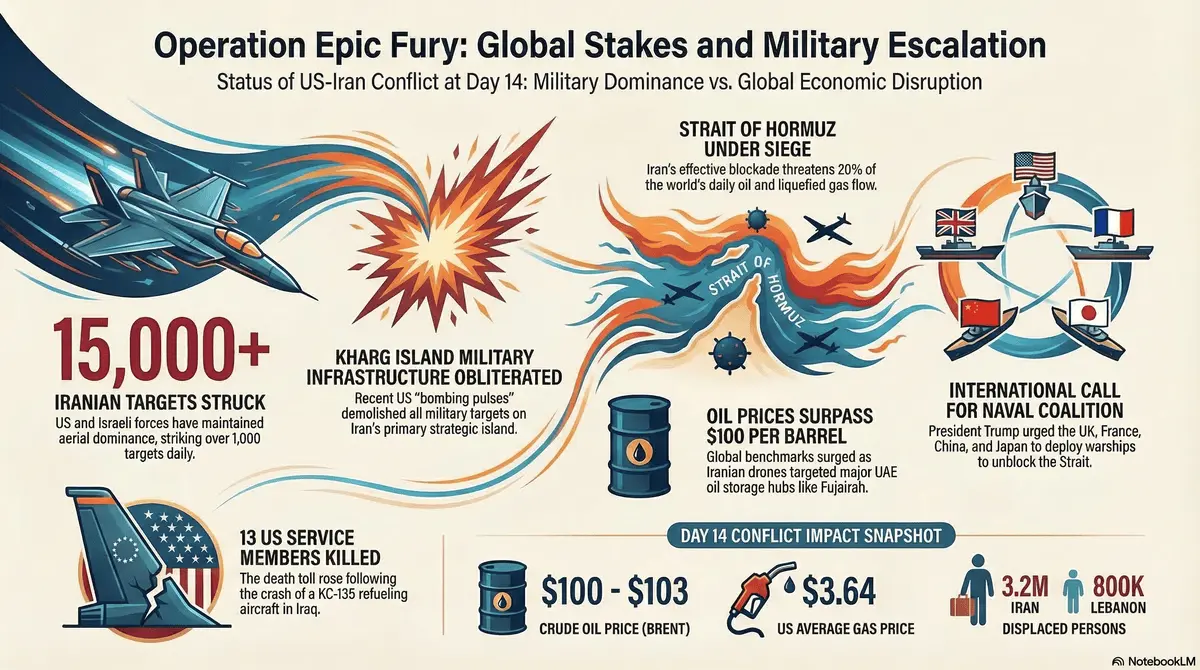
  • Senate Rejects War Powers Resolution Aimed at Constraining Military Action in Iran

    Senate Rejects War Powers Resolution Aimed at Constraining Military Action in Iran

    Washington, D.C. — The United States Senate has rejected a bipartisan war powers resolution intended to restrict President Donald Trump‘s authority to unilaterally direct military operations against Iran. The measure failed in a 47-53 vote mostly along party lines on Wednesday, March 4, 2026. The vote comes amid escalating hostilities in the Middle East, including retaliatory strikes from Iran and the deaths of six American soldiers in Kuwait.

    Below is a detailed examination of the legislative effort and the ongoing conflict.

    Context & Background

    What prompted the war powers resolution? Senator Tim Kaine introduced the measure following joint U.S. and Israeli military strikes against the Iranian regime, which killed Iranian Supreme Leader Ayatollah Ali Khamenei. Democrats and some critics expressed concern over the administration’s shifting rationale for the attacks and the lack of congressional authorization under the 1973 War Powers Act.

    How did the Senate vote unfold? The resolution failed on a 47-53 vote, reflecting deep partisan divides over foreign policy and executive power. Senator Rand Paul was the sole Republican to support the measure, while Senator John Fetterman was the only Democrat to vote against it, arguing that the strikes successfully thwarted Iran‘s nuclear ambitions.

    What is the administration’s stance? The White House and Republican leadership maintain that President Donald Trump is acting within his constitutional authority as commander in chief to defend American interests. Defense Secretary Pete Hegseth indicated that the U.S. is “just getting started,” while Secretary of State Marco Rubio asserted that the administration complied with the requirement to notify Congress within 48 hours of initiating hostilities.

    What are the next steps for Congress? The House of Representatives is scheduled to vote on a companion war powers resolution introduced by Representatives Ro Khanna and Thomas Massie on Thursday. However, the measure faces steep opposition from Republican leadership, including House Speaker Mike Johnson, who argued that limiting the president’s authority would endanger American forces.

    Q&A: Unpacking Operation Epic Fury

    Q: How does the War Powers Act apply to the current conflict?

    A: The resolution attempts to leverage the 1973 legislation to reassert congressional authority over declarations of war.

    • Constitutional Mandate: The Act requires the president to notify Congress within 48 hours of deploying troops and mandates an end to hostilities within 60 days without an Authorization for Use of Military Force.
    • Administration Argument: Officials argue inherent executive authority allows defensive military actions without prior congressional approval.
    • Legislative Challenges: Passing such a resolution requires a simple majority, but overriding a likely presidential veto would necessitate a two-thirds majority in both chambers.

    Q: Why are lawmakers divided on the long-term strategy of the campaign?

    A: Divisions stem from differing assessments of the threat level and the potential for a prolonged, endless war.

    • Democrat Concerns: Lawmakers like Senator Chris Murphy warn that destroying Iran‘s missile capacity requires endless aerial campaigns, risking trillions of dollars and further American casualties.
    • Republican Support: Senators such as Roger Wicker view the campaign as a measured necessity to eliminate threats from religious extremists and secure the region.
    • Troop Deployment Scope: At this time, the deployment of U.S. ground troops in Iran remains unverified by official sources, though officials have refused to rule it out.

    Q: How has the conflict escalated geographically since the initial strikes?

    A: The hostilities have rapidly expanded beyond Iran, drawing in neighboring countries and international waters.

    • Lebanon Strikes: Israel has expanded its operations into Lebanon, targeting Hezbollah militants and issuing evacuation orders south of the Litani River.
    • Maritime Clashes: A U.S. submarine sank an Iranian warship off the coast of Sri Lanka, and unverified attacks have been reported off the coast of Kuwait.
    • Regional Projectiles: NATO defenses intercepted an Iranian ballistic missile over Turkey, and Iran has targeted U.S. bases in Iraq.

    Q: Why is the House resolution expected to face significant hurdles?

    A: The House companion bill faces strong opposition from both Republican leadership and a faction of pro-Israel Democrats.

    • Leadership Opposition: Speaker Mike Johnson has explicitly condemned the resolution, asserting it would “kneecap” U.S. forces.
    • Competing Legislation: Representative Josh Gottheimer has introduced an alternative bill granting the administration 30 days to conclude military action, potentially siphoning Democratic support.
    • Veto Threat: Even if successful in the House, the measure lacks the bipartisan supermajority required to overcome a presidential veto.

    Q: How might Congress exert influence if war powers resolutions fail?

    A: Lawmakers are considering using the appropriations process as an alternative mechanism to constrain or guide military action.

    • Funding Requests: The Defense Department is expected to request a supplemental funding package for the ongoing operations.
    • Oversight Hearings: Senators like Chris Coons are demanding open hearings on the administration’s goals and exit strategy before approving additional defense investments.
    • AUMF Debate: Some Republicans, such as Senator Thom Tillis, have suggested debating a new Authorization for Use of Military Force if the conflict becomes a prolonged engagement.

    Editorial Note & Transparency

    Verification Log:

    • Mainstream News Media: Reporting from NPR, AP News, CBS, and BBC regarding the Senate vote tallies, legislative maneuvering, and the ongoing military conflict.
    • Government Statements: Quotes and press releases from U.S. Senators (Tim Kaine, John Fetterman, Rand Paul), Representatives (Mike Johnson), and administration officials (Pete Hegseth, Marco Rubio).
    • International Reports: Updates from Al Jazeera and The Guardian regarding the expansion of hostilities into Lebanon, Turkey, and Iraq.

    Compliance:

    • Privacy: This article respects user data under our Privacy Policy.
    • Transparency: No sponsored content influenced this reporting.

    Contact Us: For corrections or feedback, please email: news.desk@qnanews.com