Washington/London — The escalating military conflict between Israel, Iran, and the United States has severely disrupted global energy markets, sending Brent crude prices soaring past $100 per barrel. The crisis intensified after strikes on Iranian oil facilities on March 7, 2026, prompting immediate retaliatory attacks on maritime shipping and regional infrastructure. As commercial transits through vital waterways plummet, nations face widespread economic fallout, rising inflation, and localized fuel shortages.
Below is a detailed breakdown of the economic and geopolitical impacts of the Middle East energy crisis.
Context & Background
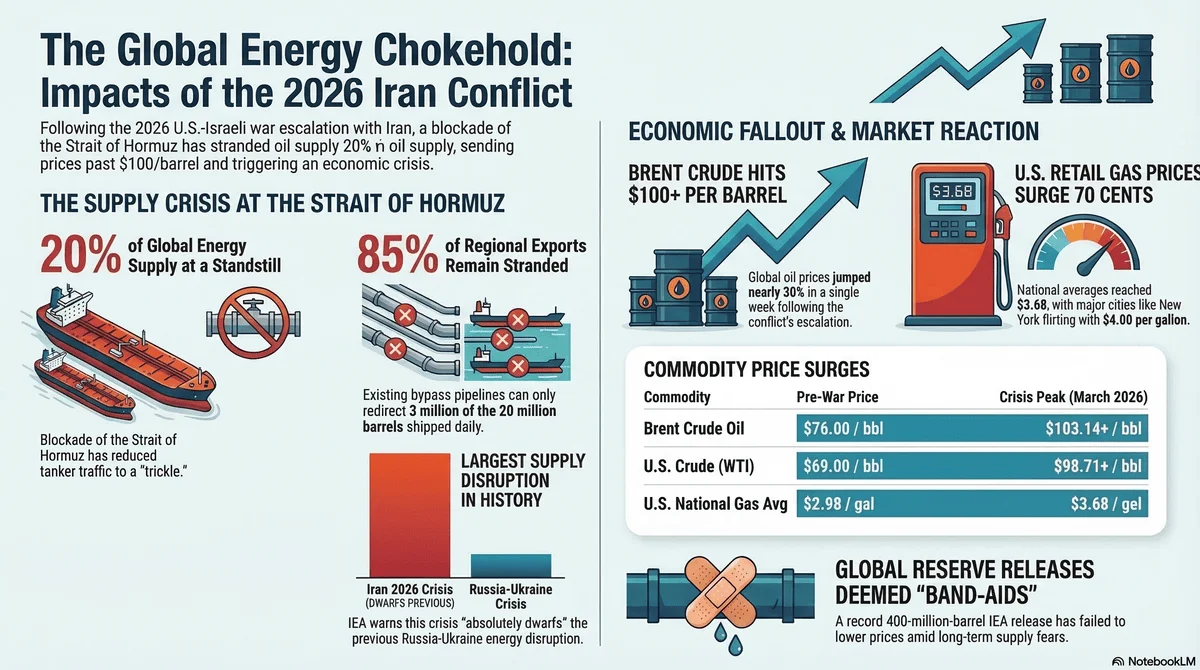
How did the current energy crisis start? The recent surge in oil prices is directly tied to the escalating conflict involving Israel, the United States, and Iran, which reached a turning point when Israel struck Iranian oil facilities. In retaliation, Iran targeted critical energy infrastructure across the Persian Gulf and initiated attacks on commercial shipping in the Strait of Hormuz, creating what the International Energy Agency has called the largest supply disruption in history.
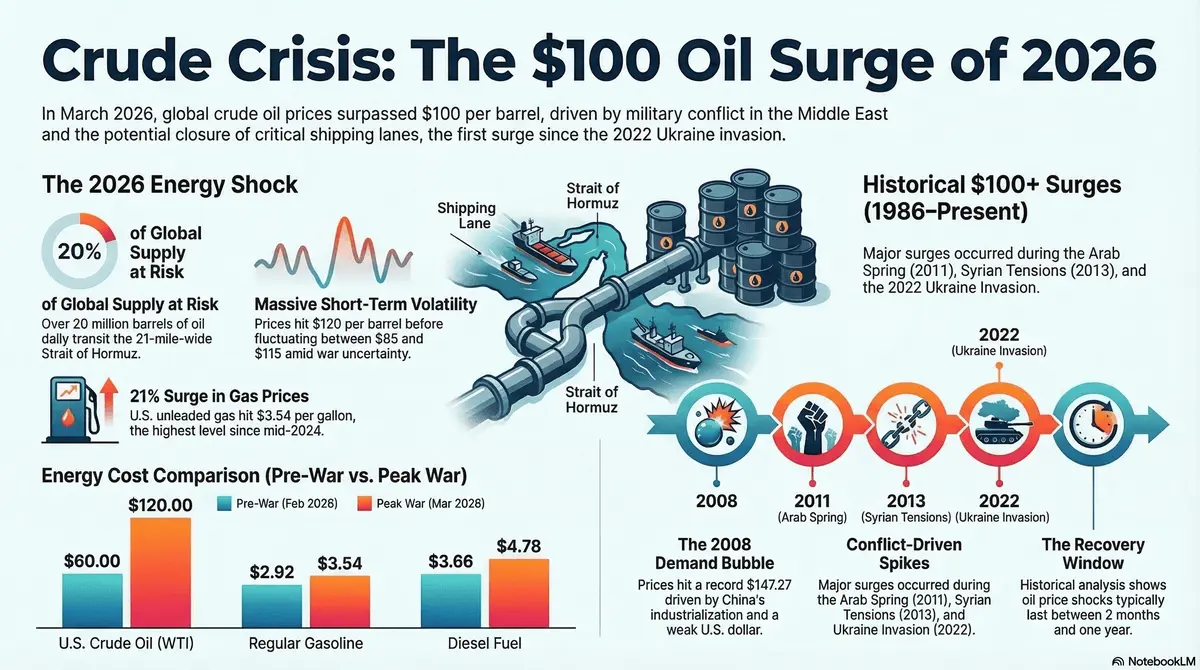
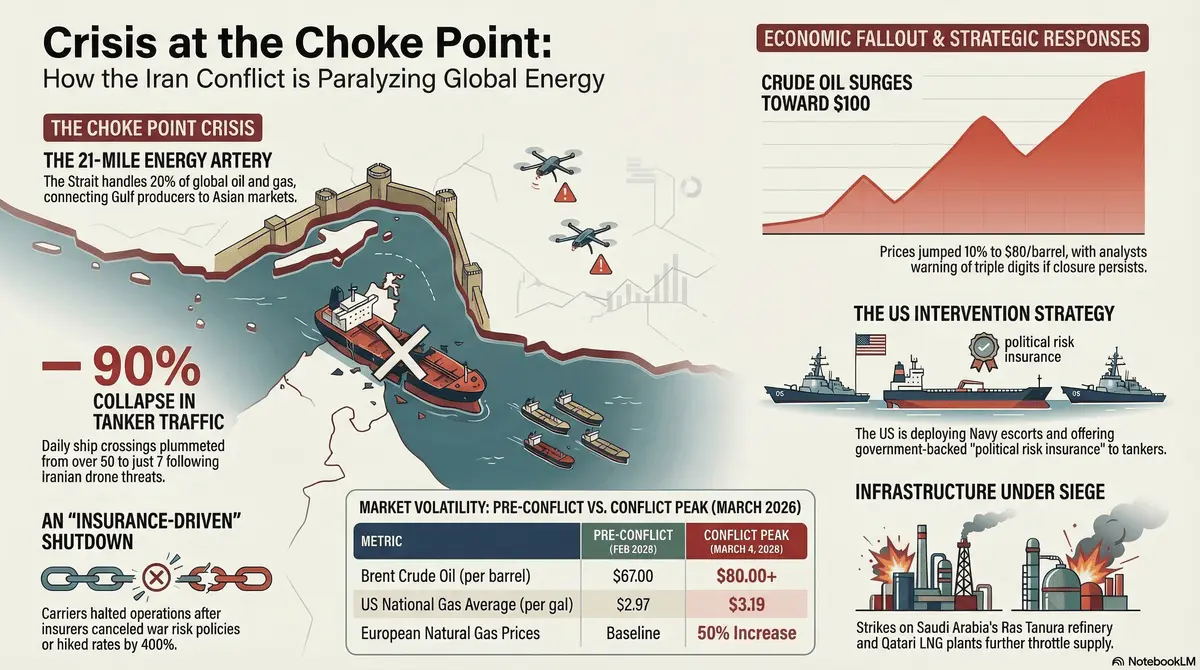
Why is the Strait of Hormuz significant? The Strait of Hormuz is a critical maritime chokepoint that typically carries around 20% of the world’s seaborne oil, amounting to roughly 20 million barrels per day, and nearly 80 million tonnes of liquefied natural gas annually. Due to the threat of anti-ship missiles, drones, and naval mines, daily ship transits have plummeted from an average of 84 down to fewer than 10, effectively stranding the vast majority of the region’s energy exports.
What are the economic consequences for consumers? The sudden reduction in global oil supply has triggered a significant spike in fuel costs, with U.S. gas prices rising by approximately 75 cents over the past month to a national average of $3.68 per gallon. Furthermore, the international benchmark, Brent crude, surged above $100 per barrel, leading to increased inflationary pressures and rising mortgage rates as financial markets react to the prolonged instability.
How are governments responding to the supply shock? To mitigate the crisis, the International Energy Agency coordinated the release of 400 million barrels of stockpiled oil, with the United States contributing 172 million barrels from its Strategic Petroleum Reserve. Additionally, Donald Trump is considering waiving regulations under the Jones Act to lower domestic transport costs, while the U.S. Treasury reportedly plans to aggressively sell oil futures to suppress price spikes.
Q&A: Unpacking the Global Energy Shock
Q: How will the disruption in the Strait of Hormuz impact global supply chains if the closure is prolonged?
A: A prolonged closure will strand the vast majority of Middle Eastern oil exports, as alternative pipeline routes lack the capacity to replace the strait’s standard volume.
- Limited Bypass Capacity: Countries like Saudi Arabia and the United Arab Emirates can redirect only about 3 million barrels per day through alternative pipelines, leaving 85% of their normal export volumes stranded.
- Asian Market Vulnerability: Roughly 84% of the energy flows through the strait are destined for Asian markets, including China, India, and Japan, meaning these economies face immediate and severe energy shortages.
- Corporate Suspensions: Major energy companies, including TotalEnergies and SLB, have halted localized operations in several Middle Eastern countries to protect personnel and facilities.
Q: Why have financial markets and stock prices reacted so negatively to the oil price surge?
A: Investors fear that sustained energy disruptions will fuel stagflation, dampening economic growth while simultaneously driving up inflation and borrowing rates.
- Equity Declines: The sudden spike in oil prices caused significant market sell-offs, with the S&P 500 dropping 1.5% and the Dow Jones Industrial Average falling over 700 points in a single day.
- Interest Rate Pressures: Rising government bond yields tied to the conflict have pushed the average 30-year fixed-rate mortgage up to 6.30%, increasing housing and borrowing costs for consumers.
- Sector Profitability Shift: While broader markets suffer, European oil and gas stocks, such as BP and Equinor, have seen their price targets and earnings expectations raised significantly by Goldman Sachs due to elevated commodity values.
Q: How are the targeted attacks on energy infrastructure uniquely weaponizing fossil fuels?
A: Both sides are systematically dismantling each other’s energy capabilities to inflict maximum economic pain and diminish long-term war-making capacities.
- Infrastructure Destruction: Israel has bombed oil depots in Tehran, while Iran has launched drone swarms at Saudi Aramco facilities and refineries in Bahrain, Kuwait, and Oman.
- Environmental Hazards: The destruction of petrochemical complexes and oil depots has released toxic smoke and caused toxic rain, posing severe health and environmental risks to local populations.
- Strategic Leverage: By throttling the flow of product, Iran aims to raise the global economic costs of the war, a tactic previously employed by Russia during its invasion of Ukraine.
Q: Why might the proposed economic and policy interventions fail to stabilize the oil market?
A: Strategic reserves and financial maneuvers cannot resolve the underlying physical risk to shipping vessels navigating an active combat zone.
- Reserve Limitations: The United States consumes about 20 million barrels daily, meaning its historic 172 million-barrel reserve release covers only about eight days of domestic demand.
- Insurance Efficacy: While the International Development Finance Corporation may backstop maritime insurance against unaffordable casualty claims, ship owners remain hesitant to risk lives and assets in an unsecured waterway.
- Futures Market Risks: Aggressive selling of oil futures by the U.S. Treasury could distort fair market values, potentially resulting in massive financial losses for the federal budget if speculative markets overwhelm the intervention.
Q: How are naval escorts and military forces preparing to address the blockade?
A: Western powers are discussing the deployment of military escorts to reassert freedom of navigation, though full implementation requires time and strategic coordination.
- Coalition Discussions: The European Union and the United States are exploring options to provide international military escorts for commercial vessels traversing the strait.
- Deployment Timing: Chris Wright indicated that naval escorts will happen soon but cannot be immediately deployed due to ongoing logistical and military constraints.
- Alternative Diplomacy: At this time, successful negotiations by neutral nations like China, India, and Turkey for safe passage agreements independent of Western military action remains unverified by official sources.
Editorial Note & Transparency
Verification Log:
- News Reporting: Extracted timeline and market data from CBS News, NBC News, NY Post, and CNBC.
- Think Tank Analysis: Referenced CSIS and ACLED reports regarding military movements and geopolitical strategy.
- Market Forecasting: Integrated Goldman Sachs pricing models and AAA gas average metrics.
Compliance:
- Privacy: This article respects user data under our Privacy Policy.
- Transparency: No sponsored content influenced this reporting.
Contact Us: For corrections or feedback, please email: news.desk@qnanews.com