New York/Washington — The global oil market has experienced severe disruptions following military actions in the Middle East, pushing crude oil prices temporarily above the $100 per barrel mark. This surge occurred after strikes initiated on February 28, 2026, targeting infrastructure across the region. Gas prices in the United States have reached their highest levels since mid-2024, raising concerns about broader economic impacts and consumer affordability.
Below is a detailed examination of the conflict’s impact on global energy markets and infrastructure.
Context & Background
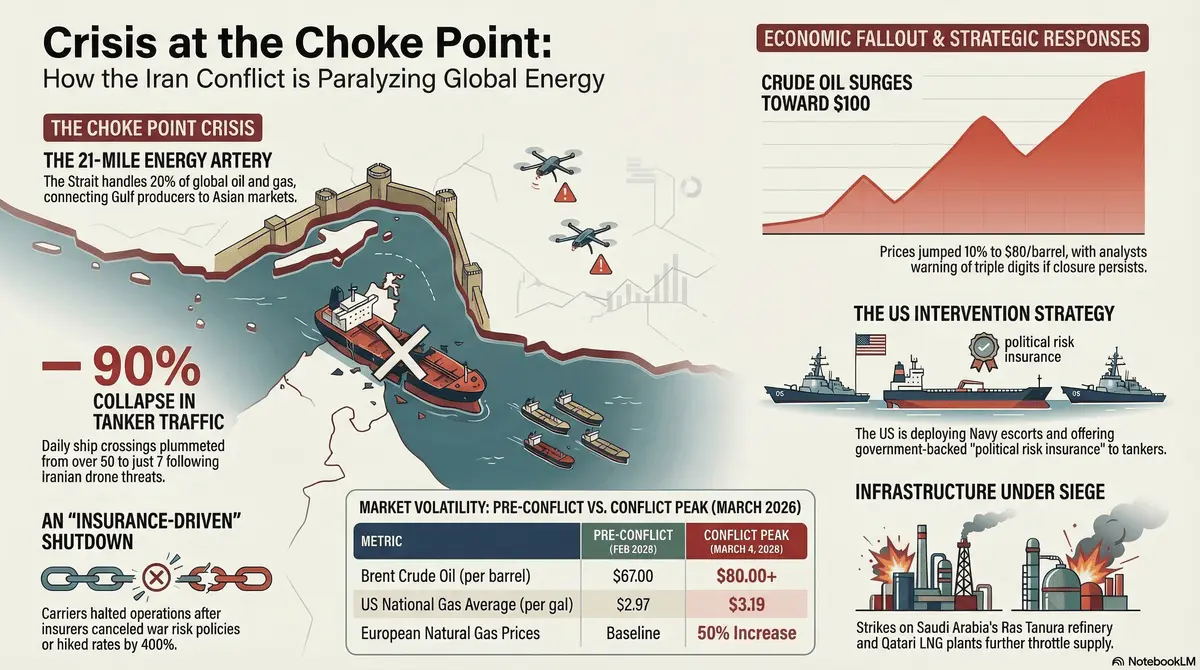
How did this conflict affect the global oil supply? The ongoing war has severely restricted marine traffic through the Strait of Hormuz, a critical chokepoint handling approximately 20% of the world’s petroleum consumption. With this vital passage compromised by the threat of drone attacks, global supply chains are heavily disrupted, causing a sharp reduction in available crude oil and pushing up prices.
The key infrastructure at risk The conflict has directly impacted critical regional facilities, including the Ras Laffan liquefied natural gas terminal in Qatar, which halted exports after a drone strike. Other significant disruptions include fires at the Ras Tanura refinery in Saudi Arabia and the suspension of production at the Leviathan natural gas field in Israel.
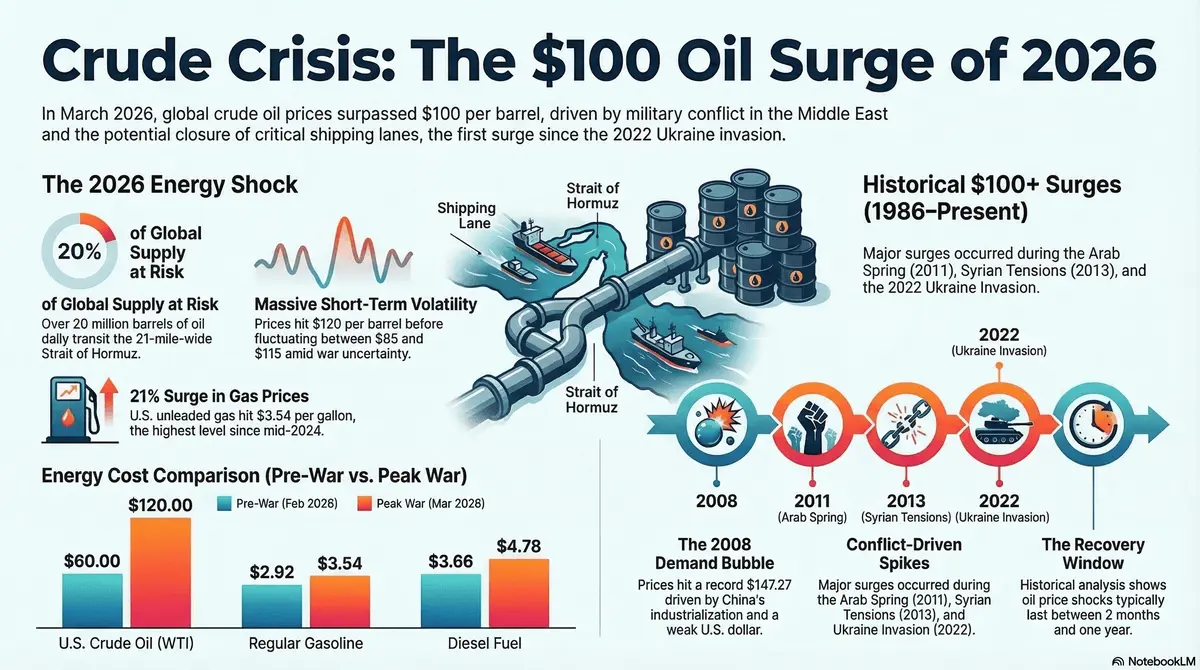
Historical significance of the price surge This marks the first time that West Texas Intermediate and Brent crude oil prices have breached the $100 per barrel threshold since the 2022 Russian invasion of Ukraine. While the 2008 financial crisis saw the highest recorded prices at over $145 a barrel, the current rapid spike represents one of the most significant energy market shocks since the 1990 Gulf War.
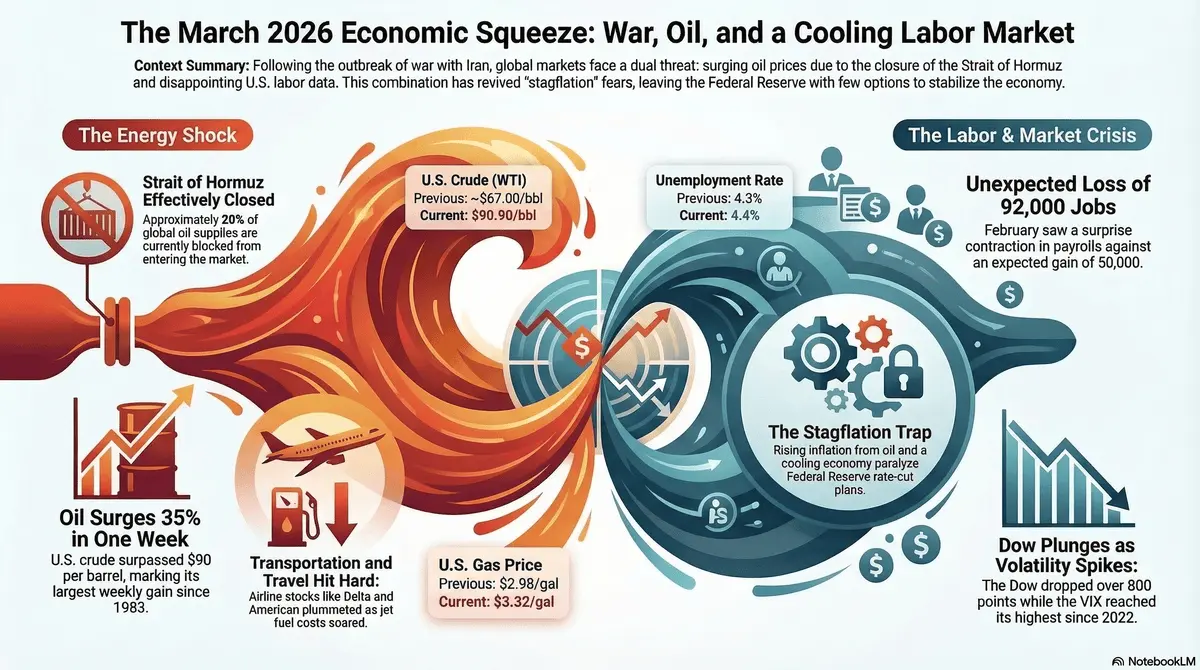
Why this matters for everyday consumers Surging oil prices directly translate to higher transportation costs, pushing the average price of regular gasoline in the United States to approximately $3.54 per gallon. This increase threatens to exacerbate inflation, potentially raising the costs of daily essentials like groceries and driving up expenses for the aviation and agricultural industries.
Q&A: Unpacking the Global Oil Crisis
Q: How are rising oil prices expected to impact the global food supply chain?
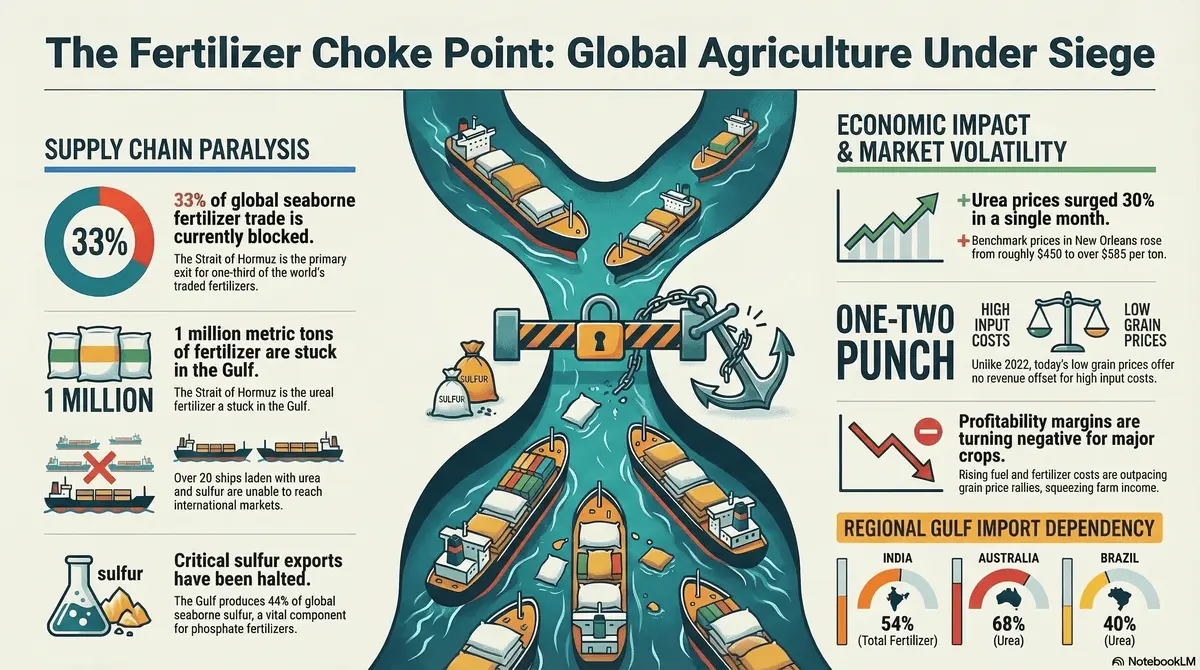
A: Elevated energy costs are anticipated to trigger a butterfly effect across the agricultural and grocery sectors by increasing operational and transportation expenses.
- Fertilizer Costs: Natural gas is a foundational ingredient for fertilizer production, and the current energy crunch has already caused suppliers to halt deliveries and hike prices.
- Transportation Expenses: Higher diesel fuel prices, which have jumped significantly, directly increase the cost of trucking and shipping agricultural goods to markets.
- Consumer Pricing: Grocers and producers facing margin compressions will likely pass these elevated logistical costs onto inflation-weary consumers.
Q: Why is the Strait of Hormuz so critical to the stabilization of global energy markets?
A: The narrow waterway is the primary maritime route for Middle Eastern oil and gas exports, lacking sufficient alternative pipelines to make up for a complete closure.
- Volume Significance: Over 20 million barrels of oil transit through the strait daily, representing a fifth of all global petroleum consumption.
- Alternative Route Limitations: Bypass options, such as Saudi Arabia‘s East-West pipeline or the United Arab Emirates‘ Fujairah pipeline, only offer a combined capacity of about 4.7 million barrels per day.
- Targeted Blockades: At this time, the exact timeline for the resumption of safe passage remains unverified by official sources, as operators anchor ships to avoid cheap drones and hidden launch sites.
Q: How have the U.S. and Iranian governments responded to the escalating economic threats?
A: Both nations are utilizing military and economic posturing, with the United States making direct threats and Iran targeting energy exports to exert pressure.
- Iranian Retaliation: Iranian officials declared no oil would leave the Middle East until bombardments cease, targeting regional infrastructure to leverage fossil fuels as a weapon of war.
- U.S. Countermeasures: President Donald Trump and Defense Secretary Pete Hegseth threatened to hit Iran harder if it continues to block the waterway, while the administration considers using naval convoys to protect tankers.
- Strategic Reserves: To combat the price spike, Western countries are discussing the potential release of oil from strategic stockpiles established after the 1970s oil crisis.
Q: Why might the current oil price shock lead to broader global economic instability?
A: Prolonged high energy costs historically correlate with economic slowdowns due to reduced discretionary spending and increased operational burdens for businesses.
- Inflationary Pressures: Economists warn that the direct pass-through of higher oil costs could push United States inflation back above the 3% mark.
- Industrial Impacts: Energy-intensive sectors, such as microchip manufacturing in Taiwan and artificial intelligence infrastructure development, face significant cost increases.
- Historical Precedent: Major oil shocks, such as those in 1973, 1978, and 1990, have consistently preceded forms of global recession or stagflation.
Q: How are different regions around the world uniquely affected by the fuel supply disruptions?
A: While oil-producing nations face infrastructure damage, import-heavy regions are struggling with immediate price surges and potential supply rationing.
- Asian Markets: Because roughly 89% of oil flowing through the Strait of Hormuz is bound for countries like China, India, and Japan, the region is facing acute shortages, prompting some governments to enact rationing measures.
- European Aviation: Europe relies on the Persian Gulf for about half of its jet fuel, causing regional aviation fuel prices to nearly double since the conflict began.
- American Consumers: While the United States is a top producer, its consumers are primarily experiencing the shock at the gas pump, where prices remain highly volatile.
Editorial Note & Transparency
Verification Log:
- Energy Industry Data: Gathered from the Energy Information Administration and American Automobile Association regarding fuel prices and historical oil shocks.
- Geopolitical Analysis: Statements and strategic insights drawn from expert interviews, including independent researchers and global macroeconomic analysts.
- Market Monitoring: Real-time commodity tracking sourced from global finance platforms mapping the price per barrel of Brent and WTI crude.
Compliance:
- Privacy: This article respects user data under our Privacy Policy.
- Transparency: No sponsored content influenced this reporting.
Contact Us: For corrections or feedback, please email: news.desk@qnanews.com