Washington, D.C. — Russia is reportedly providing Iran with critical intelligence regarding the locations of United States military assets in the Middle East, including warships, aircraft, and communication systems. This development, confirmed by U.S. officials on March 6, 2026, represents the first indication of Moscow playing a direct, supportive role in the escalating conflict between Iran, Israel, and the U.S..
Below is a detailed breakdown of the intelligence-sharing arrangement and its geopolitical implications.
Context & Background
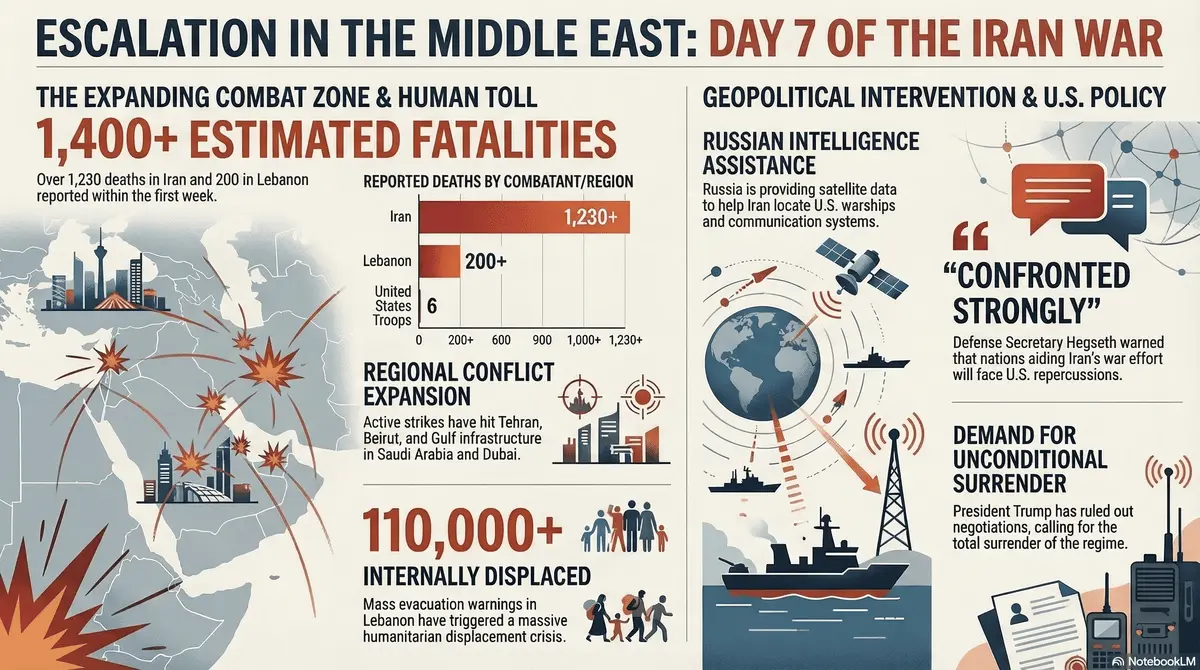
The Scope of Intelligence Sharing Russia has begun supplying Tehran with precise targeting data, including satellite imagery of U.S. bases, radars, and naval vessels. This assistance compensates for the Iranian military’s degraded surveillance capabilities, which were significantly impaired following recent U.S. and Israeli airstrikes.
The Administration’s Response The Donald Trump administration has largely downplayed the impact of Moscow‘s assistance to Iran, with White House Press Secretary Karoline Leavitt stating that the intelligence sharing does not matter because the U.S. military is actively decimating the Iranian regime. Furthermore, Defense Secretary Pete Hegseth asserted that the military is tracking all back-channel communications and that U.S. forces are not in increased danger.
Geopolitical Motivations The alliance between Vladimir Putin and Iran has deepened amid the ongoing war in Ukraine, where Russia relies heavily on Iranian-made Shahed drones. Because Moscow is facing its own severe hardware shortages, sharing actionable intelligence is the most immediate and valuable asset it can offer Tehran without depleting its own military stocks.
Congressional Pushback Lawmakers from both parties have criticized the White House’s dismissal of the threat, viewing the intelligence sharing as a severe escalation that directly endangers American lives. Figures such as Representative Don Bacon and Senator Jeanne Shaheen have called for harsher economic sanctions against Russia and increased military support for Ukraine in response to this coordination.
Q&A: Unpacking The Intelligence Partnership
Q: How does Russian intelligence specifically enhance Iran’s military capabilities?
A: Russian data provides a critical upgrade to Iran’s targeting precision and operational awareness in the region.
- Satellite Network Superiority: Iran possesses a very limited number of military satellites, whereas Russia operates a massive network that can provide rapid, precise data on U.S. forces.
- Targeting Precision: The shared intelligence has allowed Iran to execute more focused strikes on U.S. command and control infrastructure, radar sites, and communication posts.
- Battle Damage Assessment: Russian satellite imagery enables Tehran to accurately evaluate the success and damage of its aerial strikes, refining future attacks.
Q: Why is the White House dismissing the strategic impact of this intelligence sharing?
A: Administration officials argue that the overwhelming superiority of the U.S. military renders the Russian assistance functionally irrelevant.
- Military Decimation: Press Secretary Karoline Leavitt and spokeswoman Anna Kelly emphasized that the U.S. is successfully destroying Iran‘s naval fleet and diminishing its ballistic missile capabilities by 90 percent.
- Surveillance Dominance: Defense Secretary Pete Hegseth expressed confidence that U.S. commanders are fully tracking all movements and communications, neutralizing the threat before it endangers troops.
- Command Ambiguity: At this time, whether Russia is actively directing Iranian strikes remains unverified by official sources, leading officials to view the aid as passive sharing rather than coordinated command.
Q: How are logistical supply chains sustaining the military cooperation between Russia and Iran?
A: The two nations are utilizing secure, internal routes to bypass Western interdiction and maintain a steady flow of military resources.
- Caspian Sea Corridor: A supply route running through the Volga River and across the Caspian Sea provides a secure interior supply line to move electronics, missile components, and drones.
- Domestic Production Facilities: Russia is manufacturing Iranian-designed drones at its Alabuga facility in the Tatarstan region at a rate of roughly 3,000 per month.
- Inventory Replenishment: As Iran‘s domestic drone inventories decline under U.S. bombardment, Russia‘s production could theoretically fill the gap, though physical hardware transfers currently appear limited due to the war in Ukraine.
Q: Why are U.S. lawmakers alarmed by the administration’s stance on the Russia-Iran alliance?
A: Bipartisan members of Congress believe the administration is demonstrating a dangerous blind spot regarding Moscow’s broader strategic goals.
- Troop Vulnerability: Lawmakers point out that Russian intelligence has potentially aided strikes that have killed six U.S. soldiers in Kuwait and hit multiple bases.
- Sanctions Contradiction: Critics note the administration is simultaneously easing sanctions on Russian oil while Moscow helps target American forces, sending mixed signals.
- Escalation Risks: Representatives warn that ignoring this coordination emboldens Vladimir Putin and allows the Kremlin to systematically weaken the United States without direct military confrontation.
Q: How does this development fit into Russia’s broader strategic objectives?
A: Moscow is leveraging the Middle East conflict to drain Western resources and distract from its ongoing invasion of Ukraine.
- Resource Diversion: By providing intelligence, Russia forces the United States to expend expensive interceptors and military focus in the Middle East rather than Eastern Europe.
- Economic Relief: The ensuing regional instability has triggered a bump in global oil demand and prices, bolstering Russia‘s heavily sanctioned energy export revenues.
- Asymmetric Warfare: Lacking the extra hardware to supply Iran directly, Russia uses intelligence sharing as a low-cost, high-impact method to target its primary adversary, the United States.
Editorial Note & Transparency
Verification Log:
- Intelligence Reports: Corroborated statements from anonymous U.S. intelligence officials and reported by multiple outlets.
- Administration Statements: Verified quotes from White House Press Secretary Karoline Leavitt and Defense Secretary Pete Hegseth.
- Congressional Reactions: Verified statements from Rep. Don Bacon and Sen. Jeanne Shaheen regarding the intelligence sharing.
Compliance:
- Privacy: This article respects user data under our Privacy Policy.
- Transparency: No sponsored content influenced this reporting.
Contact Us: For corrections or feedback, please email: news.desk@qnanews.com