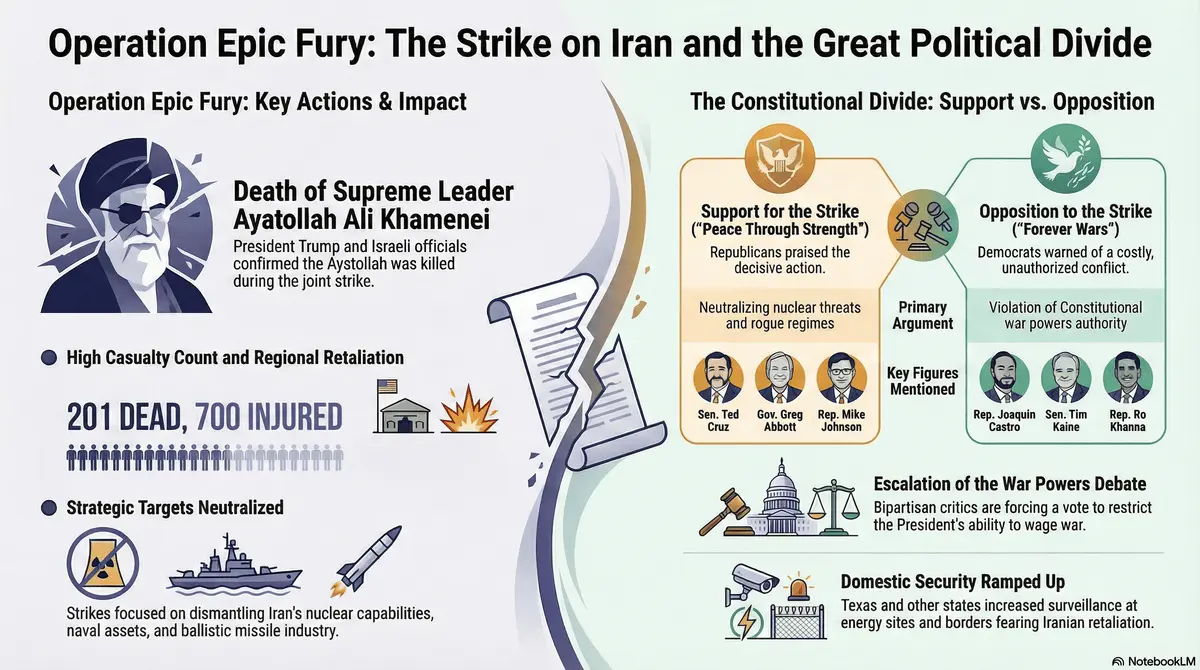
Tehran/Washington — The United States and Israel have escalated a massive, coordinated military assault against Iran, resulting in widespread destruction and prompting intense regional retaliation. This unprecedented escalation follows the targeted killing of Iranian Supreme Leader Ayatollah Ali Khamenei during the initial wave of strikes on Saturday, February 28, 2026.
Below is a detailed examination of the military operations, regional impacts, and political ramifications of this unfolding conflict.
Context & Background
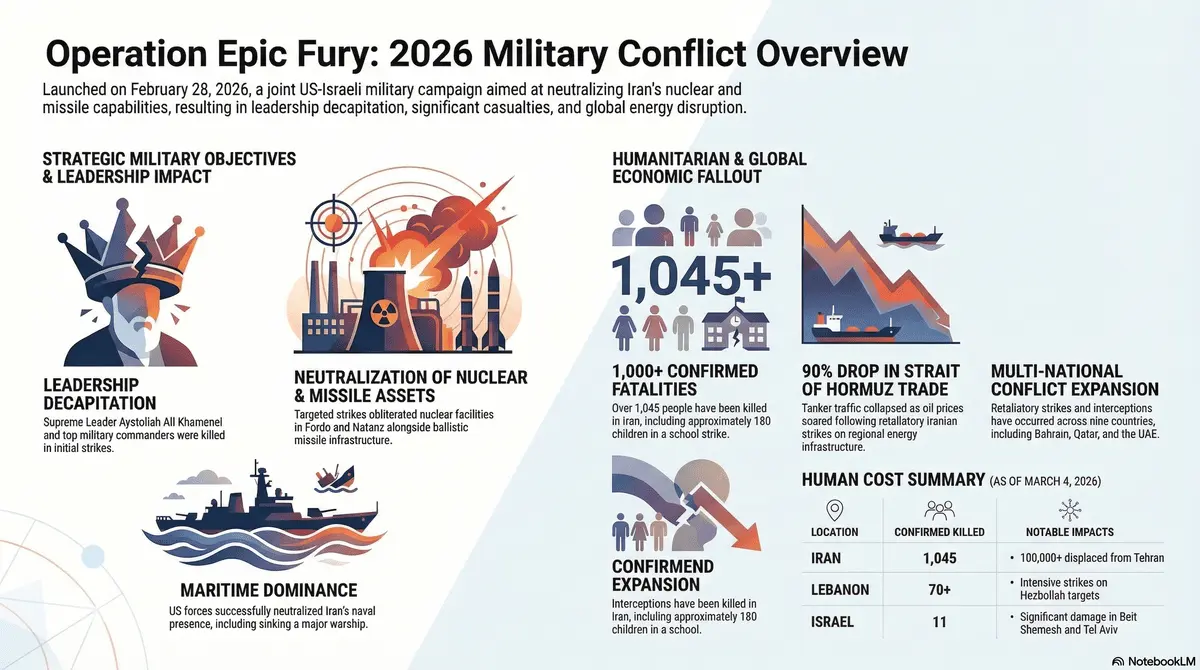
The Catalyst and Initial Operations The United States and Israel initiated a massive aerial bombardment campaign aimed at dismantling Iran’s military capabilities and leadership structure. This operation, beginning on Saturday, February 28, 2026, successfully eliminated Supreme Leader Ayatollah Ali Khamenei and significantly damaged facilities belonging to the Islamic Revolutionary Guard Corps.
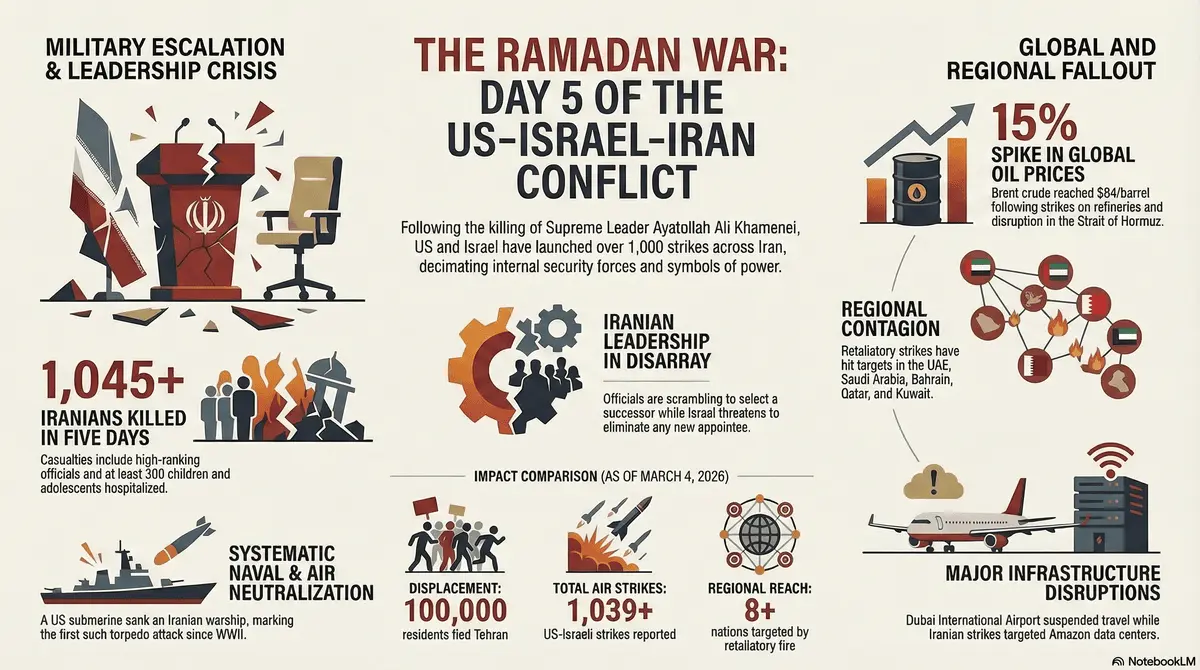
Target Selection and Collateral Damage Military planners focused on state power symbols, including the presidential office, military bases, and police stations across Iran. However, the strikes have resulted in significant civilian casualties, with the Iranian death toll surpassing 1,045 individuals, including hundreds of children. At this time, reports of an attack on a girls’ school in Minab remains unverified by official sources from the attacking nations, though international organizations have expressed profound concern.
Iranian Retaliation and Regional Escalation Following the initial bombardment, Iran commenced retaliatory strikes against Israel and allied nations hosting American military assets, including Saudi Arabia, the United Arab Emirates, and Qatar. The Islamic Revolutionary Guard Corps has explicitly threatened the complete destruction of both military and economic infrastructure throughout the Middle East, prompting widespread airspace closures.
The Succession Crisis in Tehran The sudden death of Ayatollah Ali Khamenei has triggered only the second succession process in the history of the Islamic Republic. Senior clerics in the Assembly of Experts are rapidly convening to select a replacement, with hardliner Mojtaba Khamenei emerging as a prominent contender.
Q&A: Unpacking The Middle East Conflict
Q: How are the United States and Israel degrading Iranian naval and aerial defenses?
A: Coalition forces are utilizing advanced weaponry and strategic strikes to systemically dismantle Iran’s defensive frameworks and naval presence.
- Submarine Warfare: A United States submarine successfully sank an Iranian warship in international waters, marking a rare historical use of submarine torpedoes in modern combat.
- Air Defense Suppression: Aerial bombardments have systematically targeted and damaged Iranian air defenses, ballistic missile sites, and drone launch facilities.
- Airspace Control: United States Defense Secretary Pete Hegseth stated that the coalition expects to achieve complete dominance over Iranian skies shortly.
Q: Why are Iranian counter-attacks targeting neighboring Gulf states?
A: Iran is striking regional neighbors to retaliate against nations hosting United States military installations and to disrupt the broader global economy.
- Military Base Proximity: Countries like Bahrain, Qatar, and the United Arab Emirates host significant American military bases, making them strategic targets for Iranian missiles and drones.
- Economic Disruption: By targeting critical commercial hubs and shipping lanes, Iran aims to impose severe economic costs on the international community.
- Deterrence Strategy: The Islamic Revolutionary Guard Corps seeks to deter further allied cooperation by demonstrating its capacity to inflict widespread regional damage.
Q: How is this conflict impacting global energy markets and international travel?
A: The escalation has triggered immediate spikes in oil prices and forced sweeping cancellations of commercial flights across the Middle East.
- Crude Oil Surge: Brent crude prices escalated to $84 a barrel, representing a 15% increase, due to disruptions near the Strait of Hormuz.
- Aviation Paralysis: Major aviation hubs, including Dubai, have suspended all flights as civilian infrastructure faces direct drone and missile threats.
- Refinery Threats: Drone strikes have targeted major energy facilities, such as the Aramco refinery in Saudi Arabia, exacerbating market anxieties.
Q: Why is the leadership succession in Iran considered a critical juncture for the conflict?
A: The appointment of a new Supreme Leader will dictate Iran’s strategic posture and determine whether the nation seeks diplomatic de-escalation or prolonged warfare.
- Ideological Direction: The choice between a reformist or a hardliner, such as Mojtaba Khamenei, will shape the regime’s willingness to negotiate or escalate.
- Coalition Threats: Israel’s Defense Minister Israel Katz has declared that any successor committed to the destruction of Israel will become an immediate military target.
- Internal Stability: The selection process is occurring amid wartime chaos, which may further destabilize the government as it attempts to manage both the military response and internal dissent.
Q: How are international stakeholders and allies responding to the unilateral military actions?
A: Global reactions are mixed, with some nations expressing support for neutralizing threats while others condemn the circumvention of international law.
- Legal Concerns: Canadian Prime Minister Mark Carney characterized the strikes as potentially inconsistent with international law due to the lack of United Nations consultation.
- Mediation Offers: South African President Cyril Ramaphosa has offered to mediate a ceasefire to prevent further regional destabilization.
- Domestic Opposition: In the United States, the Senate failed to pass a resolution to rein in President Donald Trump’s war powers, signaling continued domestic political friction over the conflict.
Editorial Note & Transparency
Verification Log:
- News Agency: [Al Jazeera, AP News, The Guardian, and The Independent reporting on military actions and political fallout.]
- Open Source Intelligence: [Bellingcat analysis utilizing Planet Labs satellite imagery to verify police station damage.]
- Government Briefings: [Statements from the United States Pentagon, Israeli military, and Iranian state television.]
Compliance:
- Privacy: This article respects user data under our Privacy Policy.
- Transparency: No sponsored content influenced this reporting.
Contact Us: For corrections or feedback, please email: news.desk@qnanews.com