New York/London — Global financial markets experienced a severe sell-off after crude oil prices spiked to their highest levels since 2023 amid the ongoing military conflict involving the United States, Israel, and Iran. This geopolitical shock coincided with an unexpectedly weak U.S. jobs report released on March 6, 2026, further raising fears of a stagnating economy. The dual pressures of soaring energy costs and rising unemployment have left investors deeply concerned about the prospect of stagflation.
Below is a detailed breakdown of the economic and geopolitical factors driving the current market volatility.
Context & Background
The Geopolitical Catalyst The escalating war in the Middle East has severely disrupted global energy markets, driven by clashes involving the United States, Israel, and Iran. President Donald Trump has demanded the unconditional surrender of Iran, intensifying the conflict and prompting warnings from officials like Qatar‘s energy minister, Saad al-Kaabi, that oil could soon reach $150 per barrel.
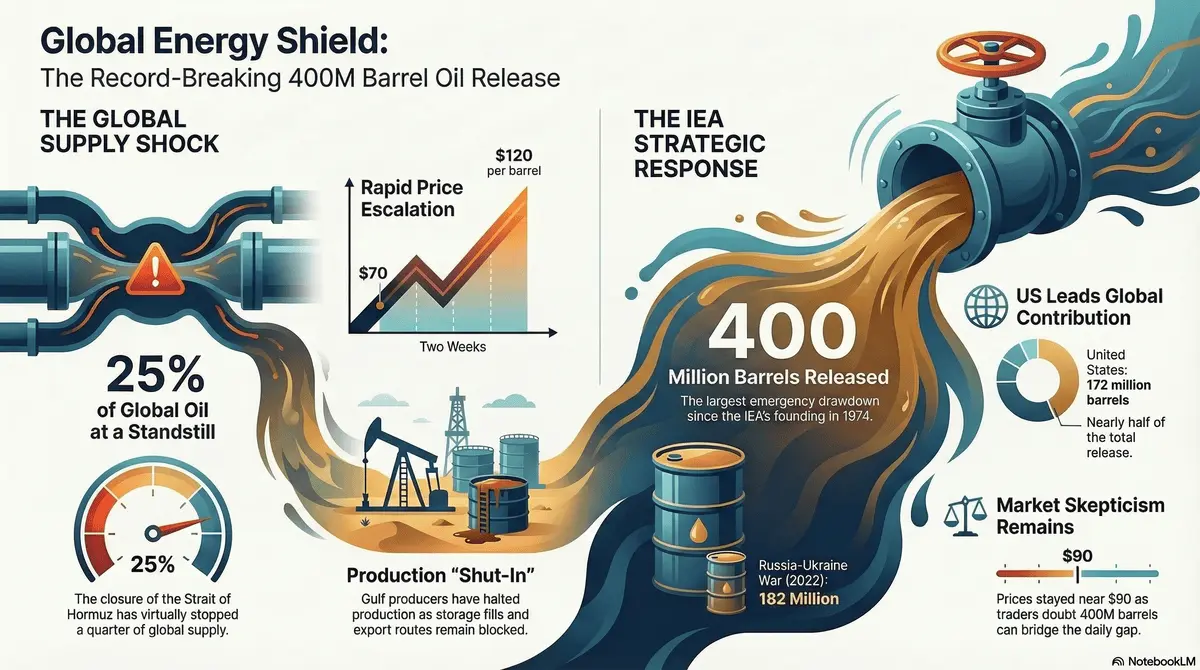
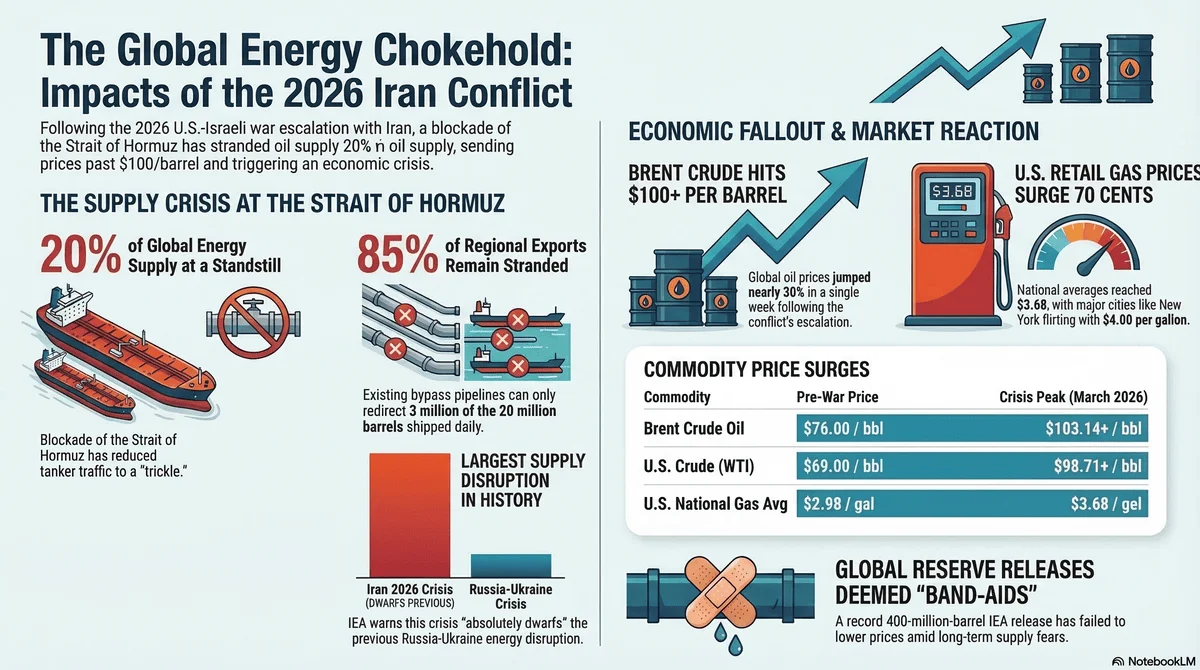
The Strait of Hormuz Bottleneck The primary driver of the oil shock is the effective closure of the Strait of Hormuz, a vital waterway through which roughly one-fifth of the world’s seaborne oil typically travels. Iran has achieved this disruption using cheap drone warfare rather than a traditional naval blockade, severely curtailing international shipping and energy exports.
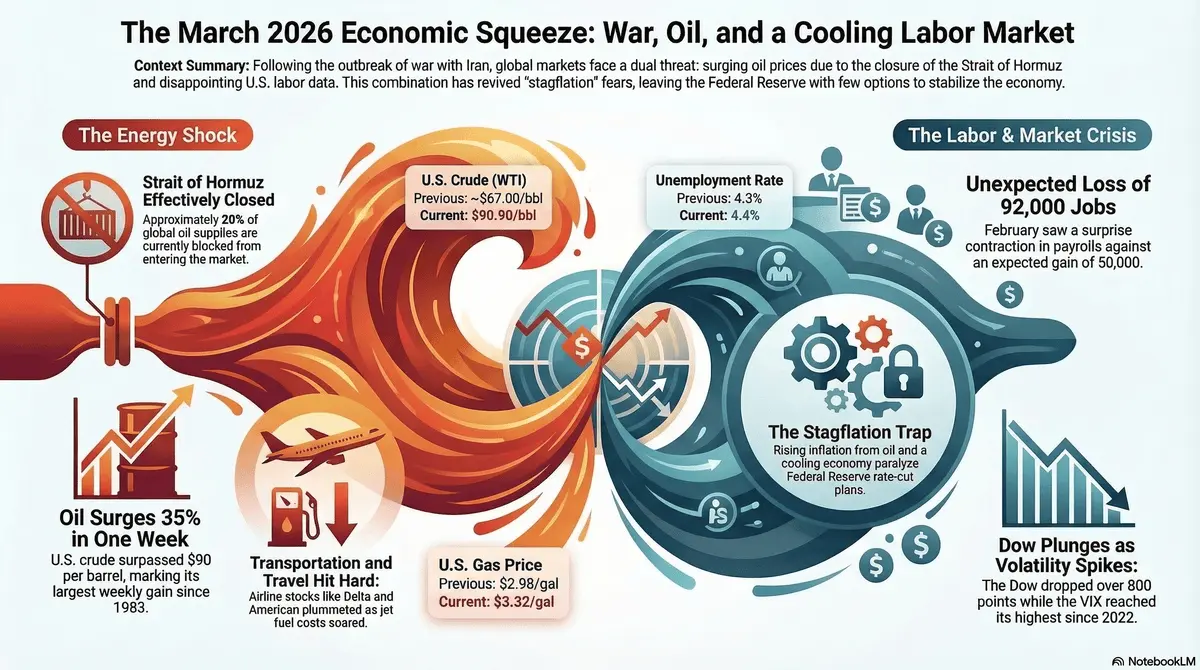
The Labor Market Setback Compounding the geopolitical crisis, the Bureau of Labor Statistics reported that U.S. nonfarm payrolls unexpectedly fell by 92,000 jobs in February, sharply contradicting economists’ expectations of job growth. The U.S. unemployment rate subsequently increased to 4.4%, a development that indicates a rapidly cooling domestic economy and a sudden shift away from previously strong job creation.
The Federal Reserve’s Policy Dilemma The combination of high inflation driven by energy costs and a weakening job market has placed the Federal Reserve in a difficult position. While a softening labor market typically warrants interest rate cuts to stimulate growth, rising oil prices apply intense upward pressure on inflation, making it risky for policymakers like San Francisco Federal Reserve President Mary Daly to ease monetary policy.
Q&A: Unpacking the Market Crisis
Q: How is the disruption in the Middle East specifically inflating global energy costs?
A: The conflict has paralyzed crucial maritime routes, causing severe supply bottlenecks that have driven U.S. crude prices above $90 per barrel.
- Strait Blockade: The use of drone warfare by Iran has effectively halted tanker traffic through the Strait of Hormuz.
- Export Stoppages: The war has halted Iranian gas exports to Asia, potentially sparking a bidding war between Europe and Asia for alternative energy sources.
- Unprecedented Gains: U.S. crude oil posted a 35% weekly gain, representing the largest jump since futures trading began in 1983.
Q: Why are financial markets reacting so negatively to the latest jobs report?
A: The unexpected job losses signal that the U.S. economy may be deteriorating faster than anticipated, removing a key pillar of recent economic stability.
- Payroll Contraction: Instead of the projected 50,000 to 59,000 job gain, the U.S. economy shed 92,000 jobs in February.
- Rising Unemployment: The unemployment rate climbed from 4.3% to 4.4%, highlighting a broader softening of the labor pool.
- Stagflation Fears: The simultaneous occurrence of job losses and soaring inflation creates the dreaded “stagflation” scenario, which equities historically struggle to navigate.
Q: How are rising oil prices disproportionately impacting specific market sectors?
A: Industries heavily reliant on fuel or discretionary consumer spending are bearing the brunt of the market sell-off.
- Airlines and Cruises: Companies like Delta Air Lines, Southwest Airlines, and Royal Caribbean have seen significant stock drops due to spiking jet fuel and diesel costs.
- Small-Cap Vulnerability: Smaller companies, tracked by the Russell 2000 index, are suffering heavy losses because they are highly sensitive to borrowing costs and domestic economic strength.
- Banking Pressures: Financial institutions like Western Alliance Bancorp are tumbling as a steeper yield curve threatens to compress net interest margins and curb loan demand.
Q: Why is the Federal Reserve struggling to respond effectively to these dual crises?
A: Policymakers lack a single tool capable of simultaneously combating rising inflation and stimulating a shrinking job market.
- Inflationary Pressures: Cutting interest rates would typically help the job market but could dangerously exacerbate the inflation caused by the 12% spike in oil prices.
- Borrowing Costs: Keeping rates high to fight inflation will maintain expensive borrowing conditions for households and businesses, further grinding down the economy.
- Policy Recalibration: Traders have pushed their expectations for rate cuts further into the summer, realizing the central bank is poorly positioned to add accommodation.
Q: How are geopolitical leaders attempting to mitigate the shipping disruptions?
A: Efforts are underway to financially and militarily protect maritime vessels, though markets remain skeptical of immediate success.
- Reinsurance Program: The U.S. government has announced a $20 billion reinsurance facility to encourage oil tankers to move through the Strait of Hormuz.
- Naval Escorts: President Donald Trump has expressed readiness to use the U.S. Navy to escort tankers, but analysts note the massive volume of traffic makes this highly challenging.
- Market Reaction: Despite these interventions, the initiatives have had little calming effect on energy markets so far.
Editorial Note & Transparency
Verification Log:
- Financial Market Data: Verified through reports from major trading indices (Dow Jones, S&P 500, Nasdaq) and oil futures tracking (Brent, WTI).
- Economic Indicators: Sourced from the Bureau of Labor Statistics February nonfarm payrolls and unemployment report.
- Geopolitical Statements: Cross-referenced statements from U.S. and Middle Eastern officials regarding the Strait of Hormuz and oil production.
Compliance:
- Privacy: This article respects user data under our Privacy Policy.
- Transparency: No sponsored content influenced this reporting.
Contact Us: For corrections or feedback, please email: news.desk@qnanews.com