Tehran — Coordinated military operations by the United States and Israel have severely damaged industrial and military targets within Iran, leading to significant environmental and humanitarian crises. A major strike targeted oil storage facilities in the capital, resulting in massive fires and toxic smoke on March 8, 2026. The ongoing campaign aims to dismantle Iranian missile capabilities and apply immense pressure on the current regime.
Below is a detailed examination of the strategic objectives and regional impacts of the ongoing conflict.
Context & Background
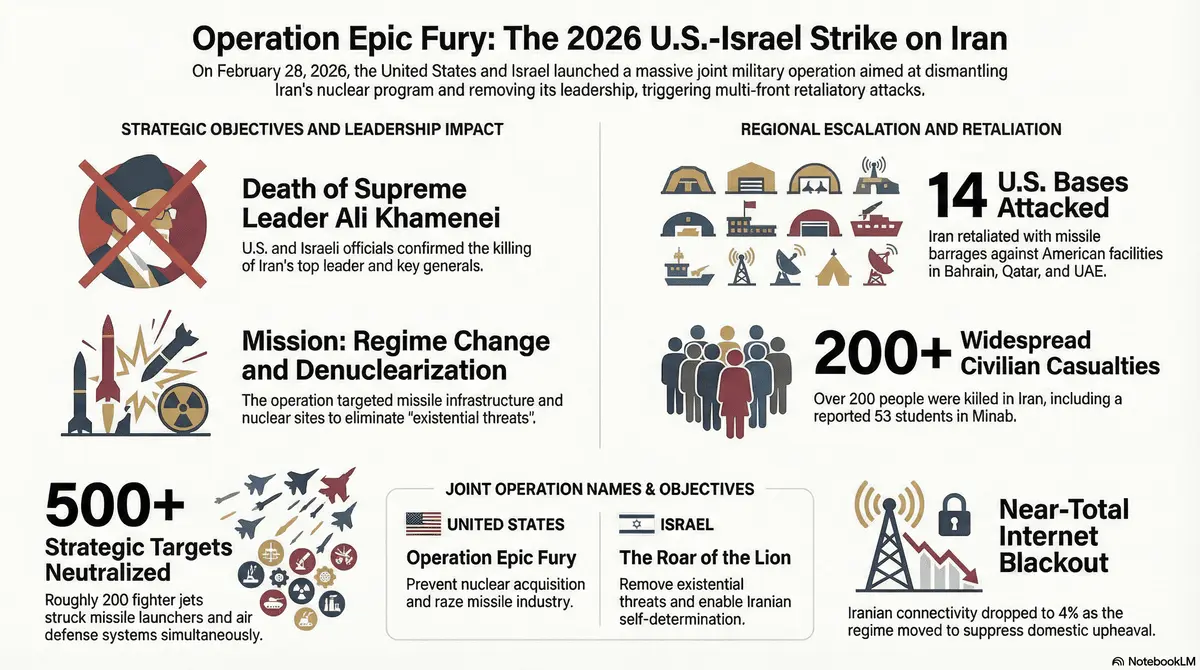
How did this start? The escalation follows the breakdown of indirect nuclear negotiations in Geneva between Iran and the United States, which were mediated by Oman. Following the failure to reach a diplomatic consensus, the United States and Israel launched a pre-emptive strike campaign beginning on February 28, 2026, initially targeting Iran’s military leadership and nuclear-related infrastructure. These initial strikes quickly expanded into a broader military effort designed to degrade Iran’s ballistic missile industrial base and enforce what US leadership has termed an unconditional surrender.
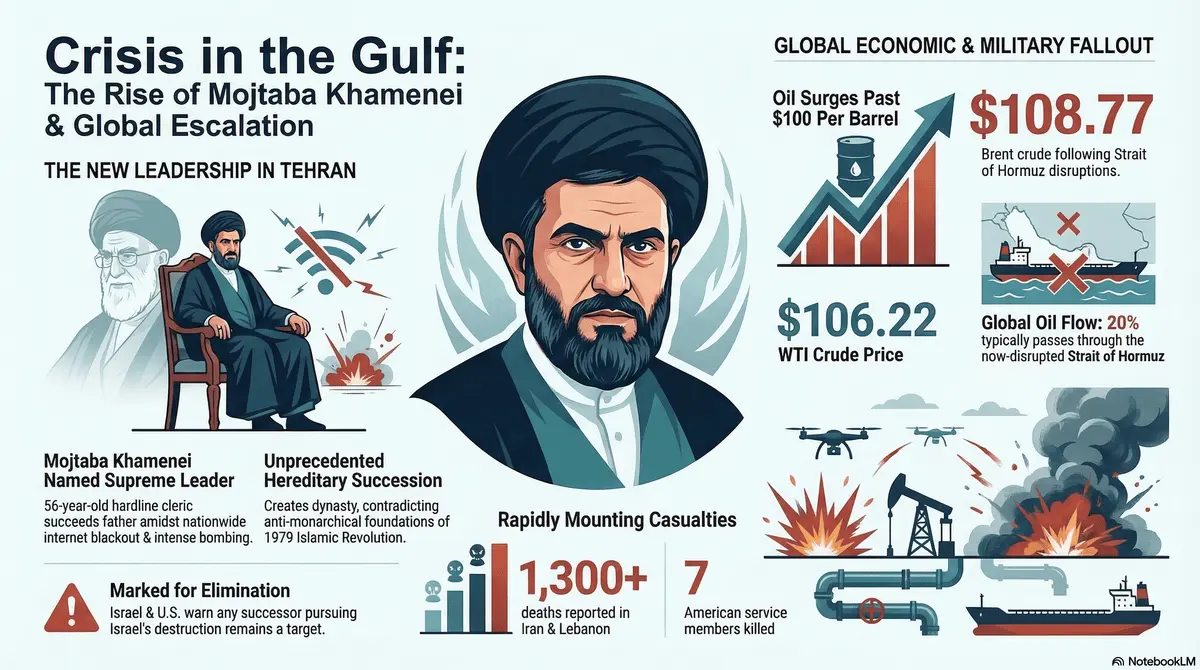
The key players US President Donald Trump and Israeli Prime Minister Benjamin Netanyahu are directing the combined military offensive, demanding total capitulation from the Iranian government. Within Iran, President Masoud Pezeshkian has attempted to balance diplomatic outreach with the military actions directed by the hardline Islamic Revolutionary Guard Corps. Following the assassination of Supreme Leader Ali Khamenei, his son, Mojtaba Khamenei, has been named as the new supreme leader to guide the nation through the conflict.
Why this matters The strikes on oil storage facilities in Tehran have caused significant environmental hazards, with authorities warning of toxic acid rain and severe air pollution threatening millions of residents. Beyond the immediate humanitarian crisis, the conflict has drastically impacted the global economy by disrupting critical shipping lanes in the Strait of Hormuz. Oil and gas prices have surged worldwide as regional energy infrastructure sustains damage, prompting global concerns over prolonged economic instability.
Q&A: Unpacking The US-Israel War on Iran
Q: How is the coalition degrading Iranian military capabilities?
A: The combined forces are executing a systematic air campaign targeting air defenses, missile production facilities, and naval assets.
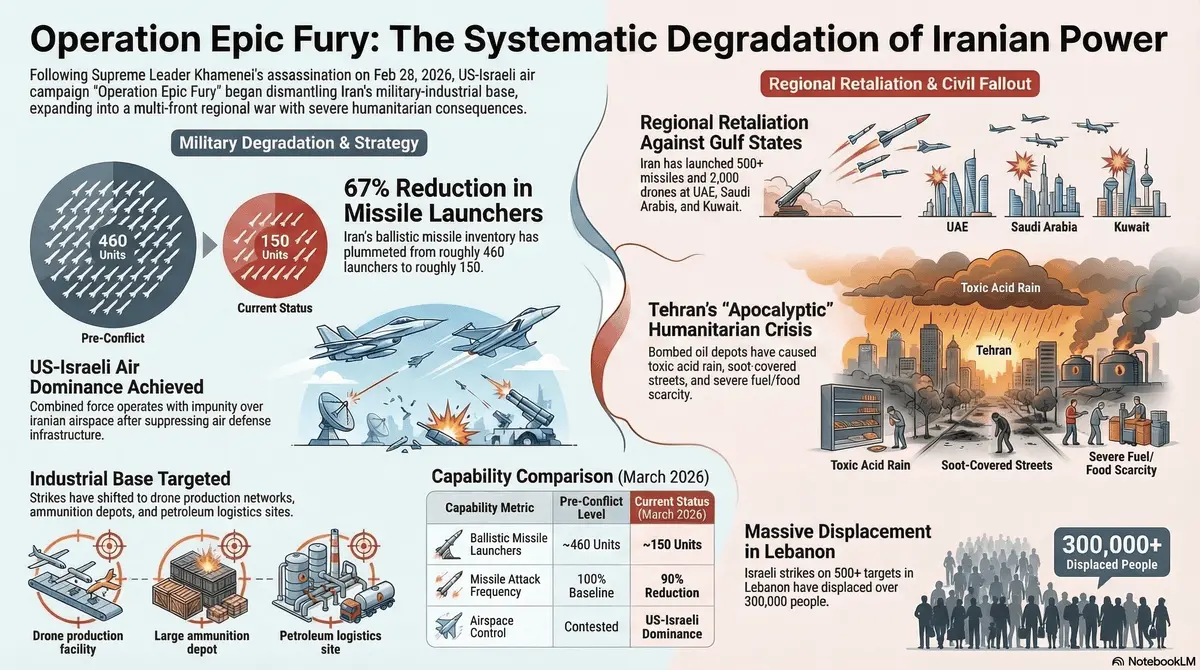
- Air Superiority: US Central Command reports that coalition forces have achieved air dominance over Iran, suppressing defense systems and allowing strikes deep inside Iranian territory.
- Missile Infrastructure Destruction: The Israel Defense Forces and US forces have reduced Iran’s ballistic missile launchers from an estimated 460 to roughly 150.
- Naval Assets: US forces have destroyed over 30 Iranian naval vessels, including a prominent drone carrier, to neutralize maritime threats.
Q: Why are global markets responding volatilely to the conflict?
A: The expansion of hostilities to encompass energy infrastructure and vital shipping lanes has severely threatened global oil and gas supplies.
- Strait of Hormuz Disruption: Iran has reportedly attacked shipping in the Strait of Hormuz, an essential waterway that accounts for approximately 20% of the global oil and gas supply.
- Infrastructure Strikes: Major energy hubs, including Saudi Arabia’s domestic refineries and Qatar’s liquefied natural gas facilities, have suspended production following regional strikes.
- Price Surges: The threat to the energy supply chain has pushed global oil prices above $110, raising alarms over inflation and economic stability.
Q: How has Iran retaliated against the coordinated strikes?
A: Iran has launched waves of ballistic missiles and drones targeting military and civilian infrastructure across the Middle East.
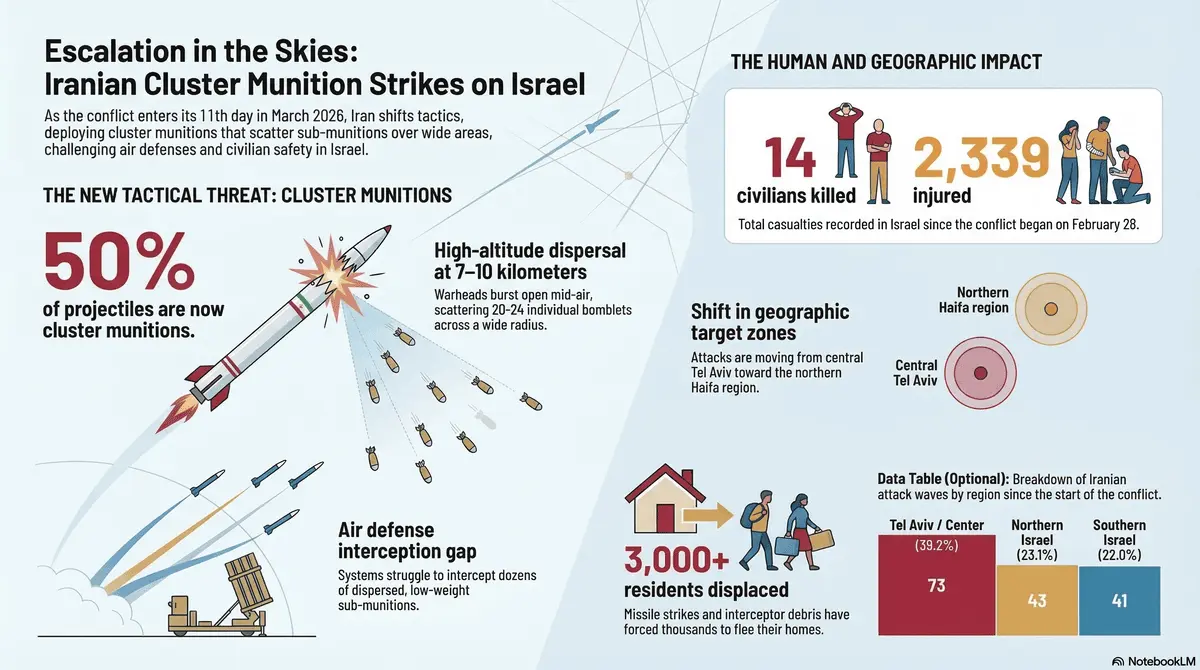
- Regional Targeting: Iran has fired projectiles at Israel, Saudi Arabia, the United Arab Emirates, Kuwait, Bahrain, and Iraq, largely targeting locations hosting US bases.
- Proxy Group Mobilization: Iranian-backed militias, including the Islamic Resistance in Iraq and Hezbollah in Lebanon, have opened new fronts, firing rockets into northern Israel and at US positions in Iraq.
- Civilian Casualties: These retaliatory strikes have caused damage and fatalities in allied nations, though President Masoud Pezeshkian issued a rare public apology to neighboring countries for the attacks.
Q: Why is there internal political tension within the Iranian leadership?
A: The ongoing war has exposed a rift between hardline factions committed to military escalation and moderates seeking diplomatic off-ramps.
- Diplomatic Appeals: President Masoud Pezeshkian announced that the leadership council ordered armed forces not to attack neighboring countries unless provoked, emphasizing a desire for diplomacy.
- Hardliner Defiance: Conversely, judiciary chief Gholam Hossein Mohseni-Ejei insisted that intense attacks on regional targets utilized by enemy forces will persist, reflecting a more aggressive stance.
- Foreign Assistance Claims: At this time, the provision of high-quality satellite targeting imagery by Russia to Iran remains unverified by official sources.
Q: How are allied nations preparing for the prolonged duration of the conflict?
A: Both the United States and Israel are bracing for an extended military campaign aimed at achieving lasting regime and regional shifts.
- Timeline Projections: Israeli leadership and US officials project the intense military operations could last for at least four to six weeks.
- Sustained Objectives: Israeli defense officials maintain that ending the campaign prematurely would allow Iran, potentially with aid from North Korea or China, to rapidly rebuild its ballistic missile array.
- Troop Adjustments: Israel is actively reinforcing military units along its northern border to counter the expanded conflict with Hezbollah in Lebanon.
Q: How is the humanitarian crisis compounding inside Iran?
A: Continuous bombardments and environmental catastrophes are stretching domestic resources and forcing mass displacement.
- Toxic Environment: The destruction of the Tehran oil depots has unleashed toxic chemicals into the atmosphere, causing respiratory issues and raising the risk of acid rain.
- Economic Collapse: Basic necessities, including medical inhalers and fuel, have experienced severe price gouging, exacerbating the suffering of civilians.
- Evacuation Barriers: The United Nations estimates over 100,000 residents fled Tehran in the initial days, though fuel rationing and damaged infrastructure make escape increasingly difficult.
Editorial Note & Transparency
Verification Log:
- Primary Source: Reports from the Israel Defense Forces and US Central Command detailing operational statistics and strike targets.
- On-the-Ground Accounts: Direct voice notes and messages from residents in Tehran describing the environmental and economic fallout.
- State Media & International Reporting: Statements from Iranian state media, US officials, and tracking by independent maritime and conflict monitors.
Compliance:
- Privacy: This article respects user data under our Privacy Policy.
- Transparency: No sponsored content influenced this reporting.
Contact Us: For corrections or feedback, please email: news.desk@qnanews.com