Category: World News

  • War in Iran Escalates as New Supreme Leader Vows Continued Retaliation and Blockade

    War in Iran Escalates as New Supreme Leader Vows Continued Retaliation and Blockade

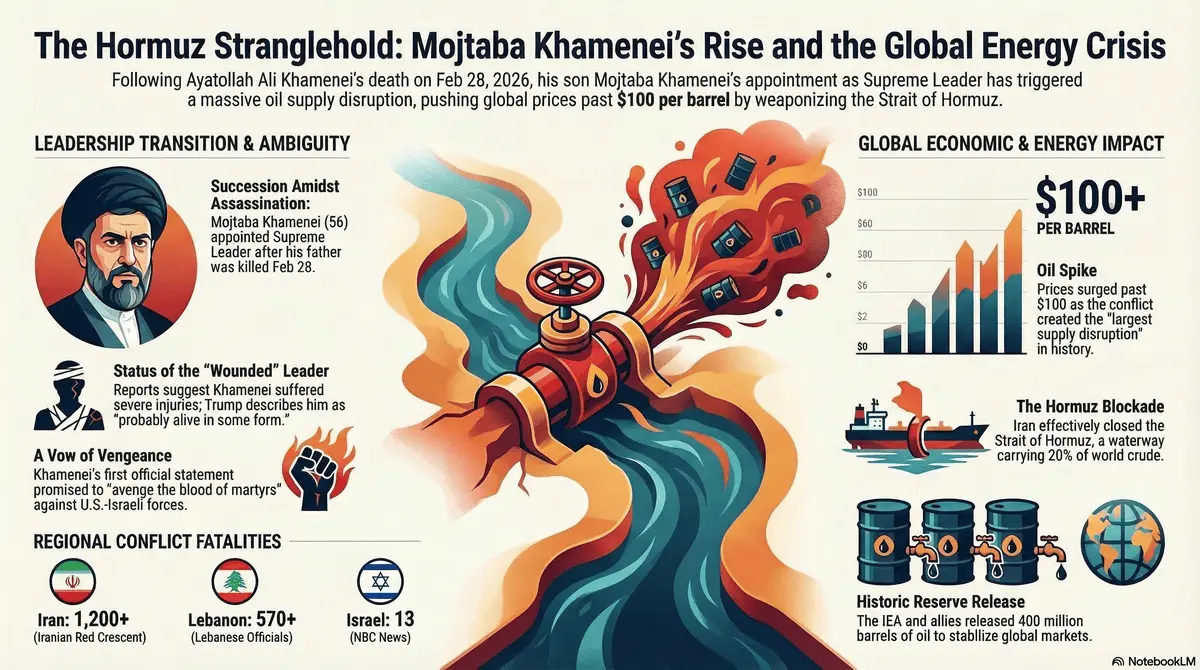
    Dubai/Washington — Tensions in the Middle East have intensified following the first public statement from Iran‘s newly appointed Supreme Leader, Mojtaba Khamenei, who vowed to maintain a blockade on a critical global oil route and continue military retaliation against the United States and Israel. The escalation follows a series of lethal airstrikes that began on February 28, 2026, which killed his father, former Supreme Leader Ayatollah Ali Khamenei, and ignited the current widespread conflict. This ongoing warfare has profoundly impacted global energy markets, sending oil prices soaring and drawing neighboring Gulf states into the crossfire.

    Below is a detailed examination of the ongoing war, its leadership shifts, and its global economic ramifications.

    Context & Background

    How did the leadership transition occur? Following the death of Ayatollah Ali Khamenei during the initial wave of United States and Israeli airstrikes on February 28, 2026, the Assembly of Experts in Iran swiftly appointed his son, Mojtaba Khamenei, as the new supreme leader. The 56-year-old hardline cleric, closely tied to the Islamic Revolutionary Guard Corps, delivered his first public message via a state television news anchor rather than an on-camera appearance, fueling rumors about his health after being reportedly wounded in the strikes.

    What is the strategic significance of the Strait of Hormuz? The Strait of Hormuz is a vital maritime chokepoint through which approximately one-fifth of the world’s traded oil passes. Mojtaba Khamenei has explicitly stated that Iran will continue to use the closure of this strait as leverage to pressure its adversaries, rendering the waterway effectively impassable. Consequently, the disruption has triggered massive shocks to the global economy, prompting the International Energy Agency to coordinate a record release of 400 million barrels of oil to stabilize surging crude prices.

    Why are neighboring Gulf states being targeted? In addition to confronting the United States and Israel, the Iranian military has launched missile and drone attacks against neighboring Arab nations, including Saudi Arabia, the United Arab Emirates, and Bahrain. Mojtaba Khamenei justified these attacks by demanding that these countries shut down American military bases hosted on their soil, warning that promised American protection is a lie. The targeted nations have responded by activating their air defense systems and intercepting incoming Iranian loitering munitions and ballistic missiles.

    How is the United States responding militarily and economically? The United States Central Command has conducted over 5,000 strikes against Iranian targets, crippling the Iranian Navy and degrading its drone and ballistic missile capabilities. Economically, the administration under President Donald Trump has authorized the release of 172 million barrels from the Strategic Petroleum Reserve and temporarily eased sanctions to allow the purchase of stranded Russian oil in a bid to lower domestic and global gas prices.

    Q&A: Unpacking the US-Israel War with Iran

    Q: How is the Iranian military adapting its tactics against superior air power?

    A: Iran is utilizing asymmetric warfare tactics, including the deployment of cluster munitions and coordination with regional proxies, to challenge allied air defense systems.

    • Cluster Munitions Deployment: Iran has launched cluster munitions that scatter dozens of smaller bomblets across a wide area, making them highly difficult for Israel‘s air defense systems to intercept and posing a lethal threat to civilians.
    • Proxy Group Coordination: Iranian forces are increasingly coordinating their missile barrages with regional proxy groups like Hezbollah in Lebanon, launching synchronized attacks to overwhelm enemy radar.
    • Concealment Strategies: The United States military has accused Iranian forces of moving rocket launchers into civilian neighborhoods, near schools and hospitals, to deter allied airstrikes.

    Q: Why have civilian and heritage sites sustained damage during the airstrikes?

    A: Airstrikes have inadvertently struck civilian infrastructure and historical landmarks due to proximity to military targets and allegedly outdated intelligence.

    • Outdated Intelligence: An American munition struck an elementary school in Minab, Iran, killing over 170 people; preliminary investigations suggest the compound was targeted because it served as a military base over a decade ago.
    • Heritage Site Proximity: The United Nations cultural agency verified damage to historical landmarks such as the Golestan Palace in Tehran and the Masjed-e Jāme in Isfahan, prompting Iran to request enhanced protection statuses.
    • Collateral Impact: Intense urban bombing campaigns by the Israel Defense Forces in Beirut, Lebanon, and Tehran have leveled residential buildings situated near suspected militant infrastructure.

    Q: How are global energy markets reacting to the prolonged conflict?

    A: Global oil markets have experienced severe volatility, with crude prices spiking above $100 per barrel due to the effective blockade of crucial shipping routes.

    • Price Surges: Brent crude oil surged by more than 10 percent, crossing the $100 per barrel threshold as a direct result of maritime disruptions.
    • Shipping Reroutes: At least 16 commercial vessels have been attacked by Iranian forces in the Persian Gulf, forcing international shipping companies to abandon the Strait of Hormuz and severely disrupting supply chains.
    • Strategic Interventions: In an effort to counter the price spikes, the United States Treasury Department authorized temporary purchases of Russian oil stranded at sea, while global agencies orchestrated massive reserve releases.

    Q: Why has the status of the new Iranian Supreme Leader sparked widespread speculation?

    A: The physical absence of the new leader from public view has led to unverified rumors regarding his health and survival.

    • Absence from Broadcasts: Mojtaba Khamenei‘s inaugural address to the nation was read by a television news anchor rather than broadcast as a live or recorded video message.
    • Injury Reports: Multiple reports suggest the leader was injured during the strikes that killed his father, with an Iranian ambassador confirming he sustained minor injuries.
    • Unverified Claims: At this time, claims that Mojtaba Khamenei is in a coma or suffered severe amputations remain unverified by official sources.

    Q: How are international governments managing the safety of their citizens and military personnel?

    A: Foreign governments are executing mass evacuations and bolstering defensive postures at regional military installations.

    • Citizen Evacuations: The United States State Department has assisted over 27,000 Americans in evacuating the region, with an additional 40,000 returning via commercial travel.
    • Base Defenses: Following deadly drone strikes on international bases, including an attack that killed a French soldier in Irbil, Iraq, allied forces are deploying interceptor drones sourced from Ukraine.
    • Aviation Incidents: A United States KC-135 refueling plane crashed in western Iraq; officials confirmed the incident occurred in friendly airspace and was not the result of hostile fire.

    Q: Why are human rights and international sporting organizations becoming involved in the conflict’s fallout?

    A: The domestic crackdown by the Iranian regime has prompted international actors to offer asylum and reconsider Iran‘s participation in global events.

    • Asylum Offers: Australia granted asylum to six players and a staff member of the Iranian women’s national soccer team after they faced regime retaliation for refusing to sing the national anthem.
    • Tournament Participation: President Donald Trump publicly suggested that the Iranian men’s national soccer team should not participate in the upcoming World Cup, citing safety concerns.
    • Domestic Repression: Iranian state television hosts have openly threatened domestic critics and protesters with severe consequences, including property confiscation and violence, as the regime seeks to maintain internal control.

    Editorial Note & Transparency

    Verification Log:

    • Government Statements: Press briefings from the United States Central Command, United States Treasury Department, and various Middle Eastern defense ministries.
    • News Reports: Field reporting and geopolitical analysis from established international broadcast and print media.
    • International Agencies: Data and alerts from the International Energy Agency and the United Nations.

    Compliance:

    • Privacy: This article respects user data under our Privacy Policy.
    • Transparency: No sponsored content influenced this reporting.

    Contact Us: For corrections or feedback, please email: news.desk@qnanews.com

  • Deadly Tornadoes and Record Hail Devastate Northwest Indiana and Illinois

    Deadly Tornadoes and Record Hail Devastate Northwest Indiana and Illinois

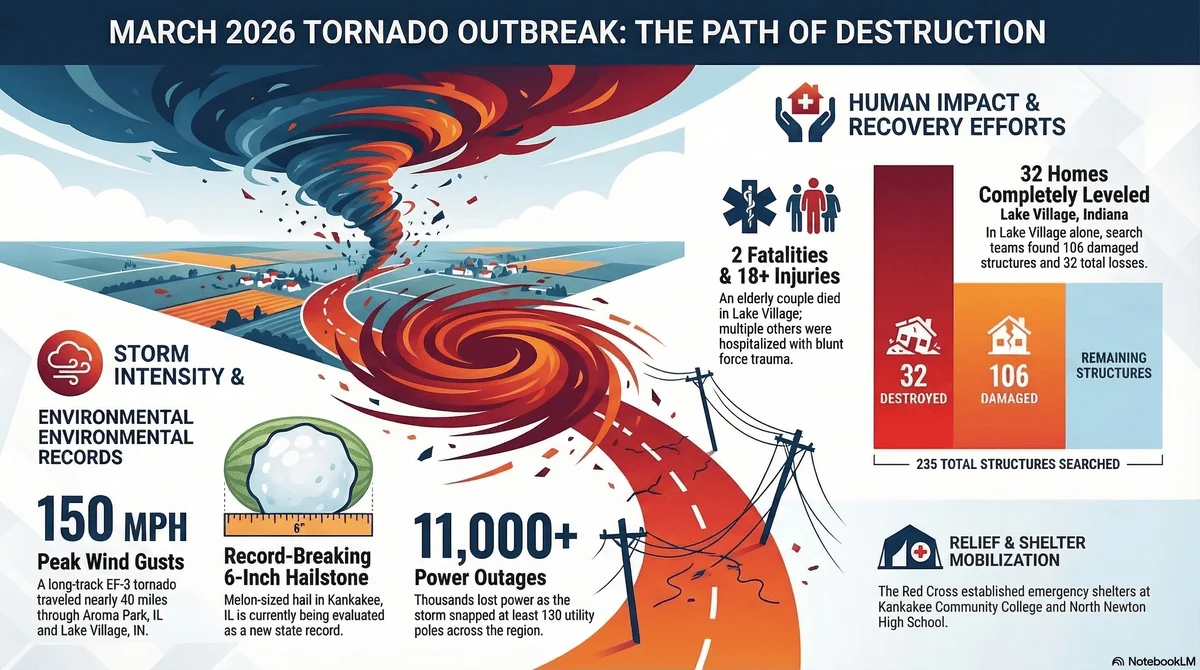
    Lake Village/Kankakee — A series of severe supercell thunderstorms produced multiple destructive tornadoes and potentially record-breaking hail across the Midwestern United States, leaving two fatalities and extensive infrastructure damage. The intense weather system struck the region on Tuesday, March 10, 2026, completely leveling homes, snapping utility poles, and knocking out power for tens of thousands of residents. Search and rescue operations have now transitioned into recovery efforts as local authorities and federal agencies assess the widespread devastation.

    Below is a detailed examination of the meteorological factors, structural impacts, and ongoing community recovery efforts.

    Context & Background

    How did this weather event develop? The destruction was fueled by a highly volatile atmospheric setup, characterized by a powerful cold front colliding with record-warm air surging from the Gulf of America. This collision generated severe supercell thunderstorms, which are rare but highly destructive rotational storms known for producing large hail and violent tornadoes. Furthermore, an 80 mph jet streak provided the necessary wind shear and atmospheric spin to sustain these violent twisters across state lines.

    The hardest-hit communities The storm’s path of destruction heavily impacted Kankakee County, Illinois, and Newton County, Indiana. In Lake Village, Indiana, the tornado destroyed dozens of homes and claimed the lives of an elderly couple, Edward Kozlowski and Arlene Kozlowski. Meanwhile, the suburb of Aroma Park, Illinois, experienced an EF-3 tornado with winds reaching 150 mph, leaving significant property and environmental damage.

    Potential record-breaking hail Alongside the tornadoes, the supercells produced exceptionally large hail that battered vehicles and buildings across the region. A massive 6-inch hailstone—roughly the size of a honeydew melon—was measured in Kankakee, Illinois, and is currently under evaluation by the National Weather Service. If officially verified, this will shatter the previous Illinois state record of 4.75 inches set in 2015.

    Emergency response and recovery Local fire departments and emergency management agencies initiated immediate search and rescue operations, working through darkness and downed power lines. Shelters were rapidly established by the American Red Cross at locations like the North Newton High School and Kankakee Community College to assist displaced residents. Kankakee County also filed an emergency declaration with the state of Illinois to secure additional recovery resources.

    Q&A: Unpacking Midwest Tornado Outbreak

    Q: How did the atmospheric conditions lead to such a rare and severe tornado outbreak?

    A: The severe weather was driven by a classic springtime meteorological clash combined with intense upper-level wind dynamics.

    • Temperature Contrast: A powerful cold front interacted with unseasonably record-setting warm, moist air, creating massive atmospheric instability.
    • Wind Shear Dynamics: An 80 mph jet streak passed overhead, creating significant wind shear that allowed the thunderstorms to rotate and develop into supercells.
    • Storm Training: The storms exhibited “training” behavior, where multiple storm cells repeatedly move over the exact same geographical area, increasing the risk of flash flooding.

    Q: Why was the tornado in Kankakee and Aroma Park particularly destructive?

    A: The twister reached extreme wind speeds and maintained a long track through populated residential and commercial zones.

    • EF-3 Intensity: Preliminary surveys indicate the tornado packed peak wind gusts of 150 mph, classifying it as a strong EF-3.
    • Extended Path: The tornado tracked nearly 40 miles over the course of 90 minutes, beginning in Illinois and dissipating in Indiana.
    • Infrastructure Impact: The high winds tore roofs off homes, collapsed basements, heavily damaged local schools like Bishop McNamara Catholic School, and snapped over 70 utility poles.

    Q: How are local authorities and utility companies responding to the widespread infrastructure failure?

    A: First responders and utility crews are coordinating massive debris removal and power restoration efforts across multiple counties.

    • Power Grid Restoration: Companies like ComEd and NIPSCO deployed hundreds of crews to address the tens of thousands of power outages caused by severed lines and broken poles.
    • Debris Management: Kankakee County initiated a structured debris removal plan, requiring residents to separate materials into categories like white goods, e-waste, and construction debris.
    • Hazardous Materials: Emergency teams successfully secured at least seven hazardous materials incidents resulting from the storm damage in Lake Village, Indiana.

    Q: How is the local community supporting the displaced residents and affected animals?

    A: Grassroots volunteer efforts and regional partnerships have emerged to provide critical supplies and animal welfare support.

    • Donation Centers: Local businesses and community centers are collecting water, clothing, tools, and hygiene products for families who lost their homes.
    • Animal Rescue Operations: The Anti-Cruelty Society in Chicago absorbed several dogs from the Kankakee County Animal Control to free up shelter space for pets displaced by the disaster.
    • Community Relief: Volunteers have established daily feeding stations for displaced neighbors and emergency crews working through the rubble.

    Q: What are the long-term meteorological and insurance implications of the record-breaking hail?

    A: The unprecedented hail size is expected to trigger widespread property claims and potential shifts in climate assessments.

    • State Record Verification: The National Weather Service is currently measuring the 6-inch hailstone found in Kankakee, which is poised to break the previous Illinois record. At this time, the new state record remains unverified by official sources.
    • Insurance Claim Surge: Restoration companies are already surveying extensive roof, siding, and vehicular damage, adding to the state’s soaring hail-related insurance claims.
    • Climate Trends: Some scientific analyses suggest that accelerating climate change may increase the frequency of such large-scale hail events.

    Editorial Note & Transparency

    Verification Log:

    • News Agency Reports: Details sourced from the Associated Press, CNN, and Fox Weather.
    • Official Statements: Information corroborated by the National Weather Service, Newton County Sheriff’s Office, and local fire departments.
    • Local Affiliates: On-the-ground reporting from ABC7 Chicago, FOX 32 Chicago, and the Chicago Sun-Times.

    Compliance:

    • Privacy: This article respects user data under our Privacy Policy.
    • Transparency: No sponsored content influenced this reporting.

    Contact Us: For corrections or feedback, please email: news.desk@qnanews.com

  • Chile Inaugurates Far-Right President Amid Regional Political Shift

    Chile Inaugurates Far-Right President Amid Regional Political Shift

    Valparaiso/Santiago — Far-right leader Jose Antonio Kast was sworn in as Chile‘s president, marking the nation’s sharpest shift to the right since the end of military rule. The transfer of power from leftist Gabriel Boric took place on March 11, 2026, amidst rising public concern over violent crime and illegal immigration. The inauguration was attended by various international leaders, signaling a broader regional shift in political alliances.

    Below is a detailed examination of Jose Antonio Kast‘s policy agenda and its geopolitical implications.

    Context & Background

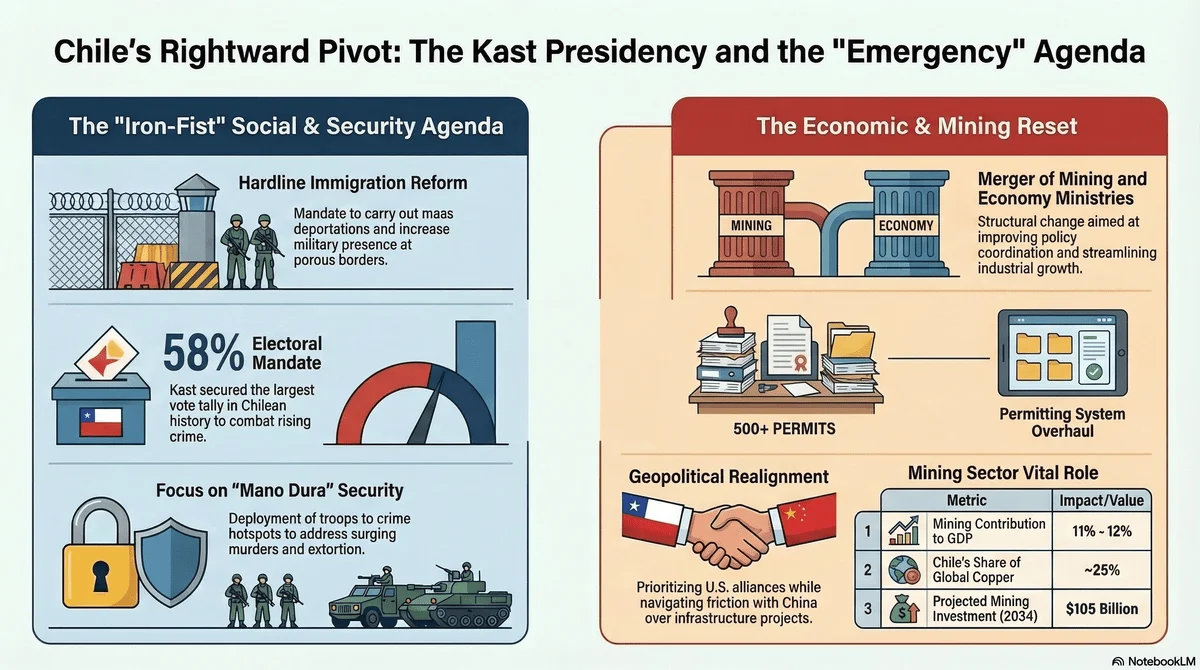
    The Rise of Kast and the Republican Party Jose Antonio Kast capitalized on public dissatisfaction with the outgoing administration’s inability to manage crime and economic stagnation. His platform emphasizes a “mano dura” approach to security, including deploying military forces to borders and implementing mass deportations. This approach resonated with voters seeking a return to stability after years of political turbulence and constitutional debates.

    Economic Strategy and the Mining Sector Chile, the world’s largest copper producer, faces a policy reset under the new administration, which aims to boost growth through deregulation and market-friendly policies. Jose Antonio Kast has merged the Ministry of Mining and the Ministry of Economy, appointing Daniel Mas to lead the portfolio in a move intended to streamline approvals but criticized for lacking technical expertise. The government hopes to accelerate investments in copper and lithium, despite concerns that declining ore grades and policy uncertainty could hinder immediate production increases.

    Geopolitical Realignments and U.S. Influence The transition highlights shifting international dynamics, as Jose Antonio Kast actively aligns himself with United States President Donald Trump and conservative leaders across Latin America. Tensions have already flared over a proposed China-backed undersea fiber optic cable, which the United States views as a security threat, prompting diplomatic friction during the final days of Gabriel Boric‘s term. Jose Antonio Kast is expected to halt the project, navigating a delicate balance between Washington‘s security interests and Beijing‘s role as Chile‘s top trading partner.

    Historical Echoes and Domestic Controversy The new president’s past defense of Augusto Pinochet‘s military dictatorship remains a highly polarizing issue within Chile. His cabinet appointments, which include two lawyers who previously defended Augusto Pinochet‘s rule, have sparked outcries from human rights organizations. Critics fear that the administration’s stringent security measures and conservative social policies may jeopardize civil liberties and human rights advancements made since 1990.

    Q&A: Unpacking the Kast Administration

    Q: How will the new administration balance diplomatic relations between the United States and China?

    A: The government must carefully navigate competing pressures from its primary security ally and its largest trade partner.

    • U.S. Security Alliances: Jose Antonio Kast has signaled strong alignment with Washington, participating in Donald Trump‘s “Shield of the Americas” alliance.
    • Chinese Trade Dependence: China purchases the majority of Chile‘s bulk copper concentrate, making it an indispensable economic partner.
    • Infrastructure Disputes: The administration is expected to cancel a controversial submarine fiber optic cable project to appease United States security concerns regarding China.

    Q: Why is the merger of the mining and economy ministries drawing criticism from industry experts?

    A: The consolidation prioritizes broad economic coordination over the specialized technical knowledge required for natural resource management.

    • Leadership Experience: The appointment of agronomist Daniel Mas surprised the sector due to his lack of specific mining expertise.
    • Permitting Complexities: The industry currently faces a cumbersome environmental assessment system, with a single project sometimes requiring over 500 permits before construction begins.
    • Resource Non-renewability: Analysts warn that without specialist oversight, the unique challenges of declining ore grades and aging deposits may be mismanaged.

    Q: How does Kast plan to address the perceived crisis in public security and immigration?

    A: The administration intends to implement aggressive law enforcement tactics and stringent border controls.

    • Military Deployment: Jose Antonio Kast plans to increase military presence at national borders and in specific crime hotspots.
    • Mass Deportations: The government has vowed to deport large numbers of undocumented migrants, primarily targeting those from Venezuela.
    • Police Empowerment: Proposed policies include expanding the authority and firepower of domestic police forces to combat organized crime.

    Q: Why do critics argue that Kast’s cabinet appointments signal a regression in human rights?

    A: Several key appointments have direct ties to the former military dictatorship and advocate for ultra-conservative social policies.

    • Dictatorship Ties: The new ministers of defense and justice are lawyers who previously defended the rule of Augusto Pinochet.
    • Social Conservatism: The incoming minister for women’s affairs is a vocal anti-abortion activist, raising alarms about reproductive rights.
    • Historical Trauma: Relatives of the forcibly disappeared during the 1973 to 1990 regime fear that historical memory and justice initiatives are under threat.

    Q: How might policy shifts impact Chile’s role in the global energy transition?

    A: Regulatory reforms aim to accelerate the extraction of critical minerals, though structural limitations pose significant hurdles.

    • Copper Production Constraints: Despite high global demand, output is hampered by aging mines and lower ore grades, making rapid production increases unlikely.
    • Lithium Strategy Reversal: The new government may roll back previous state-centric lithium strategies to encourage greater private and foreign investment.
    • Mineral Diversification: Chile is attempting to expand its mining base beyond copper and lithium to include 14 additional transition-critical minerals like cobalt and rare earth elements.

    Editorial Note & Transparency

    Verification Log:

    • International Wire Reports: Sourced breaking news details regarding the inauguration ceremony and the attending international leaders.
    • Economic Analysis Desks: Reviewed mining output projections, ministry restructuring impacts, and trade relations data.
    • Political Science Journals: Cross-referenced historical context regarding past administrations and constitutional processes.

    Compliance:

    • Privacy: This article respects user data under our Privacy Policy.
    • Transparency: No sponsored content influenced this reporting.

    Contact Us: For corrections or feedback, please email: news.desk@qnanews.com

  • Escalating Conflict in the Strait of Hormuz and Global Energy Ramifications

    Escalating Conflict in the Strait of Hormuz and Global Energy Ramifications

    Dubai, United Arab Emirates — Suspected Iranian projectiles struck at least three commercial cargo vessels navigating the strategically vital Strait of Hormuz, intensifying a global energy crisis. The attacks occurred on March 11, 2026, marking a significant escalation in the ongoing military conflict involving the United States, Israel, and Iran. The assaults on shipping infrastructure have effectively halted regional cargo transit, prompting international organizations to authorize unprecedented emergency petroleum releases.

    Below is a detailed examination of the maritime attacks, energy market disruptions, and geopolitical consequences.

    Context & Background

    How did the current maritime conflict begin? The military confrontation commenced on Feb. 28, when the United States and Israel initiated a joint aerial bombardment campaign against Iran dubbed “Operation Epic Fury”. In response to the extensive airstrikes targeting Iranian military and leadership assets, Iran launched a retaliation campaign focused on commercial shipping and regional energy infrastructure to inflict economic pressure on its adversaries.

    Who are the key players in the Strait of Hormuz crisis? The primary state actors involve the armed forces of the United States and Israel combating the military and naval forces of Iran. Iranian military spokespersons, such as Ebrahim Zolfaqari, have declared that any vessels supplying the United States or Israel are legitimate targets. Concurrently, United States President Donald Trump has authorized strikes against Iranian naval assets, including the destruction of sixteen minelayer vessels.

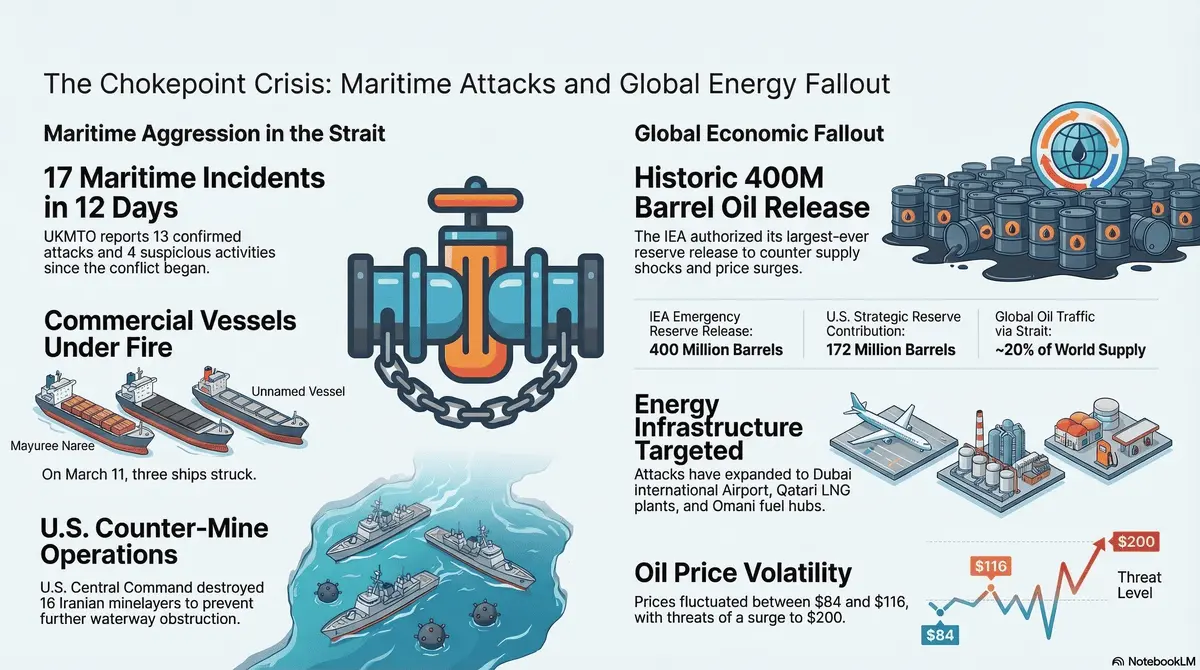
    Why is the Strait of Hormuz economically significant? The Strait of Hormuz is a narrow maritime corridor connecting the Persian Gulf and the Gulf of Oman, functioning as one of the most critical global energy chokepoints. Approximately one-fifth of the world’s traded oil and liquefied natural gas typically passes through this passage. The effective closure of the waterway by Iran has paralyzed supply chains and triggered severe volatility in international energy markets.

    What are the international energy interventions? To counteract the supply shock caused by the blockade in the Middle East, the International Energy Agency authorized the largest emergency oil release in its history. Member nations agreed to release 400 million barrels of stockpiled petroleum to stabilize crude prices, with the United States contributing 172 million barrels from its Strategic Petroleum Reserve under the direction of Energy Secretary Chris Wright.

    Q&A: Unpacking the Strait of Hormuz Crisis

    Q: How is the Iranian military executing its blockade of commercial shipping?

    A: The military forces of Iran are utilizing a combination of projectile strikes, drone swarms, and potential naval mines to deter maritime traffic.

    • Targeted Projectile Strikes: Authorities reported that the Thailand-flagged Mayuree Naree, the Japan-flagged One Majesty, and the Marshall Islands-flagged Star Gwyneth were all struck by projectiles or drones near the Strait of Hormuz and Oman.
    • Naval Mine Depletion: The United States military sank sixteen Iranian minelaying vessels near the Strait of Hormuz, aiming to prevent the mining of the vital shipping waterway.
    • Unverified Sea Mine Status: At this time, the exact number and location of active naval mines deployed by Iran remains unverified by official sources.

    Q: Why did the International Energy Agency intervene in the global oil market?

    A: The agency implemented a historic emergency release of petroleum reserves to mitigate dramatic price fluctuations and supply shortages stemming from the Gulf conflict.

    • Market Volatility Mitigation: The conflict drove Brent crude prices up by 20% since the war began, prompting fears that prices could surge to $200 per barrel as threatened by Iran.
    • Record Reserve Release: Director Fatih Birol announced a 400 million barrel release from the emergency stocks of 32 member countries to alleviate immediate disruptions.
    • United States Contribution: Energy Secretary Chris Wright confirmed the United States would release 172 million barrels from its Strategic Petroleum Reserve over 120 days.

    Q: How has the conflict impacted the internal political and leadership structure of Iran?

    A: The joint airstrikes have inflicted heavy casualties on Iranian leadership, leading to the rapid succession and reported injury of the new supreme leader.

    • Leadership Casualties: The initial United States and Israel bombings on Feb. 28 resulted in the death of Ayatollah Ali Khamenei and several of his family members.
    • Successor Injuries: The new supreme leader, Mojtaba Khamenei, was reportedly wounded in the same airstrike, sustaining injuries to his limbs.
    • Regime Continuity: Despite the extensive bombardment, United States intelligence assessments suggest that the clerical leadership of Iran retains control and is not at immediate risk of collapse.

    Q: Why has the United States faced scrutiny over its aerial bombardment campaign?

    A: A preliminary military investigation revealed that a deadly strike on a civilian target in Iran was caused by intelligence failures.

    • Civilian Casualties: A United States Tomahawk cruise missile struck an Iranian girls’ school, resulting in the deaths of approximately 175 people, primarily students.
    • Intelligence Errors: Officials disclosed that the tragic incident resulted from a targeting error caused by the reliance on outdated intelligence data that misidentified the school as a military installation.
    • Artificial Intelligence Integration: The miscalculation occurred as the United States Central Command, under Admiral Brad Cooper, increasingly leverages artificial intelligence to rapidly identify and authorize thousands of strike targets across Iran.

    Q: How is the conflict expanding beyond the immediate borders of Iran and Israel?

    A: The war has triggered a broader regional crisis, involving proxy group engagements, refugee displacement, and attacks on neighboring infrastructure.

    • Lebanese Humanitarian Crisis: Cross-border fighting between Israel and Hezbollah has devastated Lebanon, resulting in over 600 deaths and the internal displacement of over 750,000 civilians.
    • Gulf Infrastructure Attacks: Iran has expanded its targeting to include neighboring nations, launching drone strikes near the international airport in Dubai and hitting oil storage facilities in Salalah, Oman.
    • Coordinated Operations: The Islamic Revolutionary Guard Corps executed its first joint operation with Hezbollah, coordinating simultaneous missile and drone launches against Israel.

    Editorial Note & Transparency

    Verification Log:

    • Mainstream Media Outlets: News reports from established agencies like AP News, Reuters, CBS News, and NPR detailing military operations and geopolitical statements.
    • Government Statements: Official announcements from the United States military, the International Energy Agency, and international defense ministries regarding casualty figures and reserve releases.
    • Maritime Security Data: Tracking data from groups such as the United Kingdom Maritime Trade Operations confirming incidents involving commercial vessels.

    Compliance:

    • Privacy: This article respects user data under our Privacy Policy.
    • Transparency: No sponsored content influenced this reporting.

    Contact Us: For corrections or feedback, please email: news.desk@qnanews.com

  • Escalating Conflict in the Strait of Hormuz Disrupts Global Oil Markets

    Escalating Conflict in the Strait of Hormuz Disrupts Global Oil Markets

    Dubai/Washington — Multiple commercial vessels have been struck by projectiles in the Strait of Hormuz amidst an ongoing war between the United States, Israel, and Iran. On March 11, 2026, authorities confirmed that three cargo ships were attacked off the coast of Iran, effectively halting transit through the vital maritime corridor. In response to the crisis, the International Energy Agency and the United States government have announced massive releases from their strategic petroleum reserves to stabilize soaring energy prices.

    Below is a detailed examination of the maritime attacks, energy market impacts, and regional security dynamics.

    Context & Background

    How did the current conflict start? The hostilities began on Feb. 28, 2026, when the United States and Israel launched a coordinated military campaign against Iran. The initial airstrikes resulted in the death of Iran’s Supreme Leader, Ali Khamenei, prompting Tehran to retaliate by targeting regional infrastructure and commercial shipping. The United States initiated the operation, dubbed Operation Epic Fury, to eliminate threats from the Iranian regime and its military apparatus.

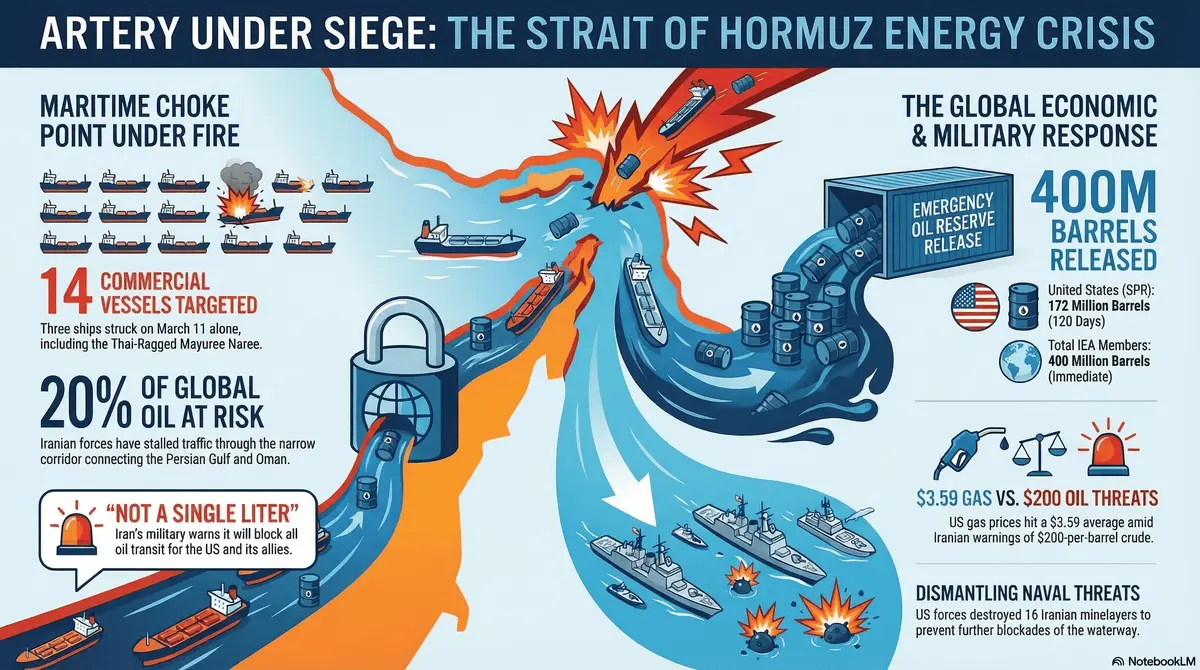
    The strategic significance of the Strait of Hormuz The Strait of Hormuz is a narrow waterway connecting the Persian Gulf and the Gulf of Oman, serving as a critical global energy artery. Approximately 20% of the world’s traded oil and natural gas typically passes through this maritime corridor. Its effective closure by Iranian military actions has severely disrupted the global supply chain and triggered widespread economic anxiety.

    The key players and international response Iran’s Islamic Revolutionary Guard Corps has actively targeted international shipping, while the United States military has countered by destroying Iranian minelaying vessels. To mitigate the economic fallout, the International Energy Agency, led by Fatih Birol, authorized the release of 400 million barrels of emergency oil. Concurrently, U.S. Energy Secretary Chris Wright announced that the United States will release 172 million barrels from the Strategic Petroleum Reserve.

    Q&A: Unpacking the Strait of Hormuz Crisis

    Q: How is the disruption in the Strait of Hormuz impacting global energy markets?

    A: The effective closure of the waterway has sparked a sharp increase in global oil prices and prompted unprecedented emergency interventions.

    • Price Surge: Crude oil prices briefly jumped to nearly $120 a barrel, driving the United States national average for gasoline up to $3.59 per gallon.
    • Supply Shock Mitigation: The International Energy Agency unanimously agreed to release 400 million barrels of oil, representing the largest emergency release in its history.
    • Reserve Drawdown: President Donald Trump authorized the release of 172 million barrels from the Strategic Petroleum Reserve to ease domestic fuel costs.
    • Export Interruption: Oil shipments from Saudi Arabia and Iraq have been severely choked off, though Iran continues to export its own crude through the corridor.

    Q: Why is Iran targeting commercial shipping in the Persian Gulf?

    A: The attacks are a retaliatory strategy aimed at inflicting economic pain on the United States and its allies to force an end to the military campaign.

    • Economic Leverage: Iran seeks to trigger global economic chaos and manipulate regional security to demonstrate its leverage over international energy supplies.
    • Military Objectives: The Islamic Revolutionary Guard Corps explicitly stated it will not allow oil to pass through the strait for the benefit of the United States or Israel.
    • Target Range: Missiles and drones have hit vessels flagged to various nations, including a Thai-flagged bulk freighter, the Mayuree Naree, which caught fire after an explosion.

    Q: How are the United States and Israel conducting their military operations?

    A: The allied forces are utilizing advanced technology and widespread airstrikes to systematically dismantle Iranian military infrastructure.

    • Targeted Destruction: United States Central Command, under Admiral Brad Cooper, reported striking over 5,500 targets, including taking out an entire class of Iranian warships and 16 minelaying vessels.
    • AI Integration: The United States military is employing advanced artificial intelligence tools to rapidly process data and identify strike targets in seconds.
    • Multi-Front Engagement: While the United States focuses on Iran, Israel is conducting simultaneous, large-scale strikes against Hezbollah infrastructure in Lebanon and Beirut.

    Q: Why are Gulf nations and international organizations expressing alarm over the conflict?

    A: The war’s expansion threatens the sovereign security of neighboring states and risks triggering a severe humanitarian and economic catastrophe.

    • Regional Spillover: Countries such as the United Arab Emirates, Kuwait, and Qatar have been forced to intercept incoming Iranian missiles and drones targeting their airspace and oil fields.
    • Diplomatic Condemnation: The United Nations Security Council voted 13-0 to demand a halt to Iran’s “egregious attacks” on its Gulf neighbors, though Russia and China abstained.
    • Infrastructure Threats: Drones have struck near major civilian hubs, including the Dubai International Airport, resulting in minor injuries and highlighting the vulnerability of the region.

    Q: How is the Iranian leadership responding to the ongoing bombardment?

    A: Iranian officials have adopted a defiant stance while managing internal leadership transitions following the deaths of key figures.

    • Defiant Posturing: President Masoud Pezeshkian demanded security guarantees and reparations from the United States and Israel as a condition for peace.
    • Leadership Succession: Following the death of Ali Khamenei, his son Mojtaba Khamenei was selected as the new supreme leader, despite reports that he was injured in the initial airstrikes.
    • Unverified Status: At this time, the exact severity of Mojtaba Khamenei’s injuries remains unverified by official sources.

    Editorial Note & Transparency

    Verification Log:

    • Military Command Bulletins: Cross-referenced statements from U.S. Central Command and the Israel Defense Forces regarding military targets and strike data.
    • Economic Data Centers: Verified crude oil pricing fluctuations and strategic petroleum reserve release metrics from the International Energy Agency.
    • Official Diplomatic Broadcasts: Monitored press conferences and official releases from the United Nations Security Council and regional government ministries.

    Compliance:

    • Privacy: This article respects user data under our Privacy Policy.
    • Transparency: No sponsored content influenced this reporting.

    Contact Us: For corrections or feedback, please email: news.desk@qnanews.com

  • Escalating Conflict: Iranian Cluster Munitions and Coordinated Strikes Target Israel

    Escalating Conflict: Iranian Cluster Munitions and Coordinated Strikes Target Israel

    Tel AvivIsrael faces a complex and deadly challenge as Iran utilizes cluster munitions during coordinated missile strikes across central and northern regions. The strikes represent a significant escalation on March 10, 2026, marking the eleventh day of the ongoing conflict involving the United States, Israel, and Iran. Unexploded submunitions have proven lethal to civilians, prompting urgent warnings from military authorities regarding the lingering threat.

    Below is a detailed examination of the escalating missile threats and coordinated military strategies.

    Context & Background

    What triggered this recent escalation? The conflict, which includes the United States and Israel launching a joint military campaign, prompted retaliatory strikes from Iran. Iran and its proxy forces have subsequently synchronized their attacks, heavily targeting the northern and central regions of Israel, including Tel Aviv and Jerusalem. These coordinated strike strategies mark a severe intensification of regional hostilities and have stretched defensive capabilities.

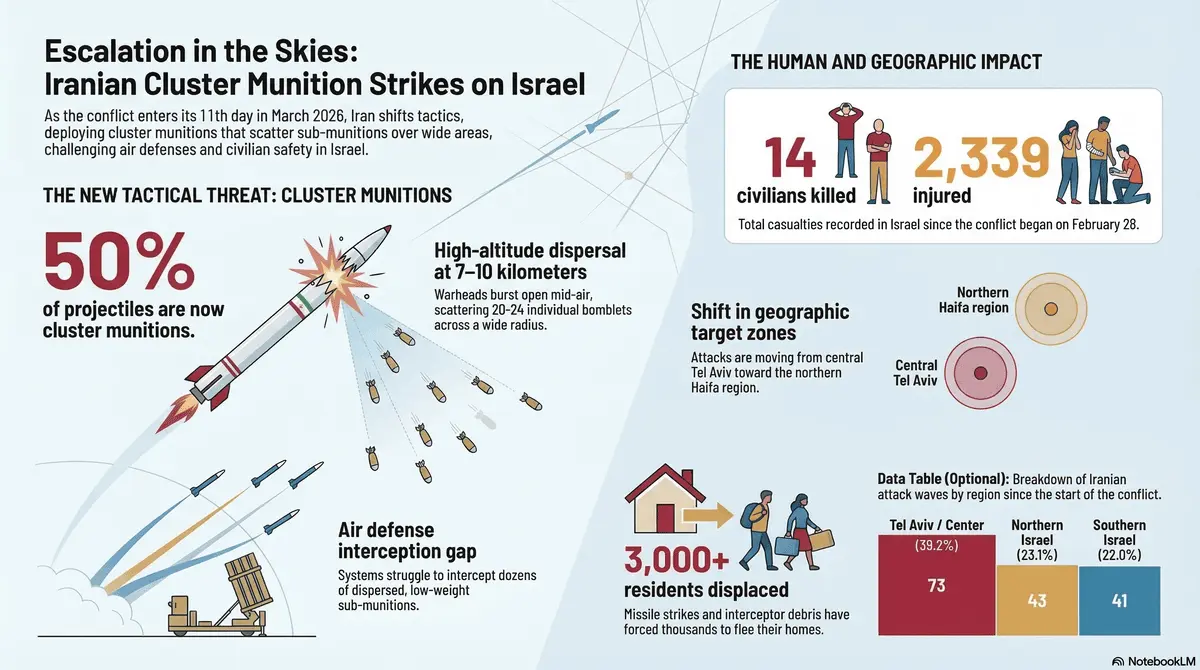
    The role of cluster munitions Military officials report that roughly half of the projectiles launched by Iran toward Israel are cluster munitions. These weapons disperse dozens of smaller explosive bomblets over wide areas, maximizing the threat to unprotected civilian targets. This creates a deadly challenge for Israel‘s air defense systems, as intercepting the parent missile is nearly impossible once the submunitions have scattered.

    Impact on civilian populations The continuous missile barrages have resulted in significant casualties, with 14 civilians killed and over 2,339 injured in Israel since the start of the conflict. The use of submunitions leaves unexploded ordnance scattered across populated areas, acting essentially as land mines. These unexploded devices continue to threaten civilians returning from shelters long after the initial air raids have ended.

    Q&A: Unpacking The Iranian Missile Strategy

    Q: WHY are cluster munitions particularly difficult for Israeli air defenses to intercept?

    A: Once the parent munition disperses its payload, traditional defense systems cannot effectively target the numerous small bomblets.

    • High-Altitude Release: The missiles release submunitions at an altitude of 4 to 6 miles, spreading them across large distances.
    • System Limitations: The Arrow system is effective against intact ballistic missiles, but neither it nor the Iron Dome is designed to intercept dozens of small, scattered explosives.
    • Wide Dispersion: According to N.R. Jenzen-Jones, the design of these weapons scatters the bomblets so widely that they act indiscriminately over a massive area.

    Q: HOW are regional proxy forces coordinating their military operations with Iran?

    A: Allied militia groups have integrated their tactical strikes with Iran, synchronizing drone and rocket launches to overwhelm Israel‘s defenses.

    • Simultaneous Launches: Researcher Kobi Michael notes that rockets originating from Lebanon are frequently fired at the exact same time as ballistic missiles from Iran.
    • Guerrilla Tactics: Militant fighters in Lebanon are returning to small-unit guerrilla warfare and rationing anti-tank rockets to prepare for potential ground invasions.
    • Strategic Positioning: Elite fighters have moved back toward Khiyam near the border of Lebanon and Israel to anticipate ground maneuvers.

    Q: WHY are the unexploded bomblets from these strikes considered a lingering hazard?

    A: A high failure rate in detonation leaves active explosives scattered on the ground that can trigger easily when disturbed.

    • Dud Rate Danger: Submunitions fail to explode on initial impact more frequently than standard warheads, turning them into volatile hazards similar to land mines.
    • Civilian Vulnerability: Because these munitions target densely populated areas like Tel Aviv, civilians returning from shelters are at high risk of stepping on or handling them.
    • Official Warnings: The military and local police in Israel have had to issue urgent flyers and public service announcements warning residents not to touch unexploded ordnance.

    Q: HOW has the international community historically viewed the use of cluster munitions?

    A: These weapons are broadly condemned and restricted due to their indiscriminate nature and long-term danger to non-combatants.

    • International Convention: Over 120 nations have signed the Convention on Cluster Munitions, which bans their use, though Israel, the United States, and Iran are not signatories.
    • Humanitarian Law: Organizations such as Amnesty International have cited the deliberate use of such indiscriminate weapons as a blatant violation of international humanitarian law.
    • Historical Precedent: These weapons have been utilized in numerous global conflicts, including by Israel in Lebanon in 2006, leaving hazardous remnants that required extensive demining.

    Q: HOW are political leaders responding to the trajectory of the ongoing war?

    A: Leadership rhetoric indicates a prolonged military engagement despite some allied predictions of an imminent conclusion.

    • Domestic Determination: Prime Minister Benjamin Netanyahu warned that the military offensive against Iran is not yet finished.
    • Allied Stance: President Donald Trump has insisted that the conflict will be over soon, highlighting a potential discrepancy in allied timelines.
    • Command Decisions: At this time, whether the new leader of Iran, Mojtaba Khamenei, directly commanded the deployment of cluster munitions remains unverified by official sources.

    Editorial Note & Transparency

    Verification Log:

    • Military Analysis Reports: Data from the Alma Research and Education Center tracking attack waves, casualties, and regional targets.
    • International News Wires: Associated Press reporting on the technical specifications and civilian impact of cluster munitions.
    • Security Expert Interviews: Fox News interviews with national security experts detailing the coordinated strike strategies between Iran and its allies.

    Compliance:

    • Privacy: This article respects user data under our Privacy Policy.
    • Transparency: No sponsored content influenced this reporting.

    Contact Us: For corrections or feedback, please email: news.desk@qnanews.com

  • At Least Six Dead in Suspected Deliberate Bus Fire in Switzerland

    At Least Six Dead in Suspected Deliberate Bus Fire in Switzerland

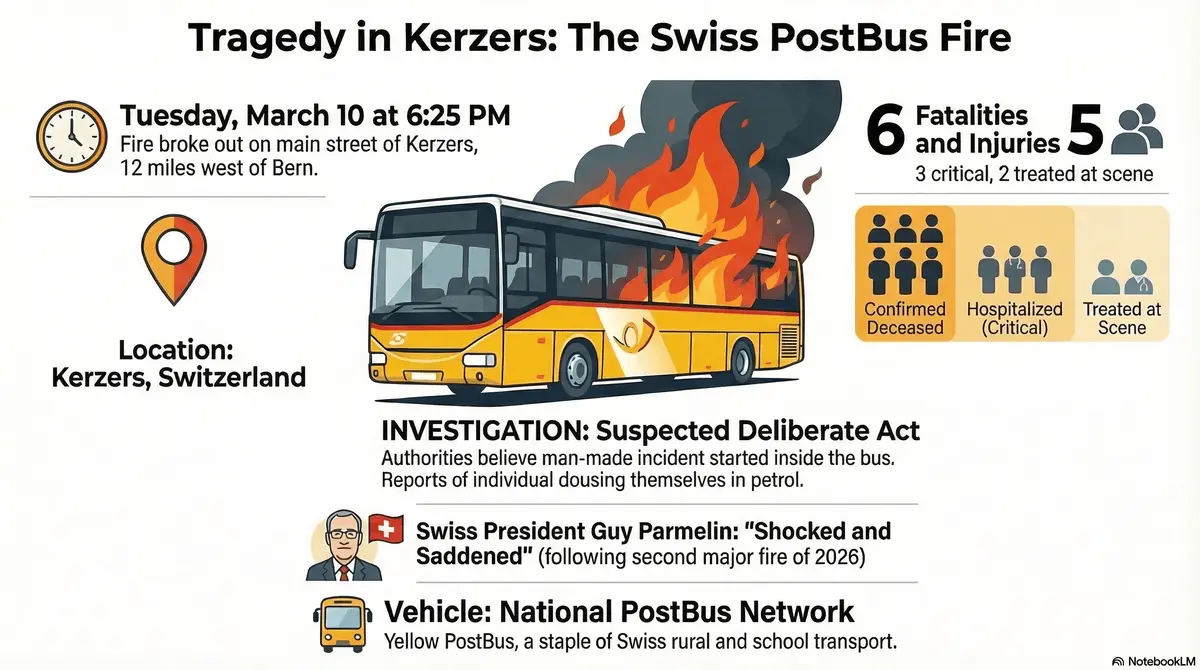
    Kerzers, Switzerland — At least six people have been killed and five others injured after a regional transport bus was completely engulfed in flames. Authorities suspect a deliberate act caused the devastating blaze on Tuesday, March 10, 2026. A criminal investigation is currently underway as emergency services continue to secure the scene and treat the survivors.

    Below is a detailed examination of the incident, the ongoing investigation, and the broader context of recent tragedies in the region.

    Context & Background

    The Incident Timeline The fire erupted shortly before the bus reached its final stop around 6:25 p.m. local time on the main street of Kerzers, a town west of the capital, Bern. The vehicle, operated by the national postal service’s PostBus network, had traveled from the municipality of Düdingen. Upon arrival, emergency responders found the bus totally consumed by flames and immediately initiated rescue and extinguishing operations while establishing a security perimeter.

    The Ongoing Investigation Authorities, including the public prosecutor’s office, have opened a criminal investigation to determine the exact circumstances of the tragedy. Fribourg cantonal police spokesperson Frederic Papaux stated that current evidence suggests a man-made incident, and potentially a deliberate act committed by an individual inside the vehicle.

    PostBus Significance The targeted vehicle belongs to the PostBus fleet, a crucial component of Swiss rural infrastructure. These distinctive yellow buses are utilized by approximately 500,000 passengers daily, connecting remote areas to larger towns while also transporting mail. Their widespread use, particularly among schoolchildren, underscores the significant public impact of this event.

    Recent National Tragedies This event marks the second mass-casualty fire in Switzerland within a span of three months. Earlier this year, an accidental fire at a New Year’s Eve celebration in a Crans-Montana ski resort bar claimed 41 lives and injured over a hundred others. Swiss President Guy Parmelin publicly expressed his shock and sorrow that the nation is mourning victims of another severe fire so soon after the previous disaster.

    Q&A: Unpacking the Kerzers Bus Fire

    Q: How are emergency responders and medical teams managing the casualties?

    A: Medical personnel rapidly triaged the victims, deploying air and ground transport to manage severe injuries.

    • Helicopter Evacuation: At least one critically injured patient was airlifted to a regional hospital for advanced care.
    • Ambulance Transport: Ground ambulances transported other severely injured passengers to nearby medical facilities.
    • On-Site Triage: Two individuals with less severe injuries received immediate medical evaluation and treatment at the scene.
    • Family Support: Police established a dedicated hotline to provide information and psychological support to the relatives of those involved.

    Q: Why do authorities suspect this fire was the result of a deliberate act?

    A: Preliminary police findings point to an intentional ignition from within the passenger cabin rather than a mechanical failure or traffic collision.

    • Single Vehicle Involvement: Investigators confirmed no other vehicles were involved in the incident, ruling out a multi-vehicle collision as the catalyst.
    • Internal Ignition Source: Elements discovered by rescue teams suggest the fire was started by an individual already inside the bus.
    • Witness Accounts: At this time, reports that a person doused themselves in gasoline remain unverified by official sources.

    Q: How is the investigation into the exact cause of the fire proceeding?

    A: Local police and public prosecutors are collaborating to secure the scene, identify victims, and determine the precise sequence of events.

    • Criminal Inquiry: The Public Prosecutor’s Office has formally opened a criminal investigation into the tragedy.
    • Scene Preservation: Fire investigators cordoned off the charred shell of the bus with white tarpaulins and barriers to preserve forensic evidence.
    • Victim Identification: Authorities are actively working to formally identify the deceased, a process complicated by the severity of the fire.

    Q: How does the PostBus network integrate into the daily lives of Swiss citizens?

    A: The network is a fundamental pillar of public transportation and logistics, especially in regions outside major metropolitan centers.

    • High Ridership: The service accommodates roughly half a million passengers every day.
    • Vulnerable Demographics: A significant portion of the daily ridership consists of schoolchildren commuting to and from educational institutions.
    • Dual Utility: Beyond passenger transport, these buses concurrently carry letters and parcels, maintaining vital logistical links for remote communities.

    Q: Why has this incident amplified national grief and political responses in Switzerland?

    A: The Kerzers bus fire compounds the unresolved trauma from a separate, highly lethal fire that occurred just weeks prior.

    • Compounding Trauma: The nation is still reeling from the Crans-Montana bar fire on New Year’s Eve, which resulted in 41 fatalities.
    • Presidential Address: Swiss President Guy Parmelin issued a public statement lamenting the recurring loss of life to severe fires within the country.
    • Corporate Mourning: The PostBus operator publicly expressed deep sorrow and immediately mobilized psychological support teams for its staff.

    Editorial Note & Transparency

    Verification Log:

    • News Agencies: Reports from The Associated Press, Reuters, and Agence France-Presse provided on-the-ground details and preliminary findings.
    • Local Authorities: Fribourg cantonal police, including spokesperson Frederic Papaux, supplied official casualty figures and investigation updates.
    • Government Officials: Statements from Swiss President Guy Parmelin provided national context regarding recent tragedies.

    Compliance:

    • Privacy: This article respects user data under our Privacy Policy.
    • Transparency: No sponsored content influenced this reporting.

    Contact Us: For corrections or feedback, please email: news.desk@qnanews.com

  • Former Rapper Leads New Party to Landslide Victory in Nepal Elections

    Former Rapper Leads New Party to Landslide Victory in Nepal Elections

    Kathmandu— A newly formed political party led by a former rapper is set to secure a sweeping victory in the country’s first general election since a youth-led uprising ousted the previous government. Preliminary results published on March 8, 2026 indicate that the Rastriya Swatantra Party has captured a decisive majority in the House of Representatives. This election marks a significant political shift, effectively ending the long-standing dominance of traditional political establishment figures in the Himalayan nation.

    Below is a detailed examination of the political dynamics, campaign strategies, and historical context defining this unprecedented electoral outcome.

    Context & Background

    How did this political shift begin? The momentum for this change originated from the Gen Z protests in September 2025, which were initially triggered by a government ban on social media platforms. The movement rapidly evolved into a mass revolt against corruption, poor governance, and economic stagnation, resulting in 77 deaths and the forced resignation of the Marxist government led by former Prime Minister Khadga Prasad Oli.

    The rise of the key players Balendra Shah, widely known as Balen, gained national prominence after winning the 2022 Kathmandu mayoral election as an independent outsider candidate. The 35-year-old structural engineer and former rapper later joined the Rastriya Swatantra Party, merging his significant youth appeal with the party’s organized platform focused on anti-corruption and job creation.

    Electoral significance and system This election represents the first time in decades that a single party might secure an outright majority in Nepal, a nation accustomed to fragile coalition governments. Voters elect 165 members directly to the House of Representatives, while an additional 110 seats are allocated through a proportional representation system, both of which the Rastriya Swatantra Party has dominated.

    Historical and geopolitical implications The victory signals a reckoning for the entrenched political elites who have ruled Nepal for decades, shifting the focus towards domestic governance and away from traditional nationalist rhetoric used to deflect from internal issues. It also requires neighboring powers like India and China to adapt to a new generation of leadership that is not tied to established historical alliances and patronage networks.

    Q&A: Unpacking the Election Results

    Q: How did the Rastriya Swatantra Party campaign successfully against established political machines?

    A: The party utilized a highly organized digital strategy combined with measured public messaging and substantial overseas support.

    • Communication Strategy: Balendra Shah employed an “eight-day gap formula,” delivering major speeches only once every eight days to allow messages to spread organically rather than flooding the public.
    • Digital Organization: The campaign was backed by a 660-person social media operation and coordinated by a central research department in Kathmandu that tracked local voter feedback.
    • Financial Backing: A significant portion of the campaign funding came from the Nepali diaspora, particularly from supporters based in the United States.

    Q: Why did traditional political heavyweights fail to retain their strongholds?

    A: Voters were largely exhausted by decades of political musical chairs, corruption, and a failure to deliver on economic promises.

    • Incumbent Defeats: Former Prime Minister Khadga Prasad Oli was decisively defeated by Balendra Shah in his traditional safe seat of Jhapa-5.
    • Generational Disconnect: The established party leaders, mostly in their 70s, failed to resonate with a demographic where over 40 percent of the nearly 30 million citizens are under 35.
    • Demand for Accountability: Voters rejected the older parties due to perceived nepotism, impunity, and an inability to create local employment, forcing young citizens to seek work abroad.

    Q: How might the new government approach its relationship with neighboring countries?

    A: The new leadership appears to be recalibrating its foreign policy to be more cautious and domestically focused, though past controversial statements suggest potential unpredictability.

    • Economic Recalibration: Balendra Shah conspicuously omitted a China-backed industrial park linked to the Belt and Road Initiative from his election manifesto, signaling sensitivity to regional dynamics, especially regarding India.
    • Diplomatic Outreach: India‘s Prime Minister Narendra Modi has already issued a congratulatory message, indicating a willingness from New Delhi to build ties with the new generation.
    • Past Controversies: At this time, how Balendra Shah‘s past controversial social media posts criticizing India, China, and the United States will affect formal diplomatic relations remains unverified by official sources.

    Q: Why has the figure of Balendra Shah attracted significant controversy despite his popularity?

    A: His confrontational public persona and anti-establishment rhetoric have frequently put him at odds with administrative norms and foreign diplomatic protocols.

    • Institutional Conflicts: During his tenure as mayor of Kathmandu, he threatened to set fire to Singha Durbar, the seat of the government, after his official vehicle was stopped by a traffic policeman.
    • Geopolitical Provocations: He placed a “Greater Nepal” map in his office, claiming Indian territories, and banned the screening of Indian films in the capital.
    • Public Scrutiny: He has faced criticism from rights groups for his heavy-handed use of police against street vendors and has largely avoided direct press scrutiny during his national campaign.

    Q: How will the incoming administration address the legacy of the September 2025 protests?

    A: The new government faces the immediate challenge of addressing demands for justice and transparency regarding the state’s violent response to the uprising.

    • Investigation Reports: The leadership must decide on the release and implementation of the Gauri Bahadur Karki Commission report, which investigated the use of force against the protesters.
    • Legal Action: If the findings implicate senior political figures, the administration will have to balance the pursuit of accountability with maintaining national political stability.
    • Institutional Reform: Fulfilling the structural reforms demanded by the youth protesters will require building consensus among all stakeholders, a complex task for a newly formed party.

    Editorial Note & Transparency

    Verification Log:

    • International News Agencies: Reporting from The Associated Press, Reuters, and AFP detailing election statistics, constituent outcomes, and international reactions.
    • Regional News Outlets: Analyses from The Himalayan Times, The Kathmandu Post, and Firstpost outlining campaign strategies, controversies, and local voter sentiment.
    • Global Broadcasters: Coverage from BBC News and Al Jazeera providing on-the-ground interviews, demographic context, and historical background on the 2025 protests.

    Compliance:

    • Privacy: This article respects user data under our Privacy Policy.
    • Transparency: No sponsored content influenced this reporting.

    Contact Us: For corrections or feedback, please email: news.desk@qnanews.com

  • US and Israeli Forces Escalate Military Campaign Against Iranian Oil and Military Infrastructure

    US and Israeli Forces Escalate Military Campaign Against Iranian Oil and Military Infrastructure

    Tehran — Coordinated military operations by the United States and Israel have severely damaged industrial and military targets within Iran, leading to significant environmental and humanitarian crises. A major strike targeted oil storage facilities in the capital, resulting in massive fires and toxic smoke on March 8, 2026. The ongoing campaign aims to dismantle Iranian missile capabilities and apply immense pressure on the current regime.

    Below is a detailed examination of the strategic objectives and regional impacts of the ongoing conflict.

    Context & Background

    How did this start? The escalation follows the breakdown of indirect nuclear negotiations in Geneva between Iran and the United States, which were mediated by Oman. Following the failure to reach a diplomatic consensus, the United States and Israel launched a pre-emptive strike campaign beginning on February 28, 2026, initially targeting Iran’s military leadership and nuclear-related infrastructure. These initial strikes quickly expanded into a broader military effort designed to degrade Iran’s ballistic missile industrial base and enforce what US leadership has termed an unconditional surrender.

    The key players US President Donald Trump and Israeli Prime Minister Benjamin Netanyahu are directing the combined military offensive, demanding total capitulation from the Iranian government. Within Iran, President Masoud Pezeshkian has attempted to balance diplomatic outreach with the military actions directed by the hardline Islamic Revolutionary Guard Corps. Following the assassination of Supreme Leader Ali Khamenei, his son, Mojtaba Khamenei, has been named as the new supreme leader to guide the nation through the conflict.

    Why this matters The strikes on oil storage facilities in Tehran have caused significant environmental hazards, with authorities warning of toxic acid rain and severe air pollution threatening millions of residents. Beyond the immediate humanitarian crisis, the conflict has drastically impacted the global economy by disrupting critical shipping lanes in the Strait of Hormuz. Oil and gas prices have surged worldwide as regional energy infrastructure sustains damage, prompting global concerns over prolonged economic instability.

    Q&A: Unpacking The US-Israel War on Iran

    Q: How is the coalition degrading Iranian military capabilities?

    A: The combined forces are executing a systematic air campaign targeting air defenses, missile production facilities, and naval assets.

    • Air Superiority: US Central Command reports that coalition forces have achieved air dominance over Iran, suppressing defense systems and allowing strikes deep inside Iranian territory.
    • Missile Infrastructure Destruction: The Israel Defense Forces and US forces have reduced Iran’s ballistic missile launchers from an estimated 460 to roughly 150.
    • Naval Assets: US forces have destroyed over 30 Iranian naval vessels, including a prominent drone carrier, to neutralize maritime threats.

    Q: Why are global markets responding volatilely to the conflict?

    A: The expansion of hostilities to encompass energy infrastructure and vital shipping lanes has severely threatened global oil and gas supplies.

    • Strait of Hormuz Disruption: Iran has reportedly attacked shipping in the Strait of Hormuz, an essential waterway that accounts for approximately 20% of the global oil and gas supply.
    • Infrastructure Strikes: Major energy hubs, including Saudi Arabia’s domestic refineries and Qatar’s liquefied natural gas facilities, have suspended production following regional strikes.
    • Price Surges: The threat to the energy supply chain has pushed global oil prices above $110, raising alarms over inflation and economic stability.

    Q: How has Iran retaliated against the coordinated strikes?

    A: Iran has launched waves of ballistic missiles and drones targeting military and civilian infrastructure across the Middle East.

    • Regional Targeting: Iran has fired projectiles at Israel, Saudi Arabia, the United Arab Emirates, Kuwait, Bahrain, and Iraq, largely targeting locations hosting US bases.
    • Proxy Group Mobilization: Iranian-backed militias, including the Islamic Resistance in Iraq and Hezbollah in Lebanon, have opened new fronts, firing rockets into northern Israel and at US positions in Iraq.
    • Civilian Casualties: These retaliatory strikes have caused damage and fatalities in allied nations, though President Masoud Pezeshkian issued a rare public apology to neighboring countries for the attacks.

    Q: Why is there internal political tension within the Iranian leadership?

    A: The ongoing war has exposed a rift between hardline factions committed to military escalation and moderates seeking diplomatic off-ramps.

    • Diplomatic Appeals: President Masoud Pezeshkian announced that the leadership council ordered armed forces not to attack neighboring countries unless provoked, emphasizing a desire for diplomacy.
    • Hardliner Defiance: Conversely, judiciary chief Gholam Hossein Mohseni-Ejei insisted that intense attacks on regional targets utilized by enemy forces will persist, reflecting a more aggressive stance.
    • Foreign Assistance Claims: At this time, the provision of high-quality satellite targeting imagery by Russia to Iran remains unverified by official sources.

    Q: How are allied nations preparing for the prolonged duration of the conflict?

    A: Both the United States and Israel are bracing for an extended military campaign aimed at achieving lasting regime and regional shifts.

    • Timeline Projections: Israeli leadership and US officials project the intense military operations could last for at least four to six weeks.
    • Sustained Objectives: Israeli defense officials maintain that ending the campaign prematurely would allow Iran, potentially with aid from North Korea or China, to rapidly rebuild its ballistic missile array.
    • Troop Adjustments: Israel is actively reinforcing military units along its northern border to counter the expanded conflict with Hezbollah in Lebanon.

    Q: How is the humanitarian crisis compounding inside Iran?

    A: Continuous bombardments and environmental catastrophes are stretching domestic resources and forcing mass displacement.

    • Toxic Environment: The destruction of the Tehran oil depots has unleashed toxic chemicals into the atmosphere, causing respiratory issues and raising the risk of acid rain.
    • Economic Collapse: Basic necessities, including medical inhalers and fuel, have experienced severe price gouging, exacerbating the suffering of civilians.
    • Evacuation Barriers: The United Nations estimates over 100,000 residents fled Tehran in the initial days, though fuel rationing and damaged infrastructure make escape increasingly difficult.

    Editorial Note & Transparency

    Verification Log:

    • Primary Source: Reports from the Israel Defense Forces and US Central Command detailing operational statistics and strike targets.
    • On-the-Ground Accounts: Direct voice notes and messages from residents in Tehran describing the environmental and economic fallout.
    • State Media & International Reporting: Statements from Iranian state media, US officials, and tracking by independent maritime and conflict monitors.

    Compliance:

    • Privacy: This article respects user data under our Privacy Policy.
    • Transparency: No sponsored content influenced this reporting.

    Contact Us: For corrections or feedback, please email: news.desk@qnanews.com

  • Iran Appoints Mojtaba Khamenei as Supreme Leader Amid Escalating Conflict with the United States and Israel

    Iran Appoints Mojtaba Khamenei as Supreme Leader Amid Escalating Conflict with the United States and Israel

    Tehran/Washington — Iran’s Assembly of Experts has reportedly chosen Mojtaba Khamenei as the nation’s new supreme leader following the assassination of his father. The appointment, confirmed by multiple sources, took place on March 8, 2026, amidst intense US-Israeli airstrikes. The transition marks a critical moment for the region as oil prices soar and military actions spread across the Middle East.

    Below is a detailed examination of Mojtaba Khamenei‘s succession and the ongoing geopolitical crisis.

    Context & Background

    The Rise of Mojtaba Khamenei Mojtaba Khamenei, the 56-year-old son of the late Ayatollah Ali Khamenei, was born in Mashhad and has long been considered a powerful figure operating behind the scenes. He holds deep ties to the Islamic Revolutionary Guard Corps (IRGC) and the Basij militia, though he has never held public office.

    A Shift Toward Hereditary Succession The Islamic Republic, founded after the 1979 revolution that overthrew a hereditary monarchy, traditionally selects leaders based on religious standing rather than lineage. The choice of Mojtaba Khamenei by the Assembly of Experts represents a profound shift, with opposition figures like Maryam Rajavi in Paris describing the move as the creation of a hereditary monarchy.

    The Catalyst: The Assassination of Ayatollah Ali Khamenei This rapid succession was triggered by the death of Ayatollah Ali Khamenei during joint strikes launched by the United States and Israel on February 28, 2026. The strikes eliminated key leadership and severely escalated the ongoing war, which has now engulfed regions including Lebanon, Syria, and Saudi Arabia.

    Global Economic and Security Repercussions The conflict’s escalation has heavily impacted global markets, driving the price of Brent crude oil to nearly $109 per barrel as of March 8, 2026. With both Donald Trump and Benjamin Netanyahu signaling prolonged military engagement, the prospect of a severe energy crisis and widened regional war threatens international stability.

    Q&A: Unpacking the Succession and Conflict

    Q: How will the appointment of Mojtaba Khamenei affect Iran’s current military strategy?

    A: Observers expect the new supreme leader to maintain a hardline approach of defiance against foreign adversaries.

    • Defiant Messaging: His swift appointment amidst heavy bombardment signals to the United States and Israel that the Iranian leadership remains intact and unyielding.
    • IRGC Influence: The decision was reportedly made under pressure from the Islamic Revolutionary Guard Corps (IRGC), suggesting that military commanders will maintain significant sway over the nation’s wartime posture.
    • Public Allegiance: Iran’s armed forces, national police, and political figures like Ali Larijani quickly pledged allegiance, indicating a consolidated military front.

    Q: Why are global oil markets reacting so violently to this specific conflict?

    A: The strategic location of the war directly threatens major arteries of global energy distribution.

    • Strait of Hormuz Threat: Approximately 20% of the world’s oil supply transits through the Strait of Hormuz, where Iranian forces have been attacking shipping vessels.
    • Infrastructure Strikes: The United States and Israel recently struck multiple oil depots and a petroleum transport center in Tehran and Alborz, further jeopardizing supply.
    • Price Surges: As a direct result, Brent crude oil spiked to over $108 a barrel, the largest daily gain since the 2020 pandemic.

    Q: How is the United States administration approaching the leadership transition in Iran?

    A: Donald Trump has openly rejected the succession and issued direct threats against the new leader.

    • Executive Disapproval: Donald Trump stated he is “not happy” with the selection and argued that any new leader requires American approval to remain in power.
    • Assassination Threats: The president warned that Mojtaba Khamenei “is not going to last long” without such approval, mirroring the fate of his father.
    • Diplomatic Posture: Donald Trump demanded an “unconditional surrender,” while Iranian President Masoud Pezeshkian dismissed the demand as a futile dream.

    Q: How is Israel responding to the establishment of the new Iranian leadership?

    A: Israel has vowed to militarily target anyone involved in leading or appointing the next generation of Iranian officials.

    • Targeted Assassinations: Defense Minister Israel Katz and the Israel Defense Forces (IDF) announced they would pursue and eliminate the new leader and the members of the Assembly of Experts in Qom.
    • Ongoing Bombardments: The Israel Defense Forces (IDF) launched waves of attacks against over 400 Iranian military infrastructure sites, emphasizing that the war continues unabated.
    • Strategic Calculus: Israeli officials view the appointment of Ayatollah Ali Khamenei‘s son as a sign of regime continuity, prioritizing its total collapse over diplomatic resolutions.

    Q: Why is the internal legitimacy of Mojtaba Khamenei contested within Iran?

    A: His lack of formal public standing and history of alleged political interference fuel domestic skepticism.

    • Electoral Interference: Reformist figures, including Mehdi Karroubi and Mostafa Tajzadeh, have historically accused him of engineering the 2005 and 2009 elections to favor hardliners like Mahmoud Ahmadinejad.
    • Religious Credentials: As a mid-ranking cleric (Hojatoleslam) rather than a high-ranking Ayatollah, his religious qualifications to serve as supreme leader are heavily debated.
    • Dynastic Resentment: Many Iranians resent the establishment of a hereditary system; however, at this time, widespread domestic protests remain unverified by official sources due to internet blackouts.

    Editorial Note & Transparency

    Verification Log:

    • Digital Media Source: Al Jazeera English live coverage detailing the succession and strikes.
    • International Broadcaster: BBC News profiling the history and controversies of the new supreme leader.
    • Domestic News Network: NBC News reporting on the global economic impact and political responses.

    Compliance:

    • Privacy: This article respects user data under our Privacy Policy.
    • Transparency: No sponsored content influenced this reporting.

    Contact Us: For corrections or feedback, please email: news.desk@qnanews.com