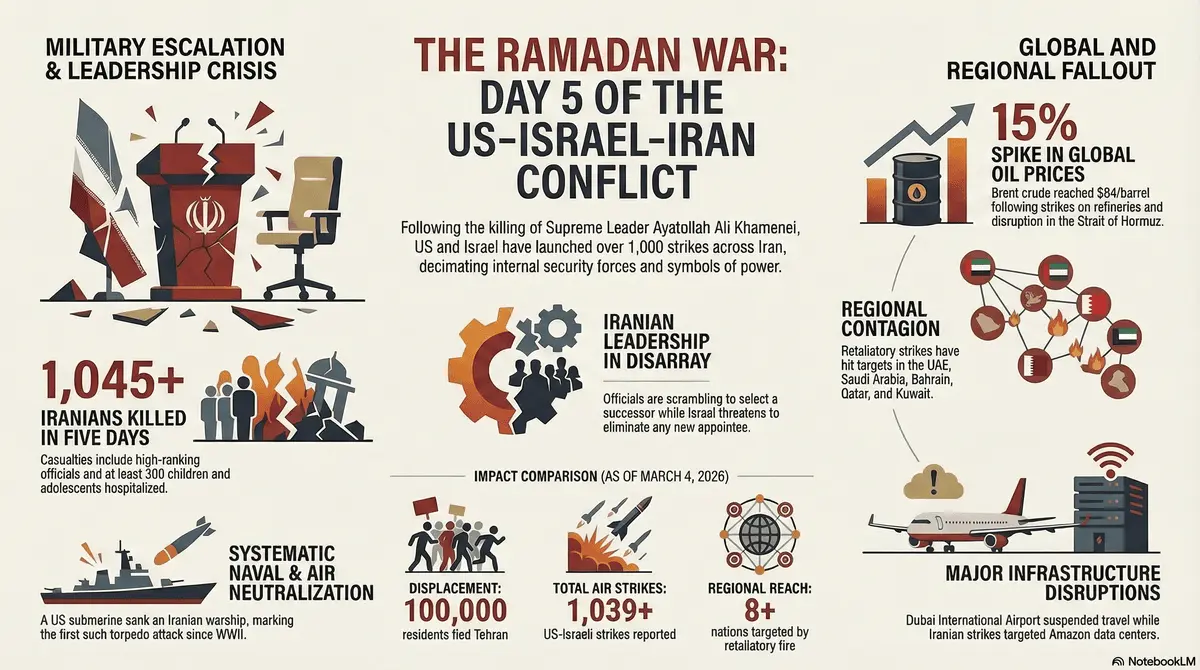
WASHINGTON/TEHRAN — The United States and Israel initiated major combat operations against Iran, resulting in the reported death of Supreme Leader Ali Khamenei. The joint strikes began overnight into February 28, 2026. This unprovoked attack bypasses congressional authorization, prompting immediate calls from lawmakers for a War Powers Resolution vote to restrict further escalation.
Below is a detailed breakdown of the political and strategic consequences of the strikes.
Context & Background
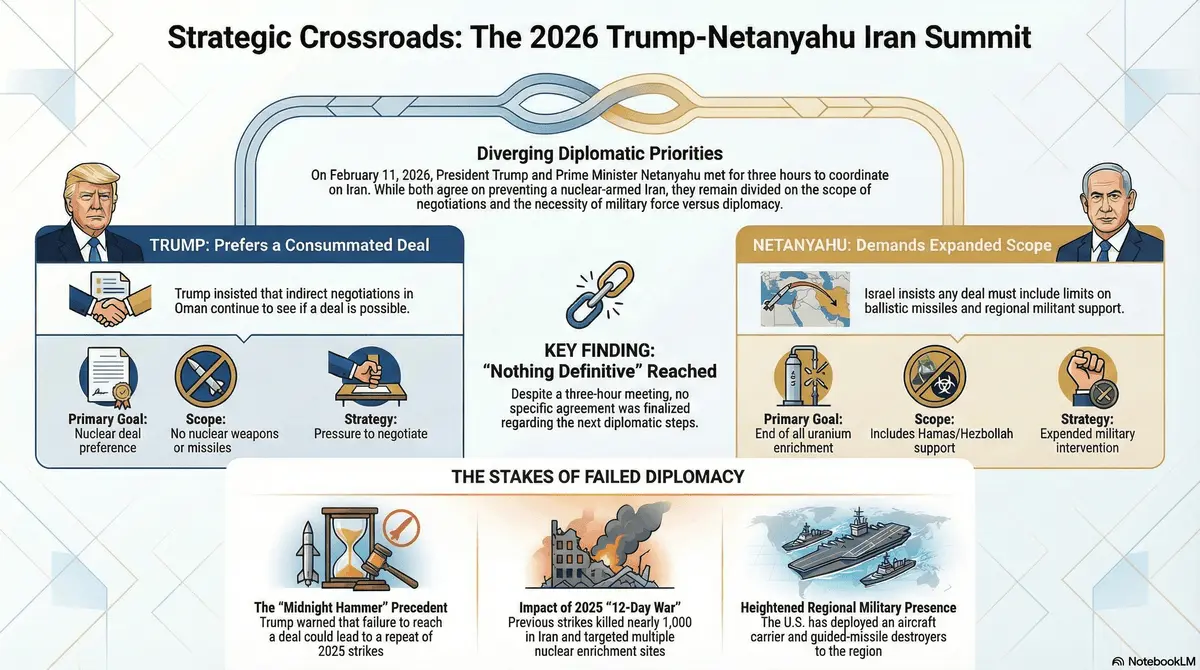
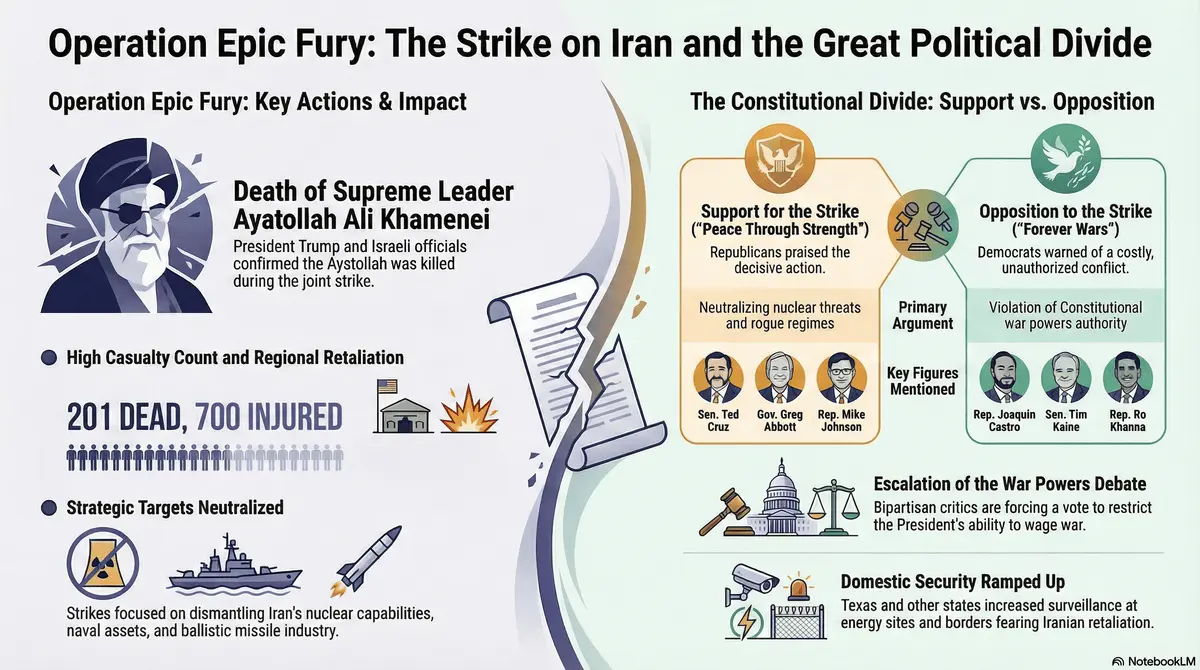
How did this start? President Donald Trump ordered the strikes, citing the need to neutralize threats from the Iranian regime, pointing to its nuclear ambitions, support for regional terrorism, and history of targeting Americans. The administration labeled the campaign Operation Epic Fury, framing it as a necessary measure to eliminate the regime’s ballistic missile capabilities and naval forces.
The key players The operation was jointly executed by the military forces of the United States and Israel under the direction of President Donald Trump and Prime Minister Benjamin Netanyahu. Within the U.S. Congress, Republican leaders like House Speaker Mike Johnson have supported the strikes, while a bipartisan coalition including Democrats like Representative Joaquin Castro and Republicans like Representative Thomas Massie are demanding legislative oversight.
Historical significance The attack marks a major escalation in the nearly 50-year geopolitical struggle between the United States and the Islamic Republic of Iran. It severely tests the constitutional separation of powers, as the executive branch launched a massive military campaign aimed at regime change without a formal declaration of war from the legislative branch.
Q&A: Unpacking the Military Strikes on Iran
Q: How are lawmakers attempting to limit the president’s military authority?
A: Lawmakers are pushing for a swift vote on a War Powers Resolution to restrict further unauthorized military action in Iran.
- Bipartisan Effort: Representatives Ro Khanna and Thomas Massie authored a resolution to force a public vote and reassert congressional war powers.
- Senate Threshold: Because of specific legislative rules, the resolution would only need a simple majority of 51 votes to pass the U.S. Senate.
- Veto Threat: Even if passed, President Donald Trump would likely veto the resolution, requiring a challenging two-thirds majority to overturn.
Q: Why are proponents of the strikes arguing that the action was necessary?
A: Supporters argue the preemptive strikes were essential to dismantle Iranian capabilities and protect international security.
- Nuclear Prevention: Proponents state the operation guarantees that Iran will never obtain nuclear weapons after refusing diplomatic off-ramps.
- Regime Change Opportunity: Leaders argue that severely degrading the Islamic Revolutionary Guard Corps provides the Iranian public an opportunity to overthrow their authoritarian government.
- Retaliation History: Allies emphasize that the Iranian regime has spent decades funding proxy groups and chanting against the United States.
Q: How is the lack of congressional approval impacting domestic political stability?
A: The unilateral nature of the strikes has ignited fierce debate over the constitutional separation of powers.
- Constitutional Violation Claims: Critics, including Senator Tammy Baldwin, accuse the administration of illegally bombing a sovereign nation by totally disregarding the constitutionally required congressional sign-off.
- Briefing Deficits: Many lawmakers assert that the administration failed to present actionable intelligence or a coherent strategy to Congress before launching the attacks.
- Civilian Casualties: State media reports massive death tolls, but at this time, the exact number of civilian casualties remains unverified by official sources.
Q: Why are critics warning about the long-term consequences of this operation?
A: Opponents fear the strikes could plunge the United States into a prolonged and costly regional conflict.
- Escalation Risks: Experts caution that the strikes could trigger widespread retaliation against American troops and bases stationed throughout the Middle East.
- Absence of Strategy: Lawmakers highlight the lack of a defined end-state or post-strike stabilization plan, warning of the disastrous consequences seen in previous regime-change wars.
- Domestic Costs: Critics argue that funding another foreign conflict diverts essential resources away from domestic priorities like healthcare and affordable housing.
Q: How did the Iranian government and military respond to the initial attack?
A: Iran immediately launched retaliatory strikes against American and Israeli targets in the region.
- Drone and Missile Deployment: Following the initial bombardment, Iranian forces fired missiles and drones toward Israel and at a U.S. Navy base in Bahrain.
- Regime Resilience: Analysts note that aerial bombing alone historically struggles to completely dismantle entrenched regimes.
- Proxy Mobilization: The regime may utilize its network of proxy militias to broaden its retaliatory campaign in the Middle East.
Editorial Notes & Transparency
Verification Log:
- News Reports: Articles from local and national outlets detailing the military operations and political responses.
- Official Statements: Public releases and social media posts from U.S. Senators, Representatives, and the President.
- International Analysis: Documentation of historical context and geopolitical strategy from foreign policy experts.
Compliance:
- Privacy: This article respects user data under our Privacy Policy.
- Transparency: No sponsored content influenced this reporting.
Contact Us: For corrections or feedback, please email: news.desk@qnanews.com