Boston, Massachusetts — A landmark long-term study published in the Journal of the American Medical Association (JAMA) in February 2026 reveals that moderate, daily consumption of caffeinated coffee or tea is associated with a 15–20% reduction in dementia risk. The findings, drawn from over 130,000 U.S. participants tracked for more than 40 years, were led by researchers at Harvard Medical School and Mass General Brigham — and are being called one of the most significant nutrition-based insights into cognitive health in decades.
Below is a detailed breakdown of the study, its findings, the controversies surrounding them, and what they mean for the millions of Americans at risk of dementia.
Context & Background
What the Study Found
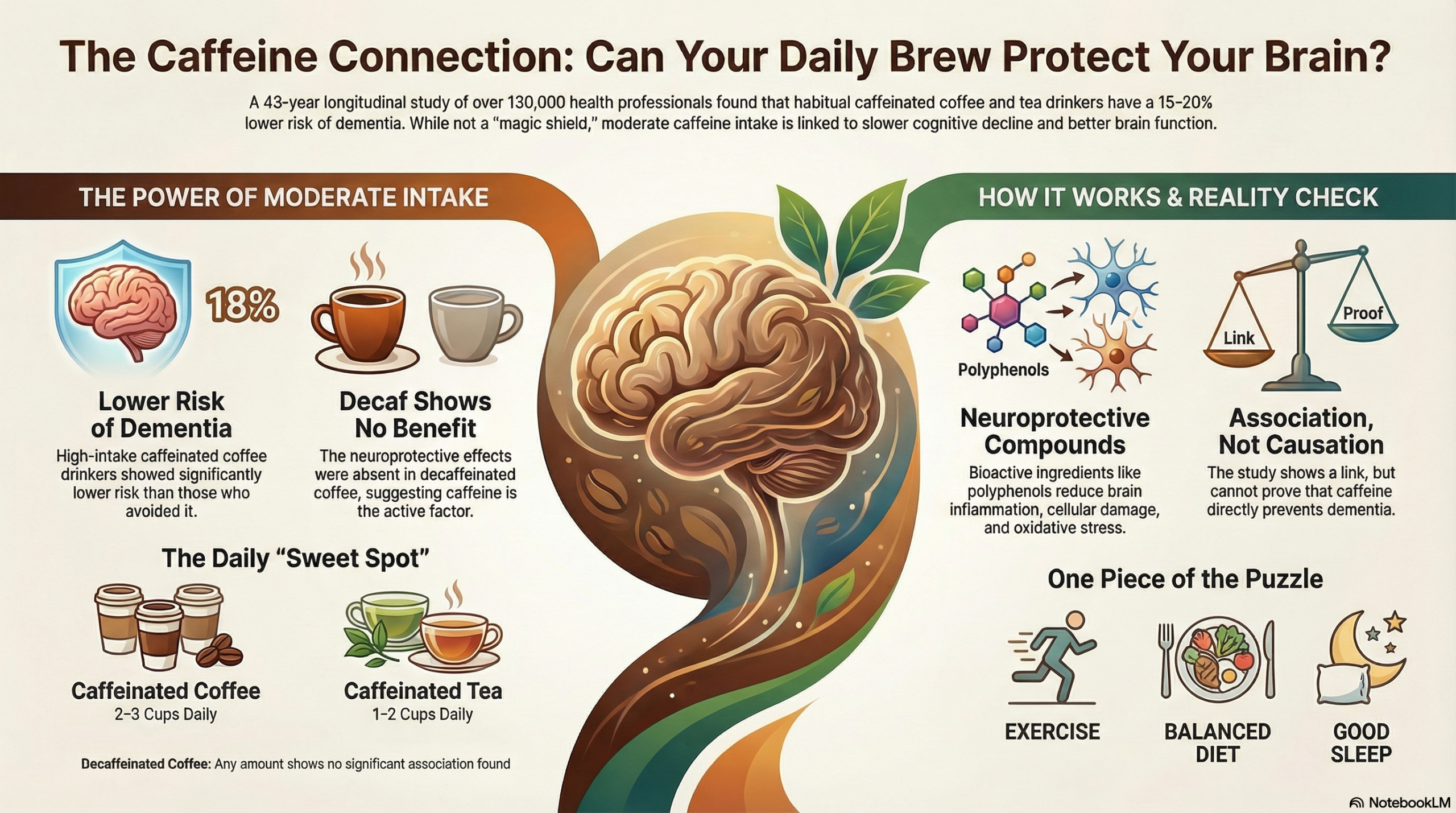
A massive long-term study published in JAMA reveals that moderate, daily consumption of caffeinated coffee or tea is associated with a 15–20% reduction in dementia risk. The greatest benefit was observed in those consuming two to three cups of caffeinated coffee or one to two cups of tea per day.
The Research Team
The research was led by Yu Zhang and Dr. Daniel Wang of Harvard Medical School and Mass General Brigham. Dr. Wang noted that while the results are promising, coffee is just “one piece of the puzzle” in cognitive health, and independent experts including Dr. Céline Gounder and Prof. Naveed Sattar contributed critical analysis.
The Scale of the Problem
With over 6 million Americans currently living with dementia — a number projected to double in the coming decades — the medical community has been urgently seeking early preventive interventions. Current treatments offer only modest benefits once symptoms appear, making dietary research like this study increasingly significant.
Historical Significance
This study stands out for its scale and duration — over 130,000 participants tracked for more than 40 years — making it one of the most rigorous analyses of diet and cognitive health ever conducted. It suggests that a simple, existing habit may serve as a practical, low-cost tool for long-term brain protection.
Q&A: Unpacking the Study
Q: What is the biological mechanism behind coffee’s neuroprotective effects?
A: Researchers point to several bioactive compounds as the primary drivers of brain health:
- Caffeine and polyphenols are believed to reduce inflammation and oxidative stress, where free radicals damage cellular tissues.
- These compounds may also improve vascular health and metabolic function.
- Specifically, caffeine is linked to lower rates of Type 2 diabetes, which is a significant known risk factor for developing dementia.
Q: Why was the benefit absent in those who drank decaffeinated coffee?
A: The decaf findings are one of the study’s most telling results:
- The Findings: The study found no significant association between decaffeinated coffee and a reduced risk of dementia.
- The Implication: This suggests that caffeine itself — rather than just the antioxidants found in the bean — is likely the active neuroprotective factor.
- The Open Question: The exact reason why decaf fails to provide the same benefit remains unverified by official sources, though researchers hypothesize caffeine’s specific impact on metabolic and vascular pathways is key.
Q: Is there a “sweet spot” for consumption, and can you drink too much?
A: Yes, the benefits appear to plateau at an optimal daily amount:
- Optimal Dose: The greatest risk reduction was observed in those consuming two to three cups of caffeinated coffee or one to two cups of tea per day.
- Higher Consumption: Unlike some previous studies, consuming higher amounts of caffeine did not lead to negative cognitive outcomes in this data set, though it did not provide additional protection beyond the optimal dosage.
Q: How does this research impact the medical industry and aging populations?
A: The implications are significant for both public health and healthcare industry strategy:
- Because current dementia treatments offer only modest benefits once symptoms appear, the medical community is shifting focus toward early prevention.
- Identifying a common dietary intervention like coffee is significant for public health officials, especially as dementia cases are projected to double in the coming decades.
- It provides a scalable, accessible lifestyle recommendation for aging populations who may already be habitual drinkers.
Q: Fact-Check — Does this study prove that coffee prevents dementia?
A: No. The study’s design places important limits on its conclusions:
- Study Type: This was an observational study, meaning it shows a strong association but cannot prove causality.
- Confounding Factors: Experts like Dr. Céline Gounder warn that underlying factors — such as people with high blood pressure already avoiding caffeine — could skew the data.
- A Known Risk: Prof. Naveed Sattar notes that caffeine can raise blood pressure in some individuals, which is itself a driver of dementia — a nuance the study does not fully resolve.
Q: How should a person who is sensitive to caffeine interpret these results?
A: Medical experts stress that this is not a one-size-fits-all recommendation:
- This is not a “prescription” to start drinking caffeine for those who do not tolerate it well.
- Alternatives: For those who must avoid stimulants, other nutrition-focused strategies — such as consuming flavonoid-rich foods (berries, leafy greens) and omega-3 fatty acids — are also strongly supported by research for maintaining cognitive health.
- The Bigger Picture: Brain health is built over decades and involves exercise, sleep, and a balanced diet — rather than any single “magic bullet” beverage.
Editorial Note & Transparency
Correction/Update: This article focuses on the JAMA coffee and dementia study published in February 2026.
Privacy & Ethics: All quotes and figures are derived from peer-reviewed research published in the Journal of the American Medical Association (JAMA), official press releases and commentary from Harvard T.H. Chan School of Public Health and Mass General Brigham, and direct quotes and analysis from lead researchers (Yu Zhang, Daniel Wang) and independent medical contributors (Dr. Céline Gounder, Prof. Naveed Sattar, Dr. Dung Trinh). No private data was accessed.
Contact Us: For corrections or feedback, please email: newsdesk@qnanews.com
Keywords: Coffee Dementia Risk 2026, JAMA Coffee Study, Caffeine Brain Health, Dementia Prevention, Harvard Medical School, Cognitive Health Diet, Neuroprotective Foods, Decaf Coffee Dementia, Polyphenols Brain, Yu Zhang Daniel Wang.
Editorial Disclosure: No sponsored content influenced this reporting.