Author: Menka

  • Global Fertilizer Crisis Mounts as War Closes Strait of Hormuz

    Global Fertilizer Crisis Mounts as War Closes Strait of Hormuz

    Washington/Tokyo — The escalating military conflict in the Middle East has effectively closed the Strait of Hormuz, trapping nearly a million metric tons of fertilizer in the Persian Gulf and sending global agricultural markets into turmoil. The de facto closure, which began following strikes on February 28, 2026, has caused urea and sulfur prices to skyrocket worldwide. Farmers and economists warn this disruption threatens spring planting seasons and risks triggering a severe global food inflation crisis.

    Below is a detailed examination of the global fertilizer supply shock and its cascading agricultural impacts.

    Context & Background

    Origins of the Supply Shock The crisis stems from the recent military engagements involving the United States, Israel, and Iran, which led to the shutdown of the Strait of Hormuz. Because approximately one-third of the world’s seaborne fertilizer trade typically passes through this narrow waterway, the conflict has stranded dozens of cargo vessels. The restricted flow of nitrogen fertilizers has prompted agricultural industry leaders to petition President Donald Trump for maritime escorts.

    The Vulnerability of Global Agriculture Modern farming relies heavily on synthetic fertilizers to maintain crop yields and prevent widespread food scarcity. The Persian Gulf region accounts for 43% of seaborne urea exports and 44% of seaborne sulfur, the latter being a crucial ingredient for manufacturing phosphate fertilizers globally. Deprived of these essential inputs, agricultural sectors face a critical shortfall just as the spring planting season approaches in the Northern Hemisphere.

    Comparisons to Historical Disruptions Agricultural economists draw direct parallels to the 2022 supply shock caused by Russia invading Ukraine, but warn the current scenario poses unique financial dangers to producers. Unlike the previous crisis where elevated grain prices offset rising input costs, the Persian Gulf is not a major grain exporter, meaning farm revenues will not rise to match surging expenses. Consequently, farmers face compressed profit margins that could trigger widespread bankruptcies.

    Q&A: Unpacking The Fertilizer Crisis

    Q: How does the blockage of the Strait of Hormuz specifically disrupt fertilizer production in other countries?

    A: The blockage cuts off critical chemical feedstocks and energy supplies needed by fertilizer manufacturers located outside the Middle East.

    • Natural Gas Dependencies: Producers in India, Bangladesh, and Pakistan have been forced to halt operations due to severed natural gas supplies from Qatar.
    • Sulfur Shortages: The Gulf produces nearly half of the world’s seaborne sulfur, which is mandatory for converting phosphate rock into usable phosphate fertilizer globally.
    • Market Concentration: With alternatives limited by tariffs on Morocco and Russia, and suspended exports from China, the concentration risk surrounding Gulf supplies creates an inescapable supply bottleneck.

    Q: Why are domestic agricultural markets in the United States feeling the impact of a Middle Eastern blockade?

    A: Despite strong domestic production, the United States remains integrated into global commodity pricing and imports specific critical components from the Gulf.

    • Price Transmission: Even though the United States produces about three-quarters of the fertilizer it consumes, global supply constraints drive up domestic benchmark prices, with urea in New Orleans rising over 25% since the conflict began.
    • Import Reliance: Approximately 17% of American urea consumption and 20% of phosphate consumption transit the Strait of Hormuz, primarily from Saudi Arabia, Qatar, and Oman.
    • Logistical Delays: Farmers in states like California and Georgia, who are ahead of schedule for planting, are facing immediate product shortages as shipments taking up to 30 days remain stalled. At this time, the deployment of naval escorts for commercial fertilizer shipments remains unverified by official sources.

    Q: How are rising input costs expected to impact global food security?

    A: The surging cost of agricultural inputs will likely suppress crop yields and drive severe food inflation, disproportionately harming poorer nations.

    • Yield Reductions: High fertilizer prices force farmers to apply fewer nutrients to their fields, directly reducing the output of nitrogen-intensive staple crops like maize and rice.
    • Retail Inflation: Agricultural economists, including Joseph Glauber, warn that retail food prices will soar as the increased costs of both fertilizer and the diesel fuel needed for farming are passed on to consumers.
    • Vulnerable Populations: Regions like Sub-Saharan Africa, where over 90% of fertilizer is imported, face extreme risks of food scarcity and worsened poverty.

    Q: Why are agricultural experts warning that the current situation may be more financially damaging to farmers than the 2022 market shock?

    A: The lack of a corresponding surge in grain prices means farmers must absorb higher production costs without increased revenue.

    • No Revenue Offset: In 2022, export disruptions in the Black Sea caused wheat and corn prices to rally significantly, buffering the financial blow of high fertilizer costs.
    • Margin Compression: Currently, with commodity crops like corn near $4.00 per bushel and soybean margins already negative, elevated input prices will directly erode farm profitability.
    • Market Volatility: As noted by Kansas farmer Adam Baldwin, the rapid escalation of fertilizer prices is vastly outpacing marginal gains in commodity crops, eliminating potential profits.

    Q: Why does the lack of alternative transportation routes exacerbate the commodity crisis in the Persian Gulf?

    A: Existing regional infrastructure and security protocols are heavily skewed toward high-value energy exports, leaving agricultural commodities trapped.

    • Priority of Oil: Pipelines designed to bypass the Strait of Hormuz, such as those built by Saudi Arabia to the Red Sea, accommodate oil and gas rather than ammonia or urea.
    • Escort Preferences: Naval protections and risk-tolerant commercial shippers prioritize lucrative energy products over lower-value agricultural fertilizers.
    • Overland Limitations: While wealthy nations like Kuwait or Bahrain can afford expensive overland or air freight for consumer food imports, bulk commodities like fertilizer cannot be economically rerouted via these methods.

    Editorial Note & Transparency

    Verification Log:

    • News Reports: Regional and national broadcast reports detailing the physical shipment delays and domestic farmer concerns.
    • Economic Analyses: Market data from agricultural institutes regarding commodity pricing, historical comparisons, and trade dependencies.
    • Geopolitical Commentary: Expert assessments on international shipping bottlenecks and the strategic impacts of the Strait of Hormuz closure.

    Compliance:

    • Privacy: This article respects user data under our Privacy Policy.
    • Transparency: No sponsored content influenced this reporting.

    Contact Us: For corrections or feedback, please email: news.desk@qnanews.com

  • Global Oil Prices Surpass $100 as Middle East Conflict Disrupts Strait of Hormuz

    Global Oil Prices Surpass $100 as Middle East Conflict Disrupts Strait of Hormuz

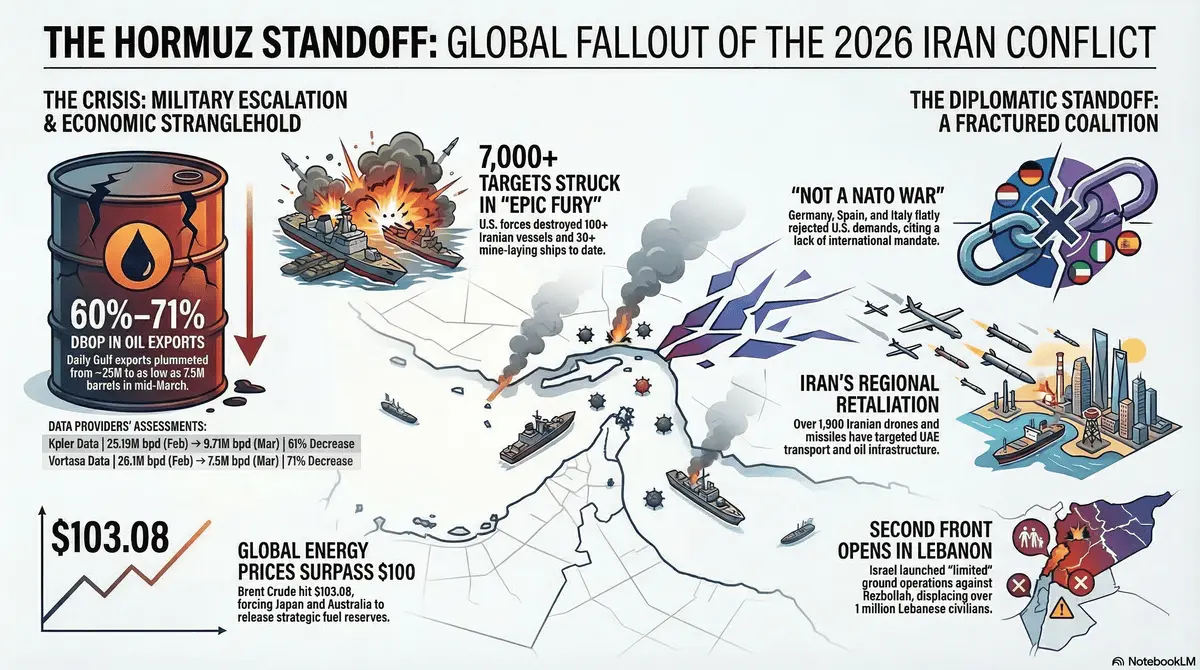
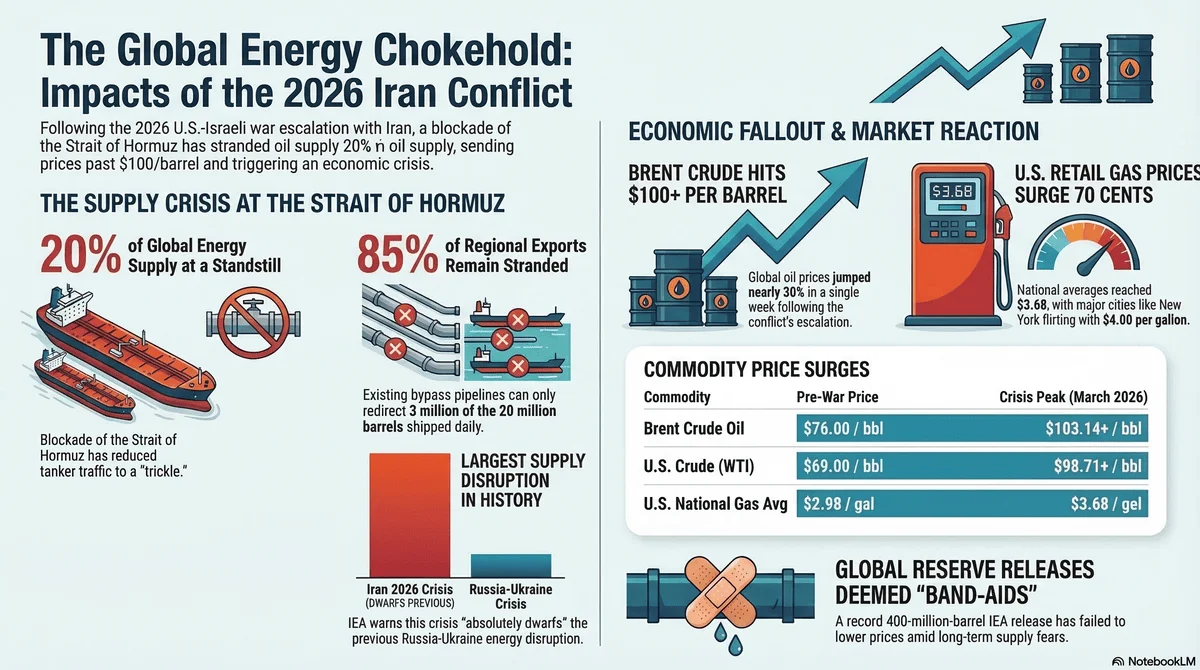
    London — Global oil markets are experiencing unprecedented volatility as the ongoing war between the United States, Israel, and Iran effectively halts transit through the Strait of Hormuz. Tensions escalated significantly on March 12, 2026, pushing Brent crude past the $100 per barrel mark despite massive emergency reserve releases. The International Energy Agency has characterized the situation as the largest supply disruption in the history of the global oil market.

    Below is a detailed breakdown of the global energy crisis and its economic ramifications.

    Context & Background

    How did this start? The crisis originated following joint strikes by the United States and Israel on Iran beginning on February 28, 2026. In response to these military actions, Iran launched retaliatory strikes on commercial vessels and energy infrastructure across the Middle East, severely disrupting the critical shipping lanes of the Persian Gulf.

    The key players The primary geopolitical actors include the governments of the United States, Israel, and Iran, alongside major intergovernmental organizations like the International Energy Agency. Mojtaba Khamenei, the new supreme leader of Iran, has advocated for the continued closure of the strait, while United States President Donald Trump has authorized emergency oil releases while maintaining military pressure.

    Historical significance The current situation represents a massive supply shock that the International Energy Agency warns is deeper than both the 1973 Yom Kippur War oil crisis and the 2022 Russian invasion of Ukraine. To stabilize the market, the organization initiated a historic release of 400 million barrels of emergency crude, marking the largest intervention since its founding in 1974.

    Why this matters The effective closure of the Strait of Hormuz threatens roughly 20% of the world’s daily energy supply. This disruption has already forced companies to halt regional operations, sending domestic gas prices climbing toward $4 a gallon in the United States and triggering significant downturns across global stock exchanges in Tokyo, London, and New York.

    Q&A: Unpacking the Global Energy Disruption

    Q: How are global financial markets reacting to the supply disruption?

    A: Financial and energy markets have demonstrated severe volatility, marked by widespread sell-offs in equities and sharp spikes in commodity prices.

    • Crude Price Surges: Brent crude exceeded $100 a barrel, jumping roughly 9% in a single day due to fears of prolonged supply shortages.
    • Equity Market Declines: Major indexes, including the Dow Jones Industrial Average and S&P 500, experienced significant sell-offs, dropping between 1.5% and 1.6%.
    • Retail Fuel Impact: Domestic gasoline prices in the United States have risen nearly 60 to 70 cents since the war began, reaching an average of $3.60 per gallon.

    Q: Why did the emergency oil reserve releases fail to immediately stabilize prices?

    A: The historic injection of reserves by the International Energy Agency and the United States has not offset the fundamental logistical threats to shipping routes.

    • Finite Supply Limitations: Analysts, including Helima Croft, note that the 400 million barrels from the International Energy Agency and 172 million barrels from the United States represent temporary relief that cannot permanently replace the continuous flow of the Strait of Hormuz.
    • Logistical Bottlenecks: The United States reserve releases will take 120 days to complete and will not reach the market immediately.
    • Refining Constraints: Global refining capacity is currently limited, meaning the raw crude released does not instantly translate to available consumer products like jet fuel and gasoline.

    Q: How is the blockade of the Strait of Hormuz being enforced by regional powers?

    A: Iran and its proxy forces have systematically targeted commercial shipping and energy infrastructure in the region to restrict maritime movement.

    • Vessel Attacks: At least 16 commercial vessels have been attacked, reducing transit from an average of 138 daily ships to fewer than five.
    • Infrastructure Strikes: Regional facilities, including an oil export terminal in Oman and operations in Iraq, have suspended activities following drone sightings and direct strikes.
    • Political Directives: Iranian leadership, specifically Mojtaba Khamenei, has publicly declared the waterway’s closure a crucial strategic lever against the United States and Israel.
    • Unverified Status: At this time, the exact timeline for the waterway’s reopening remains unverified by official sources.

    Q: How are governments and corporations mitigating the immediate energy deficit?

    A: Stakeholders are deploying a mix of operational shutdowns, domestic rationing, and sanction adjustments to manage the crisis.

    • Corporate Retreats: Major firms like TotalEnergies and SLB have suspended up to 15% of their total output in affected countries, including Qatar, Iraq, and the United Arab Emirates.
    • Domestic Consumption Limits: India has implemented measures to limit fuel usage by certain businesses to prevent hoarding and market manipulation.
    • Sanction Relief: The United States Treasury Department, under Secretary Scott Bessent, issued a temporary license allowing the purchase of previously sanctioned Russian oil stranded at sea.

    Q: Why hasn’t a military escort system been established for commercial tankers yet?

    A: While proposed by the United States administration, naval escorts have been delayed due to logistical and tactical complexities in the contested waters.

    • Preparation Timelines: United States Energy Secretary Chris Wright confirmed that while escorts are planned, the military is currently unequipped to begin them immediately, aiming for the end of the month.
    • Coalition Requirements: Treasury Secretary Scott Bessent indicated that the operation will likely require the assembly of an international maritime coalition.
    • Information Retractions: The United States was forced to retract a premature social media claim by Chris Wright regarding a successful tanker escort, highlighting the operational confusion in the Persian Gulf.

    Editorial Note & Transparency

    Verification Log:

    • News Agency Reports: CBS News, NBC News, Al Jazeera, and BBC coverage detailing market fluctuations, geopolitical movements, and reserve releases.
    • Market Data: Pricing metrics and benchmark analytics sourced from the International Energy Agency, GasBuddy, and FactSet.
    • Official Statements: Public declarations and press releases from the U.S. Departments of Energy and Treasury, as well as statements from global energy executives.

    Compliance:

    • Privacy: This article respects user data under our Privacy Policy.
    • Transparency: No sponsored content influenced this reporting.

    Contact Us: For corrections or feedback, please email: news.desk@qnanews.com

  • Astronomers Uncover Evidence of a Cataclysmic Planetary Collision

    Astronomers Uncover Evidence of a Cataclysmic Planetary Collision

    Seattle / Washington — Researchers at the University of Washington have discovered evidence of a violent collision between two exoplanets orbiting a distant star. This rare observation, formally published in The Astrophysical Journal Letters on March 11, 2026, offers unparalleled insights into the chaotic formation of planetary systems and potential exomoons. The celestial event occurred around Gaia20ehk, a star located approximately 11,000 light-years from Earth near the constellation Puppis.

    Below is a detailed examination of this astronomical event and its implications for astrobiology.

    Context & Background

    The Initial Discovery The investigation began when astronomer Andy Tzanidakis observed anomalous dimming from Gaia20ehk, a typically stable main-sequence star. While the star’s light output was consistent for years, it began exhibiting unusual dips in brightness in 2016 and fluctuated chaotically by 2021.

    The Cause of the Anomalies Researchers deduced that the erratic flickering was not intrinsic to the star itself, but was instead caused by a massive cloud of hot dust and rock debris passing in front of it. This debris cloud is the resulting wreckage of a catastrophic collision between two planetary bodies within the system.

    Similarity to Earth’s Moon Formation This cosmic crash bears striking resemblances to the hypothesized impact of Theia that created the Moon roughly 4.5 billion years ago. The wreckage orbits the star at approximately one astronomical unit, which mirrors the distance between Earth and the Sun, suggesting the material could eventually coalesce into a similar Earth-Moon system analogue.

    Significance for Astrobiology Understanding the frequency of such planetary collisions is considered fundamental to astrobiology, as highlighted by James Davenport. The presence of a moon provides stable climates, ocean tides, and protection from asteroids, which are often viewed as critical components for making a planet habitable for life.

    Q&A: Unpacking The Planetary Collision

    Q: How did astronomers confirm that a collision had occurred rather than a standard stellar fluctuation?

    A: Astronomers identified the collision by analyzing the stark contrast between the star’s visible and infrared light emissions.

    • Visible Light Dimming: As rock and dust from the shattered planets passed in front of Gaia20ehk, the visible light reaching Earth was obstructed and flickered.
    • Infrared Light Surging: The collision generated extreme heat, causing the resulting debris field to glow intensely in the infrared spectrum.
    • Thermal Confirmation: This opposing light curve pattern proved that a hot, obscuring mass of planetary wreckage was responsible for the anomalies, rather than the star failing.

    Q: How did the collision process unfold over time?

    A: The event was not instantaneous but culminated after a series of preliminary impacts as the two planets spiraled toward each other.

    • Initial Grazing Impacts: Starting around 2016, the planets experienced minor, grazing collisions that caused slight dips in stellar brightness without producing massive infrared heat.
    • Catastrophic Impact: Around 2021, a catastrophic frontal collision completely pulverized the bodies, drastically increasing the debris volume and infrared heat signature.
    • Debris Dispersal: The pulverized rock vaporized into a massive, expanding cloud—sometimes referred to as a synestia—that now irregularly eclipses the host star.

    Q: Why is the location of the debris cloud significant for the future of this planetary system?

    A: The debris cloud is positioned in a specific orbital zone that might allow it to cool and form a stable planetary system.

    • Orbital Distance: The scattered material orbits Gaia20ehk at roughly 93 million miles, mimicking the distance from Earth to the Sun.
    • Solidification Potential: If the environment remains stable, this material is expected to cool and condense into solid bodies. At this time, the exact timeframe for this cool-down process remains unverified by official sources, though estimates suggest it could take millions of years.
    • System Evolution: This ongoing process could eventually yield a rocky exoplanet accompanied by a large exomoon.

    Q: How do these observations impact our understanding of the conditions required for life?

    A: Witnessing this event allows scientists to gauge the rarity of moon-forming impacts, which are thought to be essential for planetary habitability.

    • Tidal Generation: A large moon drives ocean tides, which facilitate the global mixing of chemical and biological materials on a planet’s surface.
    • Planetary Shielding: Natural satellites can intercept inbound asteroids, protecting the primary planet from potentially devastating impacts.
    • Tectonic Activity: Lunar gravity may help drive the tectonic plate activity necessary to regulate a planet’s climate and atmosphere over geological timescales.

    Q: How will researchers detect similar planetary collisions in the future?

    A: Astronomers will rely on next-generation surveying telescopes to scan the galaxy for similar long-term stellar anomalies.

    • Upcoming Technology: Instruments like the Simonyi Survey Telescope at the Vera C. Rubin Observatory will be crucial for capturing these rare events as they begin operations.
    • Decadal Monitoring: Researchers anticipate finding up to 100 new impacts over the next ten years by leveraging continuous, decade-long data collection.
    • Astrobiological Targeting: Identifying more systems with moon-forming collisions will help narrow the search for potentially habitable worlds outside our solar system.

    Editorial Note & Transparency

    Verification Log:

    • Academic Journal: Information sourced from peer-reviewed findings published in The Astrophysical Journal Letters.
    • Institutional Press Release: Statements and analyses provided by the University of Washington astronomy research team.
    • Science Media Coverage: Aggregated reporting from science news outlets analyzing telescope data from the Puppis constellation event.

    Compliance:

    • Privacy: This article respects user data under our Privacy Policy.
    • Transparency: No sponsored content influenced this reporting.

    Contact Us: For corrections or feedback, please email: news.desk@qnanews.com

  • Colorectal Cancer Emerges as Leading Cause of Cancer Death for Adults Under Fifty

    Colorectal Cancer Emerges as Leading Cause of Cancer Death for Adults Under Fifty

    Washington/New York — Colorectal cancer has officially become the leading cause of cancer-related deaths among adults under the age of fifty in the United States. Following updated medical guidance publicized heavily on March 12, 2026, health professionals are urgently warning younger demographics to prioritize early screenings and remain vigilant about subtle symptoms. Driven by shifting dietary habits, sedentary lifestyles, and newly discovered tissue biomechanics, the disease is increasingly presenting at advanced, harder-to-treat stages in younger populations.

    Below is a detailed examination of the early-onset colorectal cancer epidemic and the preventative strategies currently advised by the medical community.

    Context & Background

    What is driving the increase in early-onset cases? Experts point to a complex combination of sedentary lifestyles, obesity, and diets high in ultra-processed foods and red meat as primary catalysts. Researchers also suspect a birth cohort effect, suggesting generations born after the 1950s have been exposed to progressive environmental risks, with microplastics emerging as a highly suspected, though unproven, factor.

    How have medical guidelines adapted? In response to the sharp demographic shift in diagnoses, national health organizations have lowered the recommended age for initial colorectal cancer screening from fifty to forty-five for average-risk individuals. Preventive diagnostic tools, specifically colonoscopies, allow doctors to safely identify and extract precancerous polyps years before they can develop into malignant tumors.

    Who are the key medical voices sounding the alarm? Leading epidemiologists such as Rebecca Siegel of the American Cancer Society, alongside gastroenterologists like Dr. Derek Ebner at the Mayo Clinic, are actively working to dispel the outdated myth that colon cancer is strictly an elderly disease. They emphasize that younger patients habitually dismiss critical warning signs like rectal bleeding, assuming they are minor issues, which critically delays life-saving interventions.

    Q&A: Unpacking Early-Onset Colorectal Cancer

    Q: Why is early-onset colorectal cancer frequently diagnosed at highly advanced stages?

    A: Younger patients consistently overlook severe gastrointestinal symptoms and delay preventative screenings due to deeply ingrained misconceptions about their age-related risk levels.

    • Symptom Dismissal: Individuals routinely attribute warning signs, such as bright red blood in the stool, to benign conditions like hemorrhoids, avoiding professional medical evaluation.
    • Screening Protocols: Because standard preventative colonoscopies are generally not recommended or covered by insurance until age forty-five, younger patients rarely receive asymptomatic imaging.
    • Diagnostic Hesitancy: At this time, the exact reason why some primary care providers may overlook cancer symptoms in young adults remains unverified by official sources, though specialists note doctors are traditionally accustomed to treating the disease almost exclusively in elderly populations.

    Q: How do newly discovered biomechanical factors influence tumor growth in younger patients?

    A: Bioengineering studies reveal that early-onset colorectal cancer patients possess abnormally stiff colon tissue that actively promotes aggressive tumor development.

    • Tissue Rigidity: Researchers discovered that both cancerous and surrounding noncancerous colon tissues in younger patients are mechanically stiffer compared to tissues from older colorectal cancer patients.
    • Collagen Accumulation: The extracellular matrix within the colon wall of younger patients exhibits fibrotic characteristics, containing excessive amounts of collagen that rigidify the tissue structure.
    • Accelerated Multiplication: When cancer cells are placed in these artificially stiff, scar-like environments during laboratory testing, they multiply at a significantly faster rate.

    Q: How does modern nutritional intake specifically impact the gut microbiome and cancer risk?

    A: Diets deficient in natural fiber and high in chemical additives disrupt the delicate bacterial balance in the colon, fostering chronic tissue inflammation.

    • Fiber Deficiency: A lack of whole grains, legumes, and vegetables reduces the production of short-chain fatty acids like butyrate, which are necessary to fight inflammation and support colon cell health.
    • Chemical Additives: Ultra-processed foods, which are high in lipids, salt, and preservatives, act as nutrient-poor calories that increase obesity rates—a well-documented cancer risk factor.
    • Bacterial Imbalance: Without a healthy microbiome, the colon lining is exposed to potentially harmful compounds, toxins, and bile acids for longer durations, which accelerates cellular damage over time.

    Q: Why is a sedentary lifestyle considered a direct mechanical threat to colon health?

    A: Chronic physical inactivity drastically slows down digestive motility, increasing the total time toxins remain in direct contact with the vulnerable colon lining.

    • Sluggish Digestion: Extended periods of sitting reduce intestinal stimulation, causing waste and potential carcinogens to linger in the digestive tract rather than passing efficiently.
    • Insulin Disruption: A lack of daily exercise negatively affects insulin sensitivity and regulation, which can foster a biological environment highly conducive to cellular mutations.
    • Inflammatory Response: Sedentary habits contribute to chronic, low-grade inflammation throughout the body, further compromising the immune system’s ability to clear abnormal, precancerous cells.

    Q: How are genetic syndromes and family histories altering preventative screening timelines?

    A: Individuals with specific hereditary conditions or familial histories of the disease are now urged to begin preventative screenings decades before the standard age of forty-five.

    • Familial Proximity: Patients with a first-degree relative diagnosed with colon cancer are advised to begin screening at age forty, or ten years prior to their relative’s initial diagnosis age.
    • Lynch Syndrome: Those carrying this specific inherited DNA mutation face a drastically increased lifetime risk and must undergo colonoscopies as early as twenty to twenty-five years old.
    • Polyposis Conditions: Patients diagnosed with Familial Adenomatous Polyposis carry a nearly guaranteed lifetime risk of colorectal cancer and are heavily recommended to start annual screenings between ten and twelve years old.

    Editorial Note & Transparency

    Verification Log:

    • Medical Organization: Guidelines sourced from the American Cancer Society and National Cancer Institute regarding screening ages and mortality rates.
    • News Outlet: Reporting compiled from The Guardian, Fox News, and TODAY covering patient testimonials and demographic shifts.
    • Research Institution: Biomechanical findings regarding colon tissue stiffness sourced from the University of Texas at Dallas and UT Southwestern Medical Center.

    Compliance:

    • Privacy: This article respects user data under our Privacy Policy.
    • Transparency: No sponsored content influenced this reporting.

    Contact Us: For corrections or feedback, please email: news.desk@qnanews.com

  • War in Iran Escalates as New Supreme Leader Vows Continued Retaliation and Blockade

    War in Iran Escalates as New Supreme Leader Vows Continued Retaliation and Blockade

    Dubai/Washington — Tensions in the Middle East have intensified following the first public statement from Iran‘s newly appointed Supreme Leader, Mojtaba Khamenei, who vowed to maintain a blockade on a critical global oil route and continue military retaliation against the United States and Israel. The escalation follows a series of lethal airstrikes that began on February 28, 2026, which killed his father, former Supreme Leader Ayatollah Ali Khamenei, and ignited the current widespread conflict. This ongoing warfare has profoundly impacted global energy markets, sending oil prices soaring and drawing neighboring Gulf states into the crossfire.

    Below is a detailed examination of the ongoing war, its leadership shifts, and its global economic ramifications.

    Context & Background

    How did the leadership transition occur? Following the death of Ayatollah Ali Khamenei during the initial wave of United States and Israeli airstrikes on February 28, 2026, the Assembly of Experts in Iran swiftly appointed his son, Mojtaba Khamenei, as the new supreme leader. The 56-year-old hardline cleric, closely tied to the Islamic Revolutionary Guard Corps, delivered his first public message via a state television news anchor rather than an on-camera appearance, fueling rumors about his health after being reportedly wounded in the strikes.

    What is the strategic significance of the Strait of Hormuz? The Strait of Hormuz is a vital maritime chokepoint through which approximately one-fifth of the world’s traded oil passes. Mojtaba Khamenei has explicitly stated that Iran will continue to use the closure of this strait as leverage to pressure its adversaries, rendering the waterway effectively impassable. Consequently, the disruption has triggered massive shocks to the global economy, prompting the International Energy Agency to coordinate a record release of 400 million barrels of oil to stabilize surging crude prices.

    Why are neighboring Gulf states being targeted? In addition to confronting the United States and Israel, the Iranian military has launched missile and drone attacks against neighboring Arab nations, including Saudi Arabia, the United Arab Emirates, and Bahrain. Mojtaba Khamenei justified these attacks by demanding that these countries shut down American military bases hosted on their soil, warning that promised American protection is a lie. The targeted nations have responded by activating their air defense systems and intercepting incoming Iranian loitering munitions and ballistic missiles.

    How is the United States responding militarily and economically? The United States Central Command has conducted over 5,000 strikes against Iranian targets, crippling the Iranian Navy and degrading its drone and ballistic missile capabilities. Economically, the administration under President Donald Trump has authorized the release of 172 million barrels from the Strategic Petroleum Reserve and temporarily eased sanctions to allow the purchase of stranded Russian oil in a bid to lower domestic and global gas prices.

    Q&A: Unpacking the US-Israel War with Iran

    Q: How is the Iranian military adapting its tactics against superior air power?

    A: Iran is utilizing asymmetric warfare tactics, including the deployment of cluster munitions and coordination with regional proxies, to challenge allied air defense systems.

    • Cluster Munitions Deployment: Iran has launched cluster munitions that scatter dozens of smaller bomblets across a wide area, making them highly difficult for Israel‘s air defense systems to intercept and posing a lethal threat to civilians.
    • Proxy Group Coordination: Iranian forces are increasingly coordinating their missile barrages with regional proxy groups like Hezbollah in Lebanon, launching synchronized attacks to overwhelm enemy radar.
    • Concealment Strategies: The United States military has accused Iranian forces of moving rocket launchers into civilian neighborhoods, near schools and hospitals, to deter allied airstrikes.

    Q: Why have civilian and heritage sites sustained damage during the airstrikes?

    A: Airstrikes have inadvertently struck civilian infrastructure and historical landmarks due to proximity to military targets and allegedly outdated intelligence.

    • Outdated Intelligence: An American munition struck an elementary school in Minab, Iran, killing over 170 people; preliminary investigations suggest the compound was targeted because it served as a military base over a decade ago.
    • Heritage Site Proximity: The United Nations cultural agency verified damage to historical landmarks such as the Golestan Palace in Tehran and the Masjed-e Jāme in Isfahan, prompting Iran to request enhanced protection statuses.
    • Collateral Impact: Intense urban bombing campaigns by the Israel Defense Forces in Beirut, Lebanon, and Tehran have leveled residential buildings situated near suspected militant infrastructure.

    Q: How are global energy markets reacting to the prolonged conflict?

    A: Global oil markets have experienced severe volatility, with crude prices spiking above $100 per barrel due to the effective blockade of crucial shipping routes.

    • Price Surges: Brent crude oil surged by more than 10 percent, crossing the $100 per barrel threshold as a direct result of maritime disruptions.
    • Shipping Reroutes: At least 16 commercial vessels have been attacked by Iranian forces in the Persian Gulf, forcing international shipping companies to abandon the Strait of Hormuz and severely disrupting supply chains.
    • Strategic Interventions: In an effort to counter the price spikes, the United States Treasury Department authorized temporary purchases of Russian oil stranded at sea, while global agencies orchestrated massive reserve releases.

    Q: Why has the status of the new Iranian Supreme Leader sparked widespread speculation?

    A: The physical absence of the new leader from public view has led to unverified rumors regarding his health and survival.

    • Absence from Broadcasts: Mojtaba Khamenei‘s inaugural address to the nation was read by a television news anchor rather than broadcast as a live or recorded video message.
    • Injury Reports: Multiple reports suggest the leader was injured during the strikes that killed his father, with an Iranian ambassador confirming he sustained minor injuries.
    • Unverified Claims: At this time, claims that Mojtaba Khamenei is in a coma or suffered severe amputations remain unverified by official sources.

    Q: How are international governments managing the safety of their citizens and military personnel?

    A: Foreign governments are executing mass evacuations and bolstering defensive postures at regional military installations.

    • Citizen Evacuations: The United States State Department has assisted over 27,000 Americans in evacuating the region, with an additional 40,000 returning via commercial travel.
    • Base Defenses: Following deadly drone strikes on international bases, including an attack that killed a French soldier in Irbil, Iraq, allied forces are deploying interceptor drones sourced from Ukraine.
    • Aviation Incidents: A United States KC-135 refueling plane crashed in western Iraq; officials confirmed the incident occurred in friendly airspace and was not the result of hostile fire.

    Q: Why are human rights and international sporting organizations becoming involved in the conflict’s fallout?

    A: The domestic crackdown by the Iranian regime has prompted international actors to offer asylum and reconsider Iran‘s participation in global events.

    • Asylum Offers: Australia granted asylum to six players and a staff member of the Iranian women’s national soccer team after they faced regime retaliation for refusing to sing the national anthem.
    • Tournament Participation: President Donald Trump publicly suggested that the Iranian men’s national soccer team should not participate in the upcoming World Cup, citing safety concerns.
    • Domestic Repression: Iranian state television hosts have openly threatened domestic critics and protesters with severe consequences, including property confiscation and violence, as the regime seeks to maintain internal control.

    Editorial Note & Transparency

    Verification Log:

    • Government Statements: Press briefings from the United States Central Command, United States Treasury Department, and various Middle Eastern defense ministries.
    • News Reports: Field reporting and geopolitical analysis from established international broadcast and print media.
    • International Agencies: Data and alerts from the International Energy Agency and the United Nations.

    Compliance:

    • Privacy: This article respects user data under our Privacy Policy.
    • Transparency: No sponsored content influenced this reporting.

    Contact Us: For corrections or feedback, please email: news.desk@qnanews.com

  • FBI Investigates Deadly Old Dominion University Shooting as Act of Terrorism

    FBI Investigates Deadly Old Dominion University Shooting as Act of Terrorism

    Norfolk, Virginia — A deadly shooting at Old Dominion University ended when students subdued the armed attacker, leading to two fatalities including the gunman. The incident occurred on the morning of March 12, 2026, when the suspect targeted a military science classroom. The Federal Bureau of Investigation has officially taken over the case, designating it as a potential act of terrorism due to the suspect’s criminal background and actions during the attack.

    Below is a detailed examination of the attack, the suspect’s history, and the ongoing federal investigation.

    Context & Background

    How the Attack Unfolded Shortly before 11:00 a.m. on March 12, 2026, the assailant entered Constant Hall and explicitly asked if the room contained an ROTC class. After receiving confirmation, he shouted “Allahu Akbar” and opened fire, killing the instructor and wounding two others before students physically intervened. The students successfully disarmed and subdued the attacker, resulting in his death without the use of firearms.

    The Key Players The suspect has been identified as Mohamed Bailor Jalloh, a 36-year-old former Army National Guard member. The deceased victim was identified as Lt. Col. Brandon Shah, a decorated military veteran, alumnus of Old Dominion University, and the targeted classroom’s military science instructor. Federal oversight is being led by Kash Patel, the FBI Director, and Dominique Evans, the FBI Special Agent in Charge, who have both praised the students’ rapid response.

    Historical Significance of the Suspect’s Background Mohamed Bailor Jalloh previously pleaded guilty in 2016 to attempting to provide material support to the ISIS terrorist organization. He served a federal prison sentence and was released early in December 2024, which has raised significant questions regarding the federal monitoring of individuals convicted of terrorism-related offenses. The Joint Terrorism Task Force is now heavily involved in analyzing how this prior conviction relates to the current attack.

    Why This Matters This incident highlights the ongoing vulnerabilities on college campuses and the evolving nature of domestic terrorism threats. It also emphasizes the critical role of bystander intervention in active shooter scenarios, as law enforcement officials credit the ROTC students with preventing a much larger mass casualty event.

    Q&A: Unpacking The Old Dominion University Attack

    Q: How was the attacker neutralized before law enforcement arrived on the scene?

    A: The gunman was physically overpowered and killed by the students inside the classroom.

    • Tactical Intervention: Several ROTC students in the targeted classroom immediately confronted and subdued Mohamed Bailor Jalloh after he opened fire.
    • Cause of Death: While the FBI confirmed the suspect was not shot, one law enforcement source indicated the attacker was killed with a knife during the struggle.
    • Casualty Prevention: Kash Patel stated that the rapid response of these students undoubtedly saved numerous lives by terminating the threat within minutes.

    Q: Why is the Federal Bureau of Investigation treating this incident as an act of terrorism?

    A: The designation stems from the suspect’s previous terror conviction and his explicit statements during the attack.

    • Verbal Indicators: Dominique Evans reported that the suspect shouted a religious phrase associated with extremism immediately before opening fire on the classroom.
    • Target Selection: The attacker specifically sought out a military-affiliated target, verifying that the room was an ROTC class before initiating the violence.
    • Criminal History: Mohamed Bailor Jalloh had a prior federal conviction for attempting to support ISIS, making his actions part of a broader, recognized pattern of extremist behavior.

    Q: How did the suspect’s prior conviction for terrorism support occur?

    A: The suspect was arrested in 2016 following an undercover federal sting operation.

    • Informant Contact: Mohamed Bailor Jalloh communicated with overseas ISIS members who connected him with an FBI confidential informant in the United States.
    • Plotting Attacks: Court documents reveal he expressed a desire to conduct an attack similar to the 2009 shooting at Fort Hood, Texas.
    • Weapon Procurement: The suspect was arrested after attempting to purchase an AR-15 assault rifle from a gun store in Virginia, which had been secretly rendered inoperable by authorities.

    Q: Why was a convicted terrorism supporter released prior to the completion of his sentence?

    A: The suspect was released early from federal custody in December 2024, though the exact legal mechanisms remain under scrutiny.

    • Sentencing Discrepancy: Despite prosecutors requesting a 20-year sentence in 2017, a federal judge sentenced him to 11 years in prison with five years of supervised release.
    • Early Release Status: He left the custody of the Federal Bureau of Prisons in December 2024, years before his full sentence or supervised release terms would have concluded.
    • Unverified Circumstances: At this time, the exact administrative or legal reasoning for his early release remains unverified by official sources.

    Q: How has the university and local government responded to the tragedy?

    A: Officials have suspended operations and initiated widespread community support protocols.

    • Campus Closures: Brian O. Hemphill canceled all classes and operations on the main campus through Friday, March 13, 2026, to allow for mourning and a thorough police investigation.
    • Mental Health Support: The university deployed comprehensive counseling services, a 24/7 peer support community called Talk Campus, and established a Family Information Center at the Chartway Arena.
    • State Mobilization: Abigail Spanberger mobilized state emergency resources to assist the university and the city of Norfolk, Virginia.

    Editorial Note & Transparency

    Verification Log:

    • Law Enforcement Statements: Press conference transcripts and official statements from the Federal Bureau of Investigation and Norfolk Police Department regarding the suspect and investigation.
    • University Communications: Official emergency alerts and public letters distributed by Old Dominion University leadership regarding campus closures and support services.
    • Court Records: Federal sentencing documents and Department of Justice press releases documenting the suspect’s 2016 terrorism conviction and subsequent release.

    Compliance:

    • Privacy: This article respects user data under our Privacy Policy.
    • Transparency: No sponsored content influenced this reporting.

    Contact Us: For corrections or feedback, please email: news.desk@qnanews.com

  • Investigation Underway Following Deadly Vehicle Ramming at Michigan Synagogue

    Investigation Underway Following Deadly Vehicle Ramming at Michigan Synagogue

    West Bloomfield Township, Michigan — Federal and local authorities are investigating a targeted act of violence after a driver rammed a truck into a large Jewish synagogue, resulting in a fatal confrontation with on-site security personnel. The incident occurred on March 12, 2026, when the suspect breached the doors of the facility before being shot by an armed guard. At least 30 first responders sustained smoke inhalation injuries after the suspect’s vehicle caught fire, while all students and congregational staff remained unharmed.

    Below is a detailed examination of the attack, the swift security response, and the broader implications for community safety.

    Context & Background

    How did the attack unfold? On the afternoon of the incident, the attacker drove a vehicle directly into the glass doors of Temple Israel, plunging nearly forty feet down a hallway before coming to a stop. A lead member of the synagogue’s security team was struck and knocked unconscious, prompting another guard to engage the driver with gunfire. The suspect’s vehicle subsequently caught fire due to an unidentified ignited substance, leading to severe smoke conditions inside the facility.

    Who are the key figures in the investigation? The primary suspect, identified by the Department of Homeland Security as Ayman Mohamad Ghazali, was a 41-year-old naturalized American citizen originally from Lebanon. The Federal Bureau of Investigation (FBI), led by Special Agent in Charge Jennifer Runyan, has assumed control of the inquiry, designating the event as a targeted act of violence against the Jewish community. Local figures, including Oakland County Sheriff Michael Bouchard, are assisting in securing the site and determining the precise cause of the fire and the suspect’s death.

    What is the historical significance of the targeted location? Temple Israel is recognized as the largest Reform synagogue in the United States, serving approximately 12,000 congregants and housing a large early childhood education center. Founded in 1941, it represents a central pillar of the Jewish community in suburban Detroit. The facility’s high profile and significant population make it a sensitive target, particularly amidst rising national concerns regarding antisemitic violence.

    Why does the immediate security response matter? The incident underscores the critical value of specialized emergency training for houses of worship. In January, the FBI Detroit Field Office conducted an active shooter preparedness course at Temple Israel, focusing on critical decision-making under extreme pressure. Officials credit this recent preparation, alongside the presence of armed security, for preventing casualties among the 140 students and staff present during the breach.

    Q&A: Unpacking the Synagogue Ramming Attack

    Q: How did ongoing international conflicts reportedly influence the suspect’s motivations?

    A: Preliminary reports suggest the suspect recently suffered personal tragedies linked to the escalating war in the Middle East.

    • Recent Family Losses: Sources within the local Lebanese American community indicate that Ayman Mohamad Ghazali lost two brothers and two nieces or nephews in a recent military airstrike in Lebanon.
    • Psychological Impact: Following the strike roughly ten days prior, the suspect reportedly experienced severe trauma, ceased working, and exhibited alarming behavior, such as instructing his ex-wife to care for their children shortly before the attack.
    • Official Verification Status: At this time, a direct political or terror-related motive linking his family’s deaths to the synagogue attack remains unverified by official sources.

    Q: Why was the threat neutralized without further civilian casualties?

    A: The synagogue’s pre-established security protocols and recent federal training empowered staff to isolate the threat instantly.

    • Armed Confrontation: An on-site security guard immediately discharged his weapon at the suspect after the vehicle breached the facility and struck a colleague.
    • Prior Federal Training: Clergy and staff had completed a scenario-based training program organized by the FBI just weeks prior to the incident.
    • Successful Evacuation: Teachers swiftly applied their training to secure all 140 early childhood center students, who were successfully evacuated and sheltered at a neighboring country club.

    Q: How are law enforcement agencies managing the complex crime scene?

    A: Authorities are treating the heavily damaged building as a potential explosive hazard while federal agencies assume jurisdictional control.

    • Explosive Device Protocols: Bomb squads deployed canine units to sweep the burned vehicle for improvised explosives due to initial reports of chemical agents or mortar-type materials inside the cab.
    • Multi-Agency Coordination: The FBI is spearheading the investigation into the targeted violence, with support from the Bureau of Alcohol, Tobacco, Firearms and Explosives (ATF) and local county sheriff’s deputies.
    • First Responder Injuries: Over thirty police officers and emergency medical personnel required hospital treatment for smoke inhalation due to the intense vehicle fire.

    Q: Why have local officials implemented heightened security postures across the region?

    A: The attack has triggered widespread precautionary measures to protect religious and educational institutions from potential copycat or subsequent threats.

    • Increased Police Patrols: The Michigan State Police and surrounding municipal departments have surged high-visibility patrols around area synagogues and churches.
    • Regional Lockdowns: The Jewish Federation of Detroit temporarily initiated lockout protocols for all affiliated organizations throughout Southeast Michigan before the immediate threat was deemed neutralized.
    • National Ripple Effects: Police departments in major metropolitan areas, including New York City and Washington, D.C., announced increased security measures at Jewish cultural sites.

    Q: How has the political leadership responded to the crisis?

    A: Bipartisan political figures have universally condemned the attack and pledged resources to combat antisemitism.

    • State Level Condemnation: Michigan Governor Gretchen Whitmer characterized the event as a “nightmare” and reiterated that antisemitic violence has no place in the state.
    • Federal Commentary: President Donald Trump stated he was fully briefed on the incident, calling it a “terrible thing” while pledging to uncover the underlying details.
    • Legislative Action Calls: Local representatives have urged Congress to allocate further federal funding to protect houses of worship from escalating hate crimes.

    Editorial Note & Transparency

    Verification Log:

    • Official Statements: Press conferences by Oakland County Sheriff Michael Bouchard and FBI Special Agent Jennifer Runyan.
    • Federal Documents: Statements from the Department of Homeland Security verifying the suspect’s citizenship status and background.
    • Local Reporting: Dispatches from local broadcast networks and community sources confirming details of the suspect’s background and synagogue operations.

    Compliance:

    • Privacy: This article respects user data under our Privacy Policy.
    • Transparency: No sponsored content influenced this reporting.

    Contact Us: For corrections or feedback, please email: news.desk@qnanews.com

  • Liza Minnelli Releases Tell-All Memoir Detailing Hollywood Career and Personal Struggles

    Liza Minnelli Releases Tell-All Memoir Detailing Hollywood Career and Personal Struggles

    New York — Entertainment icon Liza Minnelli has released a highly anticipated memoir that provides unprecedented insight into her personal and professional life. The book, titled Kids, Wait Till You Hear This!, was officially published on March 10, 2026. The text offers candid reflections on her substance abuse struggles, high-profile marriages, and complex relationships with the Hollywood elite.

    Below is a detailed breakdown of the memoir’s most significant revelations.

    Context & Background

    What prompted the creation of this memoir? Liza Minnelli decided to write her own story after growing frustrated with inaccurate portrayals of her life and family in films and miniseries. Additionally, a humiliating incident at the 2022 Academy Awards, where she felt misrepresented, served as a catalyst for taking control of her narrative. She wanted to share her truth with the public that has supported her throughout her EGOT-winning career.

    The historical significance of her relationships The memoir chronicles Liza Minnelli‘s interactions with some of the most influential figures in entertainment history, including her mother Judy Garland, director Martin Scorsese, and singer Frank Sinatra. These relationships highlight the intersection of creative brilliance and destructive behaviors, particularly concerning substance abuse within the industry during the 1970s and 1980s.

    Why this matters for public perception By openly discussing her battles with addiction and multiple stints in rehabilitation, Liza Minnelli aims to destigmatize substance use disorders and relapse. Her transparent accounts of passing out on a New York sidewalk and receiving interventions from peers like Elizabeth Taylor serve as a testament to the realities of the disease, demonstrating that recovery is a continuous struggle even for privileged celebrities.

    Q&A: Unpacking The Memoir’s Revelations

    Q: How does Liza Minnelli characterize her affair with Martin Scorsese and its impact on their careers?

    A: Liza Minnelli describes the relationship as a destructive, drug-fueled obsession that blurred professional and personal boundaries.

    • Creative Rationalization: Martin Scorsese allegedly claimed that cocaine enhanced his creative output on the set of New York, New York in 1977, though Liza Minnelli views this as a symptom of substance abuse.
    • Professional Fallout: The personal turmoil ultimately impacted their professional collaboration, leading Liza Minnelli to fire Martin Scorsese from directing her Broadway show, The Act.
    • Lingering Resentment: The fallout from the affair had lasting consequences, culminating in a tense encounter at the 2014 Oscars where Martin Scorsese refused to interact with her.

    Q: Why did the 2022 Academy Awards appearance deeply upset Liza Minnelli?

    A: The event was perceived as a humiliating orchestration by Lady Gaga that undermined Liza Minnelli‘s autonomy and physical presentation.

    • Wheelchair Mandate: Minutes before presenting, Liza Minnelli was allegedly told she must use a wheelchair instead of her requested director’s chair, with Lady Gaga insisting on this condition.
    • Cognitive Testing: Lady Gaga reportedly subjected Liza Minnelli to a backstage memory quiz, questioning her about the film they were celebrating.
    • Public Misrepresentation: The physical positioning in the low wheelchair made it difficult for Liza Minnelli to read the teleprompter in Los Angeles, falsely projecting an image of severe mental and physical decline.

    Q: How did Judy Garland’s addiction shape Liza Minnelli’s childhood and adult life?

    A: The severe addiction forced Liza Minnelli into a premature caretaking role that left lasting psychological triggers.

    • Reversed Roles: By the age of thirteen, Liza Minnelli acted as a nurse and psychiatrist, secretly replacing her mother’s dangerous medication with aspirin to prevent overdoses.
    • Trauma Responses: The volatile nature of Judy Garland‘s behavior left Liza Minnelli with a lifelong trauma trigger related to screaming voices.
    • Financial Instability: The family frequently faced financial crises, forcing them to sneak out of hotels wearing multiple layers of clothing to avoid unpaid bills.

    Q: Why does the memoir portray the marriage to David Gest as uniquely exploitative?

    A: Liza Minnelli alleges that David Gest deliberately manipulated her finances and isolated her from her support systems.

    • Financial Drain: David Gest reportedly gained access to her accounts and spent her concert earnings extravagantly while attempting to sell her valuable Andy Warhol art collection.
    • Isolation Tactics: The memoir claims he acted as a gatekeeper during their 2002 marriage, screening her phone calls and effectively keeping her as a prisoner to control her interactions.
    • Physical Altercations: The relationship devolved into toxic hostility, with Liza Minnelli admitting that his behavior triggered physical fights between them.

    Q: How did Frank Sinatra’s touring demands affect Liza Minnelli’s well-being?

    A: Touring with Frank Sinatra in 1988 exacerbated her exhaustion and compromised her ongoing battle with alcoholism.

    • Sleep Deprivation: Frank Sinatra abhorred being alone after performances and would allegedly lock his dressing room door, forcing Liza Minnelli and Sammy Davis Jr. to stay awake until dawn.
    • Environmental Triggers: The mandatory late-night gatherings occurred in dressing rooms filled with alcohol, heavily testing Liza Minnelli during a period when she was struggling with her sobriety.
    • Dictatorial Scheduling: The entire tour operated strictly on Frank Sinatra‘s volatile moods and schedules, leaving his co-stars powerless to establish their own boundaries.

    Editorial Note & Transparency

    Verification Log:

    • Primary Source: Excerpts from Kids, Wait Till You Hear This! by Liza Minnelli.
    • News Outlets: Reporting from The Hollywood Reporter, The Guardian, and People Magazine.
    • Review Materials: Reviews compiled by Playbill regarding the memoir’s release on March 10, 2026.

    Compliance:

    • Privacy: This article respects user data under our Privacy Policy.
    • Transparency: No sponsored content influenced this reporting.

    Contact Us: For corrections or feedback, please email: news.desk@qnanews.com

  • Deadly Tornadoes and Record Hail Devastate Northwest Indiana and Illinois

    Deadly Tornadoes and Record Hail Devastate Northwest Indiana and Illinois

    Lake Village/Kankakee — A series of severe supercell thunderstorms produced multiple destructive tornadoes and potentially record-breaking hail across the Midwestern United States, leaving two fatalities and extensive infrastructure damage. The intense weather system struck the region on Tuesday, March 10, 2026, completely leveling homes, snapping utility poles, and knocking out power for tens of thousands of residents. Search and rescue operations have now transitioned into recovery efforts as local authorities and federal agencies assess the widespread devastation.

    Below is a detailed examination of the meteorological factors, structural impacts, and ongoing community recovery efforts.

    Context & Background

    How did this weather event develop? The destruction was fueled by a highly volatile atmospheric setup, characterized by a powerful cold front colliding with record-warm air surging from the Gulf of America. This collision generated severe supercell thunderstorms, which are rare but highly destructive rotational storms known for producing large hail and violent tornadoes. Furthermore, an 80 mph jet streak provided the necessary wind shear and atmospheric spin to sustain these violent twisters across state lines.

    The hardest-hit communities The storm’s path of destruction heavily impacted Kankakee County, Illinois, and Newton County, Indiana. In Lake Village, Indiana, the tornado destroyed dozens of homes and claimed the lives of an elderly couple, Edward Kozlowski and Arlene Kozlowski. Meanwhile, the suburb of Aroma Park, Illinois, experienced an EF-3 tornado with winds reaching 150 mph, leaving significant property and environmental damage.

    Potential record-breaking hail Alongside the tornadoes, the supercells produced exceptionally large hail that battered vehicles and buildings across the region. A massive 6-inch hailstone—roughly the size of a honeydew melon—was measured in Kankakee, Illinois, and is currently under evaluation by the National Weather Service. If officially verified, this will shatter the previous Illinois state record of 4.75 inches set in 2015.

    Emergency response and recovery Local fire departments and emergency management agencies initiated immediate search and rescue operations, working through darkness and downed power lines. Shelters were rapidly established by the American Red Cross at locations like the North Newton High School and Kankakee Community College to assist displaced residents. Kankakee County also filed an emergency declaration with the state of Illinois to secure additional recovery resources.

    Q&A: Unpacking Midwest Tornado Outbreak

    Q: How did the atmospheric conditions lead to such a rare and severe tornado outbreak?

    A: The severe weather was driven by a classic springtime meteorological clash combined with intense upper-level wind dynamics.

    • Temperature Contrast: A powerful cold front interacted with unseasonably record-setting warm, moist air, creating massive atmospheric instability.
    • Wind Shear Dynamics: An 80 mph jet streak passed overhead, creating significant wind shear that allowed the thunderstorms to rotate and develop into supercells.
    • Storm Training: The storms exhibited “training” behavior, where multiple storm cells repeatedly move over the exact same geographical area, increasing the risk of flash flooding.

    Q: Why was the tornado in Kankakee and Aroma Park particularly destructive?

    A: The twister reached extreme wind speeds and maintained a long track through populated residential and commercial zones.

    • EF-3 Intensity: Preliminary surveys indicate the tornado packed peak wind gusts of 150 mph, classifying it as a strong EF-3.
    • Extended Path: The tornado tracked nearly 40 miles over the course of 90 minutes, beginning in Illinois and dissipating in Indiana.
    • Infrastructure Impact: The high winds tore roofs off homes, collapsed basements, heavily damaged local schools like Bishop McNamara Catholic School, and snapped over 70 utility poles.

    Q: How are local authorities and utility companies responding to the widespread infrastructure failure?

    A: First responders and utility crews are coordinating massive debris removal and power restoration efforts across multiple counties.

    • Power Grid Restoration: Companies like ComEd and NIPSCO deployed hundreds of crews to address the tens of thousands of power outages caused by severed lines and broken poles.
    • Debris Management: Kankakee County initiated a structured debris removal plan, requiring residents to separate materials into categories like white goods, e-waste, and construction debris.
    • Hazardous Materials: Emergency teams successfully secured at least seven hazardous materials incidents resulting from the storm damage in Lake Village, Indiana.

    Q: How is the local community supporting the displaced residents and affected animals?

    A: Grassroots volunteer efforts and regional partnerships have emerged to provide critical supplies and animal welfare support.

    • Donation Centers: Local businesses and community centers are collecting water, clothing, tools, and hygiene products for families who lost their homes.
    • Animal Rescue Operations: The Anti-Cruelty Society in Chicago absorbed several dogs from the Kankakee County Animal Control to free up shelter space for pets displaced by the disaster.
    • Community Relief: Volunteers have established daily feeding stations for displaced neighbors and emergency crews working through the rubble.

    Q: What are the long-term meteorological and insurance implications of the record-breaking hail?

    A: The unprecedented hail size is expected to trigger widespread property claims and potential shifts in climate assessments.

    • State Record Verification: The National Weather Service is currently measuring the 6-inch hailstone found in Kankakee, which is poised to break the previous Illinois record. At this time, the new state record remains unverified by official sources.
    • Insurance Claim Surge: Restoration companies are already surveying extensive roof, siding, and vehicular damage, adding to the state’s soaring hail-related insurance claims.
    • Climate Trends: Some scientific analyses suggest that accelerating climate change may increase the frequency of such large-scale hail events.

    Editorial Note & Transparency

    Verification Log:

    • News Agency Reports: Details sourced from the Associated Press, CNN, and Fox Weather.
    • Official Statements: Information corroborated by the National Weather Service, Newton County Sheriff’s Office, and local fire departments.
    • Local Affiliates: On-the-ground reporting from ABC7 Chicago, FOX 32 Chicago, and the Chicago Sun-Times.

    Compliance:

    • Privacy: This article respects user data under our Privacy Policy.
    • Transparency: No sponsored content influenced this reporting.

    Contact Us: For corrections or feedback, please email: news.desk@qnanews.com

  • Chile Inaugurates Far-Right President Amid Regional Political Shift

    Chile Inaugurates Far-Right President Amid Regional Political Shift

    Valparaiso/Santiago — Far-right leader Jose Antonio Kast was sworn in as Chile‘s president, marking the nation’s sharpest shift to the right since the end of military rule. The transfer of power from leftist Gabriel Boric took place on March 11, 2026, amidst rising public concern over violent crime and illegal immigration. The inauguration was attended by various international leaders, signaling a broader regional shift in political alliances.

    Below is a detailed examination of Jose Antonio Kast‘s policy agenda and its geopolitical implications.

    Context & Background

    The Rise of Kast and the Republican Party Jose Antonio Kast capitalized on public dissatisfaction with the outgoing administration’s inability to manage crime and economic stagnation. His platform emphasizes a “mano dura” approach to security, including deploying military forces to borders and implementing mass deportations. This approach resonated with voters seeking a return to stability after years of political turbulence and constitutional debates.

    Economic Strategy and the Mining Sector Chile, the world’s largest copper producer, faces a policy reset under the new administration, which aims to boost growth through deregulation and market-friendly policies. Jose Antonio Kast has merged the Ministry of Mining and the Ministry of Economy, appointing Daniel Mas to lead the portfolio in a move intended to streamline approvals but criticized for lacking technical expertise. The government hopes to accelerate investments in copper and lithium, despite concerns that declining ore grades and policy uncertainty could hinder immediate production increases.

    Geopolitical Realignments and U.S. Influence The transition highlights shifting international dynamics, as Jose Antonio Kast actively aligns himself with United States President Donald Trump and conservative leaders across Latin America. Tensions have already flared over a proposed China-backed undersea fiber optic cable, which the United States views as a security threat, prompting diplomatic friction during the final days of Gabriel Boric‘s term. Jose Antonio Kast is expected to halt the project, navigating a delicate balance between Washington‘s security interests and Beijing‘s role as Chile‘s top trading partner.

    Historical Echoes and Domestic Controversy The new president’s past defense of Augusto Pinochet‘s military dictatorship remains a highly polarizing issue within Chile. His cabinet appointments, which include two lawyers who previously defended Augusto Pinochet‘s rule, have sparked outcries from human rights organizations. Critics fear that the administration’s stringent security measures and conservative social policies may jeopardize civil liberties and human rights advancements made since 1990.

    Q&A: Unpacking the Kast Administration

    Q: How will the new administration balance diplomatic relations between the United States and China?

    A: The government must carefully navigate competing pressures from its primary security ally and its largest trade partner.

    • U.S. Security Alliances: Jose Antonio Kast has signaled strong alignment with Washington, participating in Donald Trump‘s “Shield of the Americas” alliance.
    • Chinese Trade Dependence: China purchases the majority of Chile‘s bulk copper concentrate, making it an indispensable economic partner.
    • Infrastructure Disputes: The administration is expected to cancel a controversial submarine fiber optic cable project to appease United States security concerns regarding China.

    Q: Why is the merger of the mining and economy ministries drawing criticism from industry experts?

    A: The consolidation prioritizes broad economic coordination over the specialized technical knowledge required for natural resource management.

    • Leadership Experience: The appointment of agronomist Daniel Mas surprised the sector due to his lack of specific mining expertise.
    • Permitting Complexities: The industry currently faces a cumbersome environmental assessment system, with a single project sometimes requiring over 500 permits before construction begins.
    • Resource Non-renewability: Analysts warn that without specialist oversight, the unique challenges of declining ore grades and aging deposits may be mismanaged.

    Q: How does Kast plan to address the perceived crisis in public security and immigration?

    A: The administration intends to implement aggressive law enforcement tactics and stringent border controls.

    • Military Deployment: Jose Antonio Kast plans to increase military presence at national borders and in specific crime hotspots.
    • Mass Deportations: The government has vowed to deport large numbers of undocumented migrants, primarily targeting those from Venezuela.
    • Police Empowerment: Proposed policies include expanding the authority and firepower of domestic police forces to combat organized crime.

    Q: Why do critics argue that Kast’s cabinet appointments signal a regression in human rights?

    A: Several key appointments have direct ties to the former military dictatorship and advocate for ultra-conservative social policies.

    • Dictatorship Ties: The new ministers of defense and justice are lawyers who previously defended the rule of Augusto Pinochet.
    • Social Conservatism: The incoming minister for women’s affairs is a vocal anti-abortion activist, raising alarms about reproductive rights.
    • Historical Trauma: Relatives of the forcibly disappeared during the 1973 to 1990 regime fear that historical memory and justice initiatives are under threat.

    Q: How might policy shifts impact Chile’s role in the global energy transition?

    A: Regulatory reforms aim to accelerate the extraction of critical minerals, though structural limitations pose significant hurdles.

    • Copper Production Constraints: Despite high global demand, output is hampered by aging mines and lower ore grades, making rapid production increases unlikely.
    • Lithium Strategy Reversal: The new government may roll back previous state-centric lithium strategies to encourage greater private and foreign investment.
    • Mineral Diversification: Chile is attempting to expand its mining base beyond copper and lithium to include 14 additional transition-critical minerals like cobalt and rare earth elements.

    Editorial Note & Transparency

    Verification Log:

    • International Wire Reports: Sourced breaking news details regarding the inauguration ceremony and the attending international leaders.
    • Economic Analysis Desks: Reviewed mining output projections, ministry restructuring impacts, and trade relations data.
    • Political Science Journals: Cross-referenced historical context regarding past administrations and constitutional processes.

    Compliance:

    • Privacy: This article respects user data under our Privacy Policy.
    • Transparency: No sponsored content influenced this reporting.

    Contact Us: For corrections or feedback, please email: news.desk@qnanews.com