Dubai, United Arab Emirates — Suspected Iranian projectiles struck at least three commercial cargo vessels navigating the strategically vital Strait of Hormuz, intensifying a global energy crisis. The attacks occurred on March 11, 2026, marking a significant escalation in the ongoing military conflict involving the United States, Israel, and Iran. The assaults on shipping infrastructure have effectively halted regional cargo transit, prompting international organizations to authorize unprecedented emergency petroleum releases.
Below is a detailed examination of the maritime attacks, energy market disruptions, and geopolitical consequences.
Context & Background
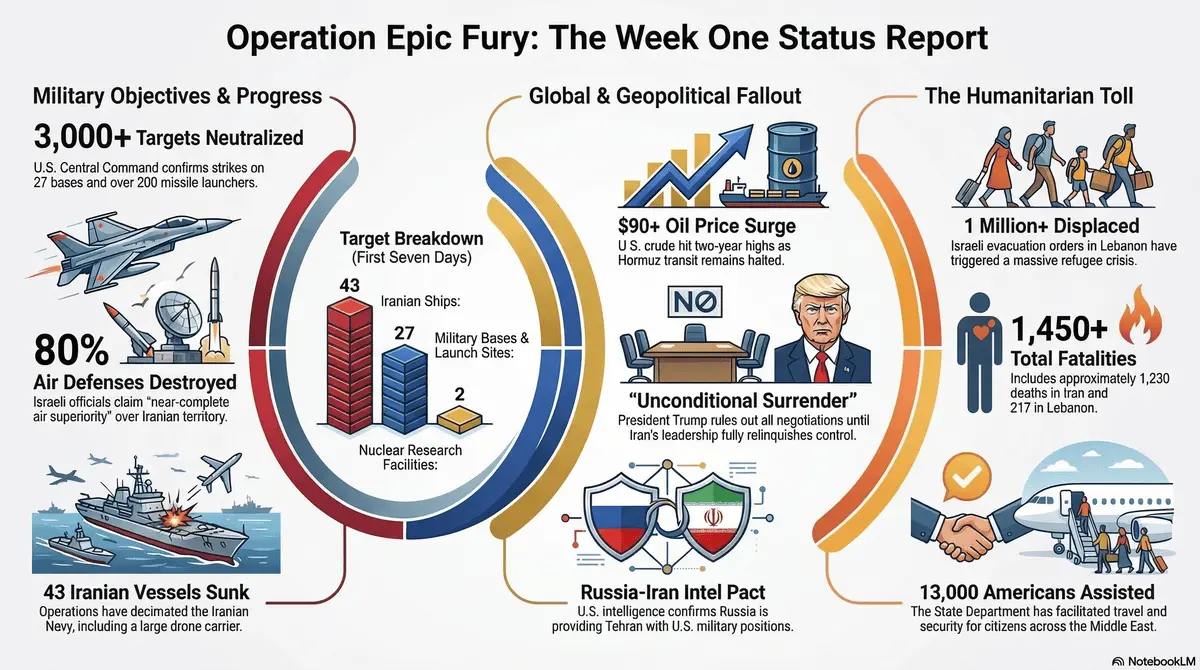
How did the current maritime conflict begin? The military confrontation commenced on Feb. 28, when the United States and Israel initiated a joint aerial bombardment campaign against Iran dubbed “Operation Epic Fury”. In response to the extensive airstrikes targeting Iranian military and leadership assets, Iran launched a retaliation campaign focused on commercial shipping and regional energy infrastructure to inflict economic pressure on its adversaries.
Who are the key players in the Strait of Hormuz crisis? The primary state actors involve the armed forces of the United States and Israel combating the military and naval forces of Iran. Iranian military spokespersons, such as Ebrahim Zolfaqari, have declared that any vessels supplying the United States or Israel are legitimate targets. Concurrently, United States President Donald Trump has authorized strikes against Iranian naval assets, including the destruction of sixteen minelayer vessels.
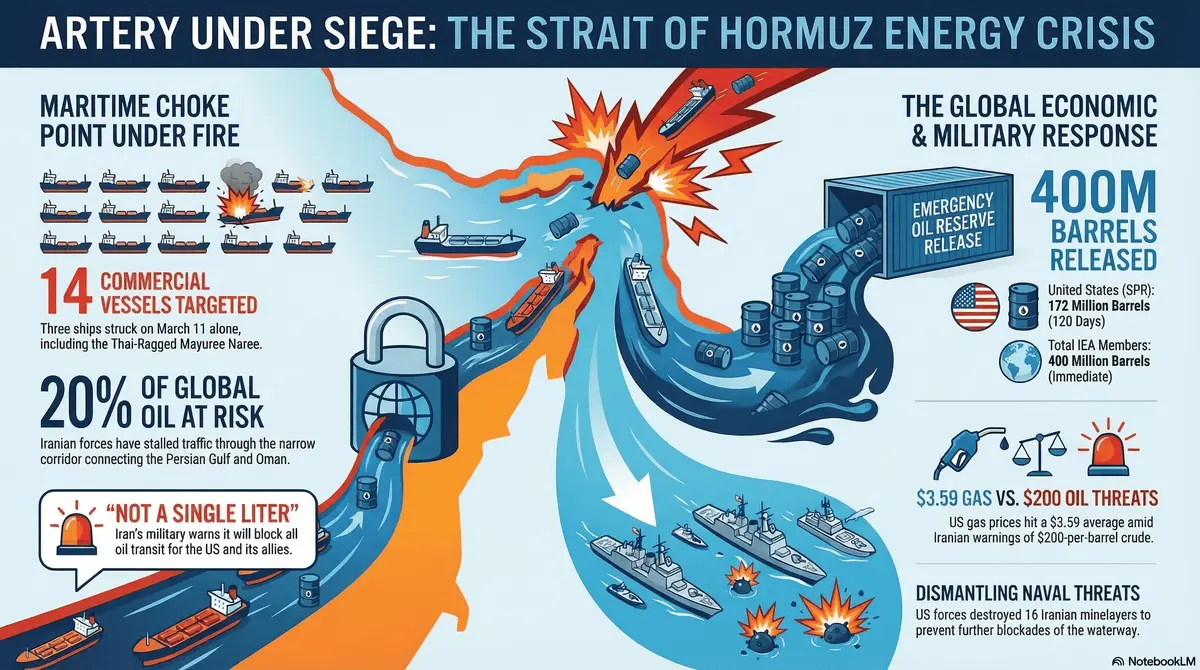
Why is the Strait of Hormuz economically significant? The Strait of Hormuz is a narrow maritime corridor connecting the Persian Gulf and the Gulf of Oman, functioning as one of the most critical global energy chokepoints. Approximately one-fifth of the world’s traded oil and liquefied natural gas typically passes through this passage. The effective closure of the waterway by Iran has paralyzed supply chains and triggered severe volatility in international energy markets.
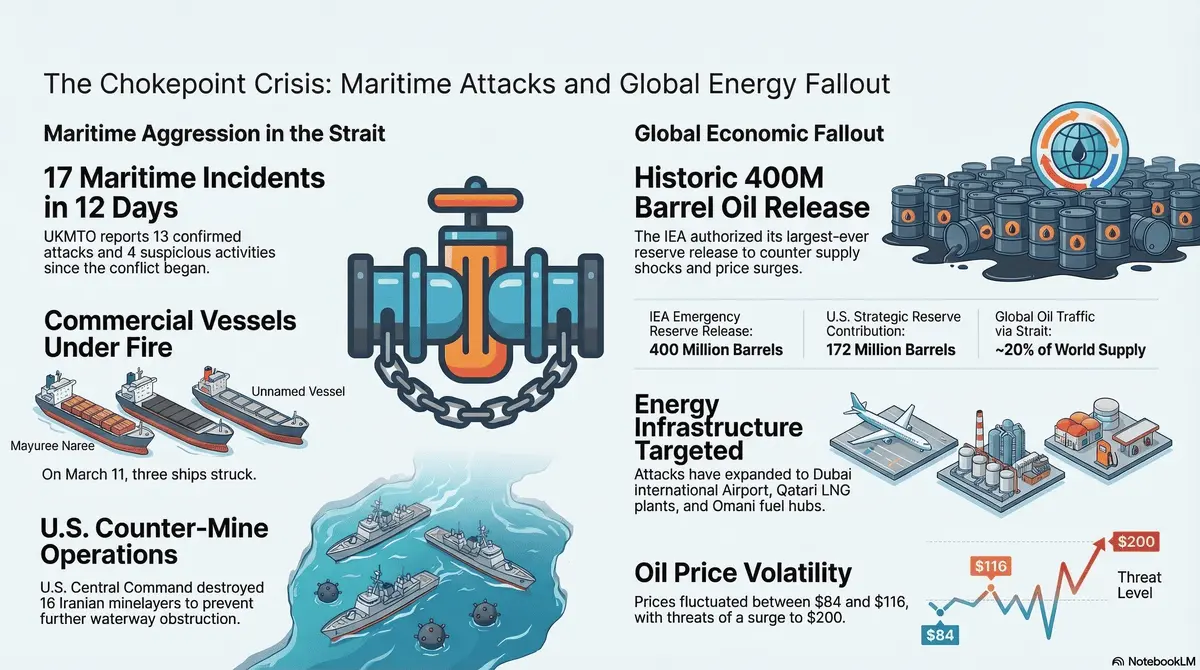
What are the international energy interventions? To counteract the supply shock caused by the blockade in the Middle East, the International Energy Agency authorized the largest emergency oil release in its history. Member nations agreed to release 400 million barrels of stockpiled petroleum to stabilize crude prices, with the United States contributing 172 million barrels from its Strategic Petroleum Reserve under the direction of Energy Secretary Chris Wright.
Q&A: Unpacking the Strait of Hormuz Crisis
Q: How is the Iranian military executing its blockade of commercial shipping?
A: The military forces of Iran are utilizing a combination of projectile strikes, drone swarms, and potential naval mines to deter maritime traffic.
- Targeted Projectile Strikes: Authorities reported that the Thailand-flagged Mayuree Naree, the Japan-flagged One Majesty, and the Marshall Islands-flagged Star Gwyneth were all struck by projectiles or drones near the Strait of Hormuz and Oman.
- Naval Mine Depletion: The United States military sank sixteen Iranian minelaying vessels near the Strait of Hormuz, aiming to prevent the mining of the vital shipping waterway.
- Unverified Sea Mine Status: At this time, the exact number and location of active naval mines deployed by Iran remains unverified by official sources.
Q: Why did the International Energy Agency intervene in the global oil market?
A: The agency implemented a historic emergency release of petroleum reserves to mitigate dramatic price fluctuations and supply shortages stemming from the Gulf conflict.
- Market Volatility Mitigation: The conflict drove Brent crude prices up by 20% since the war began, prompting fears that prices could surge to $200 per barrel as threatened by Iran.
- Record Reserve Release: Director Fatih Birol announced a 400 million barrel release from the emergency stocks of 32 member countries to alleviate immediate disruptions.
- United States Contribution: Energy Secretary Chris Wright confirmed the United States would release 172 million barrels from its Strategic Petroleum Reserve over 120 days.
Q: How has the conflict impacted the internal political and leadership structure of Iran?
A: The joint airstrikes have inflicted heavy casualties on Iranian leadership, leading to the rapid succession and reported injury of the new supreme leader.
- Leadership Casualties: The initial United States and Israel bombings on Feb. 28 resulted in the death of Ayatollah Ali Khamenei and several of his family members.
- Successor Injuries: The new supreme leader, Mojtaba Khamenei, was reportedly wounded in the same airstrike, sustaining injuries to his limbs.
- Regime Continuity: Despite the extensive bombardment, United States intelligence assessments suggest that the clerical leadership of Iran retains control and is not at immediate risk of collapse.
Q: Why has the United States faced scrutiny over its aerial bombardment campaign?
A: A preliminary military investigation revealed that a deadly strike on a civilian target in Iran was caused by intelligence failures.
- Civilian Casualties: A United States Tomahawk cruise missile struck an Iranian girls’ school, resulting in the deaths of approximately 175 people, primarily students.
- Intelligence Errors: Officials disclosed that the tragic incident resulted from a targeting error caused by the reliance on outdated intelligence data that misidentified the school as a military installation.
- Artificial Intelligence Integration: The miscalculation occurred as the United States Central Command, under Admiral Brad Cooper, increasingly leverages artificial intelligence to rapidly identify and authorize thousands of strike targets across Iran.
Q: How is the conflict expanding beyond the immediate borders of Iran and Israel?
A: The war has triggered a broader regional crisis, involving proxy group engagements, refugee displacement, and attacks on neighboring infrastructure.
- Lebanese Humanitarian Crisis: Cross-border fighting between Israel and Hezbollah has devastated Lebanon, resulting in over 600 deaths and the internal displacement of over 750,000 civilians.
- Gulf Infrastructure Attacks: Iran has expanded its targeting to include neighboring nations, launching drone strikes near the international airport in Dubai and hitting oil storage facilities in Salalah, Oman.
- Coordinated Operations: The Islamic Revolutionary Guard Corps executed its first joint operation with Hezbollah, coordinating simultaneous missile and drone launches against Israel.
Editorial Note & Transparency
Verification Log:
- Mainstream Media Outlets: News reports from established agencies like AP News, Reuters, CBS News, and NPR detailing military operations and geopolitical statements.
- Government Statements: Official announcements from the United States military, the International Energy Agency, and international defense ministries regarding casualty figures and reserve releases.
- Maritime Security Data: Tracking data from groups such as the United Kingdom Maritime Trade Operations confirming incidents involving commercial vessels.
Compliance:
- Privacy: This article respects user data under our Privacy Policy.
- Transparency: No sponsored content influenced this reporting.
Contact Us: For corrections or feedback, please email: news.desk@qnanews.com